
27 sex workers killed in Nairobi as government sits on femicide report
Source: The Standard
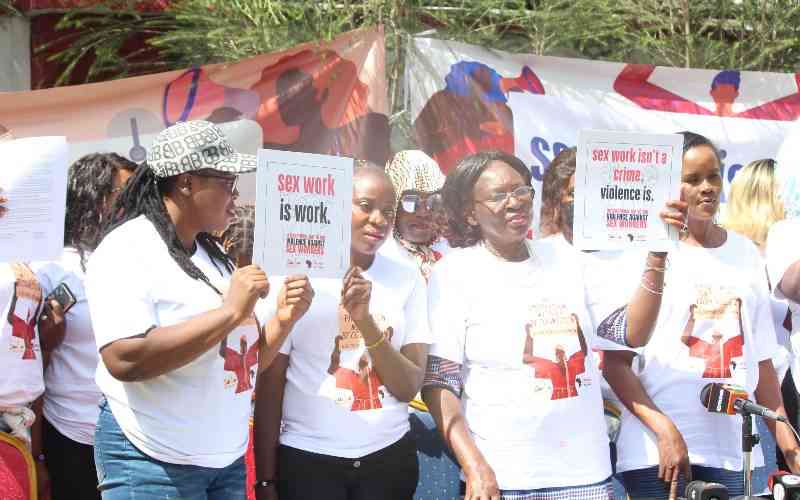
Twenty-seven women in sex work were murdered in Nairobi in 2025, with SWOP Ambassadors recording 345 cases of violence against sex workers in the capital alone.The deaths exposed how Kenya's laws criminalizing consensual adult sex work enable violence by denying survivors police protection and access to justice, sex worker advocates said Tuesday.SWOP Ambassadors, a sex worker-led organisation, marked International Day to End Violence Against Sex Workers by calling for the immediate release of the Presidential Taskforce on Gender-Based Violence and Femicide report, which remains unpublished one year after it was promised.Follow The Standard
channel
on WhatsApp"We demand thatthe taskforce report is released immediately and our experiences be officially acknowledged, published and used to shape policy," said Veronica Achibeta Were, program lead for safety from violence at SWOP Ambassadors on Wednesday, December 17."Anything less justifies more violence," she added.The organisation documented how criminalisation under Sections 153 and 154 of the Penal Code traps women in cycles of violence."When the state labels sex workers as criminals, police protection, medical care and justice are denied," Were noted, adding, "After we suffer violence, task force our abusers often tell us 'utanipeleka wapi? Utado?'"President WilliamRuto appointed former Deputy Chief Justice Nancy Baraza to lead a 42-member taskforce in January to investigate gender-based violence and femicide.The task force was given a 90-day timeline to deliver findings to Deputy President Kithure Kindiki through the Gender Principal Secretary.By August, Baraza said the report was in its final stage before being handed over to Ruto, but the report has not been released.Kenyan Sex workers held a press conference in Nairobi demanding the decriminalisation of their work to protect them while on duty. They claim that 27 women in sex work have been murdered in Nairobi this year.[Benard Orwongo,Standard]The United Nations Office on Drugs and Crime reported 725 cases of femicide in Kenya in 2024, translating to 2.66 deaths per 100,000 women.About 75 per cent of these killings were committed by someone known to the victims.For sex workers, the violence is compounded by laws that make reporting dangerous."Reporting violence can mean jail or even death," Rosemary Kasiba, executive director of SWOP Ambassadors, said at a press conference in Kayole.Stay informed. Subscribe to our newsletterBy clicking on theSIGN UPbutton, you agree to ourTerms & Conditionsand thePrivacy PolicySIGN UP"Survivors fear arrest and retaliation. Evidence is lost, police look the other way, and abusers act with confidence, knowing the system is very unlikely to protect those that they harm," she noted.Stay Informed, Stay Empowered: Download the Standard ePaper App!SWOP Ambassadors said its data shows patterns of systematic failure in police handling of violence cases."Police files are routinely sabotaged or disappear," Kasiba said, adding, "Bribery determines whose case moves and whose does not. Courts are underfunded. Powerful abusers are shielded by police and political allies."The organisation called for increased oversight of police handling of violence, proper funding for health and courts, more investigative journalism and courage to confront abusers in positions of power.When survivors are accompanied by paralegals, when hospitals provide care without judgment, when lawyers are present and when witnesses are protected, cases move, the organisation noted."When we call for decriminalization, we are simply calling for the right to report violence without fear of arrest," Were explained. "These laws do not prevent violence. In fact, they enable it by making survivors disposable while protecting their abusers."SWOP Ambassadorsurged media to report with care and responsibility, using plain-language definitions of decriminalisation and avoiding framing sex work itself as violence."If you wish to interview survivors, work with SWOP Ambassadors and other sex worker-led organisations so safety and informed consent are guaranteed," Kasiba said.The organisation pledged to continue accompanying survivors to hospitals, police stations and courts, documenting violence and pushing for change."We are asking for nothing more and nothing less than equal protection under the law," Kasiba said, noting, "Criminalisation has failed us. It punishes survivors and protects abusers."Follow The Standard
channel
on WhatsApp
The deaths exposed how Kenya's laws criminalizing consensual adult sex work enable violence by denying survivors police protection and access to justice, sex worker advocates said Tuesday.SWOP Ambassadors, a sex worker-led organisation, marked International Day to End Violence Against Sex Workers by calling for the immediate release of the Presidential Taskforce on Gender-Based Violence and Femicide report, which remains unpublished one year after it was promised.Follow The Standard
channel
on WhatsApp"We demand thatthe taskforce report is released immediately and our experiences be officially acknowledged, published and used to shape policy," said Veronica Achibeta Were, program lead for safety from violence at SWOP Ambassadors on Wednesday, December 17."Anything less justifies more violence," she added.The organisation documented how criminalisation under Sections 153 and 154 of the Penal Code traps women in cycles of violence."When the state labels sex workers as criminals, police protection, medical care and justice are denied," Were noted, adding, "After we suffer violence, task force our abusers often tell us 'utanipeleka wapi? Utado?'"President WilliamRuto appointed former Deputy Chief Justice Nancy Baraza to lead a 42-member taskforce in January to investigate gender-based violence and femicide.The task force was given a 90-day timeline to deliver findings to Deputy President Kithure Kindiki through the Gender Principal Secretary.By August, Baraza said the report was in its final stage before being handed over to Ruto, but the report has not been released.Kenyan Sex workers held a press conference in Nairobi demanding the decriminalisation of their work to protect them while on duty. They claim that 27 women in sex work have been murdered in Nairobi this year.[Benard Orwongo,Standard]The United Nations Office on Drugs and Crime reported 725 cases of femicide in Kenya in 2024, translating to 2.66 deaths per 100,000 women.About 75 per cent of these killings were committed by someone known to the victims.For sex workers, the violence is compounded by laws that make reporting dangerous."Reporting violence can mean jail or even death," Rosemary Kasiba, executive director of SWOP Ambassadors, said at a press conference in Kayole.Stay informed. Subscribe to our newsletterBy clicking on theSIGN UPbutton, you agree to ourTerms & Conditionsand thePrivacy PolicySIGN UP"Survivors fear arrest and retaliation. Evidence is lost, police look the other way, and abusers act with confidence, knowing the system is very unlikely to protect those that they harm," she noted.Stay Informed, Stay Empowered: Download the Standard ePaper App!SWOP Ambassadors said its data shows patterns of systematic failure in police handling of violence cases."Police files are routinely sabotaged or disappear," Kasiba said, adding, "Bribery determines whose case moves and whose does not. Courts are underfunded. Powerful abusers are shielded by police and political allies."The organisation called for increased oversight of police handling of violence, proper funding for health and courts, more investigative journalism and courage to confront abusers in positions of power.When survivors are accompanied by paralegals, when hospitals provide care without judgment, when lawyers are present and when witnesses are protected, cases move, the organisation noted."When we call for decriminalization, we are simply calling for the right to report violence without fear of arrest," Were explained. "These laws do not prevent violence. In fact, they enable it by making survivors disposable while protecting their abusers."SWOP Ambassadorsurged media to report with care and responsibility, using plain-language definitions of decriminalisation and avoiding framing sex work itself as violence."If you wish to interview survivors, work with SWOP Ambassadors and other sex worker-led organisations so safety and informed consent are guaranteed," Kasiba said.The organisation pledged to continue accompanying survivors to hospitals, police stations and courts, documenting violence and pushing for change."We are asking for nothing more and nothing less than equal protection under the law," Kasiba said, noting, "Criminalisation has failed us. It punishes survivors and protects abusers."Follow The Standard
channel
on WhatsApp
SWOP Ambassadors, a sex worker-led organisation, marked International Day to End Violence Against Sex Workers by calling for the immediate release of the Presidential Taskforce on Gender-Based Violence and Femicide report, which remains unpublished one year after it was promised.Follow The Standard
channel
on WhatsApp"We demand thatthe taskforce report is released immediately and our experiences be officially acknowledged, published and used to shape policy," said Veronica Achibeta Were, program lead for safety from violence at SWOP Ambassadors on Wednesday, December 17."Anything less justifies more violence," she added.The organisation documented how criminalisation under Sections 153 and 154 of the Penal Code traps women in cycles of violence."When the state labels sex workers as criminals, police protection, medical care and justice are denied," Were noted, adding, "After we suffer violence, task force our abusers often tell us 'utanipeleka wapi? Utado?'"President WilliamRuto appointed former Deputy Chief Justice Nancy Baraza to lead a 42-member taskforce in January to investigate gender-based violence and femicide.The task force was given a 90-day timeline to deliver findings to Deputy President Kithure Kindiki through the Gender Principal Secretary.By August, Baraza said the report was in its final stage before being handed over to Ruto, but the report has not been released.Kenyan Sex workers held a press conference in Nairobi demanding the decriminalisation of their work to protect them while on duty. They claim that 27 women in sex work have been murdered in Nairobi this year.[Benard Orwongo,Standard]The United Nations Office on Drugs and Crime reported 725 cases of femicide in Kenya in 2024, translating to 2.66 deaths per 100,000 women.About 75 per cent of these killings were committed by someone known to the victims.For sex workers, the violence is compounded by laws that make reporting dangerous."Reporting violence can mean jail or even death," Rosemary Kasiba, executive director of SWOP Ambassadors, said at a press conference in Kayole.Stay informed. Subscribe to our newsletterBy clicking on theSIGN UPbutton, you agree to ourTerms & Conditionsand thePrivacy PolicySIGN UP"Survivors fear arrest and retaliation. Evidence is lost, police look the other way, and abusers act with confidence, knowing the system is very unlikely to protect those that they harm," she noted.Stay Informed, Stay Empowered: Download the Standard ePaper App!SWOP Ambassadors said its data shows patterns of systematic failure in police handling of violence cases."Police files are routinely sabotaged or disappear," Kasiba said, adding, "Bribery determines whose case moves and whose does not. Courts are underfunded. Powerful abusers are shielded by police and political allies."The organisation called for increased oversight of police handling of violence, proper funding for health and courts, more investigative journalism and courage to confront abusers in positions of power.When survivors are accompanied by paralegals, when hospitals provide care without judgment, when lawyers are present and when witnesses are protected, cases move, the organisation noted."When we call for decriminalization, we are simply calling for the right to report violence without fear of arrest," Were explained. "These laws do not prevent violence. In fact, they enable it by making survivors disposable while protecting their abusers."SWOP Ambassadorsurged media to report with care and responsibility, using plain-language definitions of decriminalisation and avoiding framing sex work itself as violence."If you wish to interview survivors, work with SWOP Ambassadors and other sex worker-led organisations so safety and informed consent are guaranteed," Kasiba said.The organisation pledged to continue accompanying survivors to hospitals, police stations and courts, documenting violence and pushing for change."We are asking for nothing more and nothing less than equal protection under the law," Kasiba said, noting, "Criminalisation has failed us. It punishes survivors and protects abusers."Follow The Standard
channel
on WhatsApp
Follow The Standard
channel
on WhatsApp"We demand thatthe taskforce report is released immediately and our experiences be officially acknowledged, published and used to shape policy," said Veronica Achibeta Were, program lead for safety from violence at SWOP Ambassadors on Wednesday, December 17."Anything less justifies more violence," she added.The organisation documented how criminalisation under Sections 153 and 154 of the Penal Code traps women in cycles of violence."When the state labels sex workers as criminals, police protection, medical care and justice are denied," Were noted, adding, "After we suffer violence, task force our abusers often tell us 'utanipeleka wapi? Utado?'"President WilliamRuto appointed former Deputy Chief Justice Nancy Baraza to lead a 42-member taskforce in January to investigate gender-based violence and femicide.The task force was given a 90-day timeline to deliver findings to Deputy President Kithure Kindiki through the Gender Principal Secretary.By August, Baraza said the report was in its final stage before being handed over to Ruto, but the report has not been released.Kenyan Sex workers held a press conference in Nairobi demanding the decriminalisation of their work to protect them while on duty. They claim that 27 women in sex work have been murdered in Nairobi this year.[Benard Orwongo,Standard]The United Nations Office on Drugs and Crime reported 725 cases of femicide in Kenya in 2024, translating to 2.66 deaths per 100,000 women.About 75 per cent of these killings were committed by someone known to the victims.For sex workers, the violence is compounded by laws that make reporting dangerous."Reporting violence can mean jail or even death," Rosemary Kasiba, executive director of SWOP Ambassadors, said at a press conference in Kayole.Stay informed. Subscribe to our newsletterBy clicking on theSIGN UPbutton, you agree to ourTerms & Conditionsand thePrivacy PolicySIGN UP"Survivors fear arrest and retaliation. Evidence is lost, police look the other way, and abusers act with confidence, knowing the system is very unlikely to protect those that they harm," she noted.Stay Informed, Stay Empowered: Download the Standard ePaper App!SWOP Ambassadors said its data shows patterns of systematic failure in police handling of violence cases."Police files are routinely sabotaged or disappear," Kasiba said, adding, "Bribery determines whose case moves and whose does not. Courts are underfunded. Powerful abusers are shielded by police and political allies."The organisation called for increased oversight of police handling of violence, proper funding for health and courts, more investigative journalism and courage to confront abusers in positions of power.When survivors are accompanied by paralegals, when hospitals provide care without judgment, when lawyers are present and when witnesses are protected, cases move, the organisation noted."When we call for decriminalization, we are simply calling for the right to report violence without fear of arrest," Were explained. "These laws do not prevent violence. In fact, they enable it by making survivors disposable while protecting their abusers."SWOP Ambassadorsurged media to report with care and responsibility, using plain-language definitions of decriminalisation and avoiding framing sex work itself as violence."If you wish to interview survivors, work with SWOP Ambassadors and other sex worker-led organisations so safety and informed consent are guaranteed," Kasiba said.The organisation pledged to continue accompanying survivors to hospitals, police stations and courts, documenting violence and pushing for change."We are asking for nothing more and nothing less than equal protection under the law," Kasiba said, noting, "Criminalisation has failed us. It punishes survivors and protects abusers."Follow The Standard
channel
on WhatsApp
"We demand thatthe taskforce report is released immediately and our experiences be officially acknowledged, published and used to shape policy," said Veronica Achibeta Were, program lead for safety from violence at SWOP Ambassadors on Wednesday, December 17."Anything less justifies more violence," she added.The organisation documented how criminalisation under Sections 153 and 154 of the Penal Code traps women in cycles of violence."When the state labels sex workers as criminals, police protection, medical care and justice are denied," Were noted, adding, "After we suffer violence, task force our abusers often tell us 'utanipeleka wapi? Utado?'"President WilliamRuto appointed former Deputy Chief Justice Nancy Baraza to lead a 42-member taskforce in January to investigate gender-based violence and femicide.The task force was given a 90-day timeline to deliver findings to Deputy President Kithure Kindiki through the Gender Principal Secretary.By August, Baraza said the report was in its final stage before being handed over to Ruto, but the report has not been released.Kenyan Sex workers held a press conference in Nairobi demanding the decriminalisation of their work to protect them while on duty. They claim that 27 women in sex work have been murdered in Nairobi this year.[Benard Orwongo,Standard]The United Nations Office on Drugs and Crime reported 725 cases of femicide in Kenya in 2024, translating to 2.66 deaths per 100,000 women.About 75 per cent of these killings were committed by someone known to the victims.For sex workers, the violence is compounded by laws that make reporting dangerous."Reporting violence can mean jail or even death," Rosemary Kasiba, executive director of SWOP Ambassadors, said at a press conference in Kayole.Stay informed. Subscribe to our newsletterBy clicking on theSIGN UPbutton, you agree to ourTerms & Conditionsand thePrivacy PolicySIGN UP"Survivors fear arrest and retaliation. Evidence is lost, police look the other way, and abusers act with confidence, knowing the system is very unlikely to protect those that they harm," she noted.Stay Informed, Stay Empowered: Download the Standard ePaper App!SWOP Ambassadors said its data shows patterns of systematic failure in police handling of violence cases."Police files are routinely sabotaged or disappear," Kasiba said, adding, "Bribery determines whose case moves and whose does not. Courts are underfunded. Powerful abusers are shielded by police and political allies."The organisation called for increased oversight of police handling of violence, proper funding for health and courts, more investigative journalism and courage to confront abusers in positions of power.When survivors are accompanied by paralegals, when hospitals provide care without judgment, when lawyers are present and when witnesses are protected, cases move, the organisation noted."When we call for decriminalization, we are simply calling for the right to report violence without fear of arrest," Were explained. "These laws do not prevent violence. In fact, they enable it by making survivors disposable while protecting their abusers."SWOP Ambassadorsurged media to report with care and responsibility, using plain-language definitions of decriminalisation and avoiding framing sex work itself as violence."If you wish to interview survivors, work with SWOP Ambassadors and other sex worker-led organisations so safety and informed consent are guaranteed," Kasiba said.The organisation pledged to continue accompanying survivors to hospitals, police stations and courts, documenting violence and pushing for change."We are asking for nothing more and nothing less than equal protection under the law," Kasiba said, noting, "Criminalisation has failed us. It punishes survivors and protects abusers."Follow The Standard
channel
on WhatsApp
"Anything less justifies more violence," she added.The organisation documented how criminalisation under Sections 153 and 154 of the Penal Code traps women in cycles of violence."When the state labels sex workers as criminals, police protection, medical care and justice are denied," Were noted, adding, "After we suffer violence, task force our abusers often tell us 'utanipeleka wapi? Utado?'"President WilliamRuto appointed former Deputy Chief Justice Nancy Baraza to lead a 42-member taskforce in January to investigate gender-based violence and femicide.The task force was given a 90-day timeline to deliver findings to Deputy President Kithure Kindiki through the Gender Principal Secretary.By August, Baraza said the report was in its final stage before being handed over to Ruto, but the report has not been released.Kenyan Sex workers held a press conference in Nairobi demanding the decriminalisation of their work to protect them while on duty. They claim that 27 women in sex work have been murdered in Nairobi this year.[Benard Orwongo,Standard]The United Nations Office on Drugs and Crime reported 725 cases of femicide in Kenya in 2024, translating to 2.66 deaths per 100,000 women.About 75 per cent of these killings were committed by someone known to the victims.For sex workers, the violence is compounded by laws that make reporting dangerous."Reporting violence can mean jail or even death," Rosemary Kasiba, executive director of SWOP Ambassadors, said at a press conference in Kayole.Stay informed. Subscribe to our newsletterBy clicking on theSIGN UPbutton, you agree to ourTerms & Conditionsand thePrivacy PolicySIGN UP"Survivors fear arrest and retaliation. Evidence is lost, police look the other way, and abusers act with confidence, knowing the system is very unlikely to protect those that they harm," she noted.Stay Informed, Stay Empowered: Download the Standard ePaper App!SWOP Ambassadors said its data shows patterns of systematic failure in police handling of violence cases."Police files are routinely sabotaged or disappear," Kasiba said, adding, "Bribery determines whose case moves and whose does not. Courts are underfunded. Powerful abusers are shielded by police and political allies."The organisation called for increased oversight of police handling of violence, proper funding for health and courts, more investigative journalism and courage to confront abusers in positions of power.When survivors are accompanied by paralegals, when hospitals provide care without judgment, when lawyers are present and when witnesses are protected, cases move, the organisation noted."When we call for decriminalization, we are simply calling for the right to report violence without fear of arrest," Were explained. "These laws do not prevent violence. In fact, they enable it by making survivors disposable while protecting their abusers."SWOP Ambassadorsurged media to report with care and responsibility, using plain-language definitions of decriminalisation and avoiding framing sex work itself as violence."If you wish to interview survivors, work with SWOP Ambassadors and other sex worker-led organisations so safety and informed consent are guaranteed," Kasiba said.The organisation pledged to continue accompanying survivors to hospitals, police stations and courts, documenting violence and pushing for change."We are asking for nothing more and nothing less than equal protection under the law," Kasiba said, noting, "Criminalisation has failed us. It punishes survivors and protects abusers."Follow The Standard
channel
on WhatsApp
The organisation documented how criminalisation under Sections 153 and 154 of the Penal Code traps women in cycles of violence."When the state labels sex workers as criminals, police protection, medical care and justice are denied," Were noted, adding, "After we suffer violence, task force our abusers often tell us 'utanipeleka wapi? Utado?'"President WilliamRuto appointed former Deputy Chief Justice Nancy Baraza to lead a 42-member taskforce in January to investigate gender-based violence and femicide.The task force was given a 90-day timeline to deliver findings to Deputy President Kithure Kindiki through the Gender Principal Secretary.By August, Baraza said the report was in its final stage before being handed over to Ruto, but the report has not been released.Kenyan Sex workers held a press conference in Nairobi demanding the decriminalisation of their work to protect them while on duty. They claim that 27 women in sex work have been murdered in Nairobi this year.[Benard Orwongo,Standard]The United Nations Office on Drugs and Crime reported 725 cases of femicide in Kenya in 2024, translating to 2.66 deaths per 100,000 women.About 75 per cent of these killings were committed by someone known to the victims.For sex workers, the violence is compounded by laws that make reporting dangerous."Reporting violence can mean jail or even death," Rosemary Kasiba, executive director of SWOP Ambassadors, said at a press conference in Kayole.Stay informed. Subscribe to our newsletterBy clicking on theSIGN UPbutton, you agree to ourTerms & Conditionsand thePrivacy PolicySIGN UP"Survivors fear arrest and retaliation. Evidence is lost, police look the other way, and abusers act with confidence, knowing the system is very unlikely to protect those that they harm," she noted.Stay Informed, Stay Empowered: Download the Standard ePaper App!SWOP Ambassadors said its data shows patterns of systematic failure in police handling of violence cases."Police files are routinely sabotaged or disappear," Kasiba said, adding, "Bribery determines whose case moves and whose does not. Courts are underfunded. Powerful abusers are shielded by police and political allies."The organisation called for increased oversight of police handling of violence, proper funding for health and courts, more investigative journalism and courage to confront abusers in positions of power.When survivors are accompanied by paralegals, when hospitals provide care without judgment, when lawyers are present and when witnesses are protected, cases move, the organisation noted."When we call for decriminalization, we are simply calling for the right to report violence without fear of arrest," Were explained. "These laws do not prevent violence. In fact, they enable it by making survivors disposable while protecting their abusers."SWOP Ambassadorsurged media to report with care and responsibility, using plain-language definitions of decriminalisation and avoiding framing sex work itself as violence."If you wish to interview survivors, work with SWOP Ambassadors and other sex worker-led organisations so safety and informed consent are guaranteed," Kasiba said.The organisation pledged to continue accompanying survivors to hospitals, police stations and courts, documenting violence and pushing for change."We are asking for nothing more and nothing less than equal protection under the law," Kasiba said, noting, "Criminalisation has failed us. It punishes survivors and protects abusers."Follow The Standard
channel
on WhatsApp
"When the state labels sex workers as criminals, police protection, medical care and justice are denied," Were noted, adding, "After we suffer violence, task force our abusers often tell us 'utanipeleka wapi? Utado?'"President WilliamRuto appointed former Deputy Chief Justice Nancy Baraza to lead a 42-member taskforce in January to investigate gender-based violence and femicide.The task force was given a 90-day timeline to deliver findings to Deputy President Kithure Kindiki through the Gender Principal Secretary.By August, Baraza said the report was in its final stage before being handed over to Ruto, but the report has not been released.Kenyan Sex workers held a press conference in Nairobi demanding the decriminalisation of their work to protect them while on duty. They claim that 27 women in sex work have been murdered in Nairobi this year.[Benard Orwongo,Standard]The United Nations Office on Drugs and Crime reported 725 cases of femicide in Kenya in 2024, translating to 2.66 deaths per 100,000 women.About 75 per cent of these killings were committed by someone known to the victims.For sex workers, the violence is compounded by laws that make reporting dangerous."Reporting violence can mean jail or even death," Rosemary Kasiba, executive director of SWOP Ambassadors, said at a press conference in Kayole.Stay informed. Subscribe to our newsletterBy clicking on theSIGN UPbutton, you agree to ourTerms & Conditionsand thePrivacy PolicySIGN UP"Survivors fear arrest and retaliation. Evidence is lost, police look the other way, and abusers act with confidence, knowing the system is very unlikely to protect those that they harm," she noted.Stay Informed, Stay Empowered: Download the Standard ePaper App!SWOP Ambassadors said its data shows patterns of systematic failure in police handling of violence cases."Police files are routinely sabotaged or disappear," Kasiba said, adding, "Bribery determines whose case moves and whose does not. Courts are underfunded. Powerful abusers are shielded by police and political allies."The organisation called for increased oversight of police handling of violence, proper funding for health and courts, more investigative journalism and courage to confront abusers in positions of power.When survivors are accompanied by paralegals, when hospitals provide care without judgment, when lawyers are present and when witnesses are protected, cases move, the organisation noted."When we call for decriminalization, we are simply calling for the right to report violence without fear of arrest," Were explained. "These laws do not prevent violence. In fact, they enable it by making survivors disposable while protecting their abusers."SWOP Ambassadorsurged media to report with care and responsibility, using plain-language definitions of decriminalisation and avoiding framing sex work itself as violence."If you wish to interview survivors, work with SWOP Ambassadors and other sex worker-led organisations so safety and informed consent are guaranteed," Kasiba said.The organisation pledged to continue accompanying survivors to hospitals, police stations and courts, documenting violence and pushing for change."We are asking for nothing more and nothing less than equal protection under the law," Kasiba said, noting, "Criminalisation has failed us. It punishes survivors and protects abusers."Follow The Standard
channel
on WhatsApp
President WilliamRuto appointed former Deputy Chief Justice Nancy Baraza to lead a 42-member taskforce in January to investigate gender-based violence and femicide.The task force was given a 90-day timeline to deliver findings to Deputy President Kithure Kindiki through the Gender Principal Secretary.By August, Baraza said the report was in its final stage before being handed over to Ruto, but the report has not been released.Kenyan Sex workers held a press conference in Nairobi demanding the decriminalisation of their work to protect them while on duty. They claim that 27 women in sex work have been murdered in Nairobi this year.[Benard Orwongo,Standard]The United Nations Office on Drugs and Crime reported 725 cases of femicide in Kenya in 2024, translating to 2.66 deaths per 100,000 women.About 75 per cent of these killings were committed by someone known to the victims.For sex workers, the violence is compounded by laws that make reporting dangerous."Reporting violence can mean jail or even death," Rosemary Kasiba, executive director of SWOP Ambassadors, said at a press conference in Kayole.Stay informed. Subscribe to our newsletterBy clicking on theSIGN UPbutton, you agree to ourTerms & Conditionsand thePrivacy PolicySIGN UP"Survivors fear arrest and retaliation. Evidence is lost, police look the other way, and abusers act with confidence, knowing the system is very unlikely to protect those that they harm," she noted.Stay Informed, Stay Empowered: Download the Standard ePaper App!SWOP Ambassadors said its data shows patterns of systematic failure in police handling of violence cases."Police files are routinely sabotaged or disappear," Kasiba said, adding, "Bribery determines whose case moves and whose does not. Courts are underfunded. Powerful abusers are shielded by police and political allies."The organisation called for increased oversight of police handling of violence, proper funding for health and courts, more investigative journalism and courage to confront abusers in positions of power.When survivors are accompanied by paralegals, when hospitals provide care without judgment, when lawyers are present and when witnesses are protected, cases move, the organisation noted."When we call for decriminalization, we are simply calling for the right to report violence without fear of arrest," Were explained. "These laws do not prevent violence. In fact, they enable it by making survivors disposable while protecting their abusers."SWOP Ambassadorsurged media to report with care and responsibility, using plain-language definitions of decriminalisation and avoiding framing sex work itself as violence."If you wish to interview survivors, work with SWOP Ambassadors and other sex worker-led organisations so safety and informed consent are guaranteed," Kasiba said.The organisation pledged to continue accompanying survivors to hospitals, police stations and courts, documenting violence and pushing for change."We are asking for nothing more and nothing less than equal protection under the law," Kasiba said, noting, "Criminalisation has failed us. It punishes survivors and protects abusers."Follow The Standard
channel
on WhatsApp
The task force was given a 90-day timeline to deliver findings to Deputy President Kithure Kindiki through the Gender Principal Secretary.By August, Baraza said the report was in its final stage before being handed over to Ruto, but the report has not been released.Kenyan Sex workers held a press conference in Nairobi demanding the decriminalisation of their work to protect them while on duty. They claim that 27 women in sex work have been murdered in Nairobi this year.[Benard Orwongo,Standard]The United Nations Office on Drugs and Crime reported 725 cases of femicide in Kenya in 2024, translating to 2.66 deaths per 100,000 women.About 75 per cent of these killings were committed by someone known to the victims.For sex workers, the violence is compounded by laws that make reporting dangerous."Reporting violence can mean jail or even death," Rosemary Kasiba, executive director of SWOP Ambassadors, said at a press conference in Kayole.Stay informed. Subscribe to our newsletterBy clicking on theSIGN UPbutton, you agree to ourTerms & Conditionsand thePrivacy PolicySIGN UP"Survivors fear arrest and retaliation. Evidence is lost, police look the other way, and abusers act with confidence, knowing the system is very unlikely to protect those that they harm," she noted.Stay Informed, Stay Empowered: Download the Standard ePaper App!SWOP Ambassadors said its data shows patterns of systematic failure in police handling of violence cases."Police files are routinely sabotaged or disappear," Kasiba said, adding, "Bribery determines whose case moves and whose does not. Courts are underfunded. Powerful abusers are shielded by police and political allies."The organisation called for increased oversight of police handling of violence, proper funding for health and courts, more investigative journalism and courage to confront abusers in positions of power.When survivors are accompanied by paralegals, when hospitals provide care without judgment, when lawyers are present and when witnesses are protected, cases move, the organisation noted."When we call for decriminalization, we are simply calling for the right to report violence without fear of arrest," Were explained. "These laws do not prevent violence. In fact, they enable it by making survivors disposable while protecting their abusers."SWOP Ambassadorsurged media to report with care and responsibility, using plain-language definitions of decriminalisation and avoiding framing sex work itself as violence."If you wish to interview survivors, work with SWOP Ambassadors and other sex worker-led organisations so safety and informed consent are guaranteed," Kasiba said.The organisation pledged to continue accompanying survivors to hospitals, police stations and courts, documenting violence and pushing for change."We are asking for nothing more and nothing less than equal protection under the law," Kasiba said, noting, "Criminalisation has failed us. It punishes survivors and protects abusers."Follow The Standard
channel
on WhatsApp
By August, Baraza said the report was in its final stage before being handed over to Ruto, but the report has not been released.Kenyan Sex workers held a press conference in Nairobi demanding the decriminalisation of their work to protect them while on duty. They claim that 27 women in sex work have been murdered in Nairobi this year.[Benard Orwongo,Standard]The United Nations Office on Drugs and Crime reported 725 cases of femicide in Kenya in 2024, translating to 2.66 deaths per 100,000 women.About 75 per cent of these killings were committed by someone known to the victims.For sex workers, the violence is compounded by laws that make reporting dangerous."Reporting violence can mean jail or even death," Rosemary Kasiba, executive director of SWOP Ambassadors, said at a press conference in Kayole.Stay informed. Subscribe to our newsletterBy clicking on theSIGN UPbutton, you agree to ourTerms & Conditionsand thePrivacy PolicySIGN UP"Survivors fear arrest and retaliation. Evidence is lost, police look the other way, and abusers act with confidence, knowing the system is very unlikely to protect those that they harm," she noted.Stay Informed, Stay Empowered: Download the Standard ePaper App!SWOP Ambassadors said its data shows patterns of systematic failure in police handling of violence cases."Police files are routinely sabotaged or disappear," Kasiba said, adding, "Bribery determines whose case moves and whose does not. Courts are underfunded. Powerful abusers are shielded by police and political allies."The organisation called for increased oversight of police handling of violence, proper funding for health and courts, more investigative journalism and courage to confront abusers in positions of power.When survivors are accompanied by paralegals, when hospitals provide care without judgment, when lawyers are present and when witnesses are protected, cases move, the organisation noted."When we call for decriminalization, we are simply calling for the right to report violence without fear of arrest," Were explained. "These laws do not prevent violence. In fact, they enable it by making survivors disposable while protecting their abusers."SWOP Ambassadorsurged media to report with care and responsibility, using plain-language definitions of decriminalisation and avoiding framing sex work itself as violence."If you wish to interview survivors, work with SWOP Ambassadors and other sex worker-led organisations so safety and informed consent are guaranteed," Kasiba said.The organisation pledged to continue accompanying survivors to hospitals, police stations and courts, documenting violence and pushing for change."We are asking for nothing more and nothing less than equal protection under the law," Kasiba said, noting, "Criminalisation has failed us. It punishes survivors and protects abusers."Follow The Standard
channel
on WhatsApp
The United Nations Office on Drugs and Crime reported 725 cases of femicide in Kenya in 2024, translating to 2.66 deaths per 100,000 women.About 75 per cent of these killings were committed by someone known to the victims.For sex workers, the violence is compounded by laws that make reporting dangerous."Reporting violence can mean jail or even death," Rosemary Kasiba, executive director of SWOP Ambassadors, said at a press conference in Kayole.Stay informed. Subscribe to our newsletterBy clicking on theSIGN UPbutton, you agree to ourTerms & Conditionsand thePrivacy PolicySIGN UP"Survivors fear arrest and retaliation. Evidence is lost, police look the other way, and abusers act with confidence, knowing the system is very unlikely to protect those that they harm," she noted.Stay Informed, Stay Empowered: Download the Standard ePaper App!SWOP Ambassadors said its data shows patterns of systematic failure in police handling of violence cases."Police files are routinely sabotaged or disappear," Kasiba said, adding, "Bribery determines whose case moves and whose does not. Courts are underfunded. Powerful abusers are shielded by police and political allies."The organisation called for increased oversight of police handling of violence, proper funding for health and courts, more investigative journalism and courage to confront abusers in positions of power.When survivors are accompanied by paralegals, when hospitals provide care without judgment, when lawyers are present and when witnesses are protected, cases move, the organisation noted."When we call for decriminalization, we are simply calling for the right to report violence without fear of arrest," Were explained. "These laws do not prevent violence. In fact, they enable it by making survivors disposable while protecting their abusers."SWOP Ambassadorsurged media to report with care and responsibility, using plain-language definitions of decriminalisation and avoiding framing sex work itself as violence."If you wish to interview survivors, work with SWOP Ambassadors and other sex worker-led organisations so safety and informed consent are guaranteed," Kasiba said.The organisation pledged to continue accompanying survivors to hospitals, police stations and courts, documenting violence and pushing for change."We are asking for nothing more and nothing less than equal protection under the law," Kasiba said, noting, "Criminalisation has failed us. It punishes survivors and protects abusers."Follow The Standard
channel
on WhatsApp
About 75 per cent of these killings were committed by someone known to the victims.For sex workers, the violence is compounded by laws that make reporting dangerous."Reporting violence can mean jail or even death," Rosemary Kasiba, executive director of SWOP Ambassadors, said at a press conference in Kayole.Stay informed. Subscribe to our newsletterBy clicking on theSIGN UPbutton, you agree to ourTerms & Conditionsand thePrivacy PolicySIGN UP"Survivors fear arrest and retaliation. Evidence is lost, police look the other way, and abusers act with confidence, knowing the system is very unlikely to protect those that they harm," she noted.Stay Informed, Stay Empowered: Download the Standard ePaper App!SWOP Ambassadors said its data shows patterns of systematic failure in police handling of violence cases."Police files are routinely sabotaged or disappear," Kasiba said, adding, "Bribery determines whose case moves and whose does not. Courts are underfunded. Powerful abusers are shielded by police and political allies."The organisation called for increased oversight of police handling of violence, proper funding for health and courts, more investigative journalism and courage to confront abusers in positions of power.When survivors are accompanied by paralegals, when hospitals provide care without judgment, when lawyers are present and when witnesses are protected, cases move, the organisation noted."When we call for decriminalization, we are simply calling for the right to report violence without fear of arrest," Were explained. "These laws do not prevent violence. In fact, they enable it by making survivors disposable while protecting their abusers."SWOP Ambassadorsurged media to report with care and responsibility, using plain-language definitions of decriminalisation and avoiding framing sex work itself as violence."If you wish to interview survivors, work with SWOP Ambassadors and other sex worker-led organisations so safety and informed consent are guaranteed," Kasiba said.The organisation pledged to continue accompanying survivors to hospitals, police stations and courts, documenting violence and pushing for change."We are asking for nothing more and nothing less than equal protection under the law," Kasiba said, noting, "Criminalisation has failed us. It punishes survivors and protects abusers."Follow The Standard
channel
on WhatsApp
For sex workers, the violence is compounded by laws that make reporting dangerous."Reporting violence can mean jail or even death," Rosemary Kasiba, executive director of SWOP Ambassadors, said at a press conference in Kayole.Stay informed. Subscribe to our newsletterBy clicking on theSIGN UPbutton, you agree to ourTerms & Conditionsand thePrivacy PolicySIGN UP"Survivors fear arrest and retaliation. Evidence is lost, police look the other way, and abusers act with confidence, knowing the system is very unlikely to protect those that they harm," she noted.Stay Informed, Stay Empowered: Download the Standard ePaper App!SWOP Ambassadors said its data shows patterns of systematic failure in police handling of violence cases."Police files are routinely sabotaged or disappear," Kasiba said, adding, "Bribery determines whose case moves and whose does not. Courts are underfunded. Powerful abusers are shielded by police and political allies."The organisation called for increased oversight of police handling of violence, proper funding for health and courts, more investigative journalism and courage to confront abusers in positions of power.When survivors are accompanied by paralegals, when hospitals provide care without judgment, when lawyers are present and when witnesses are protected, cases move, the organisation noted."When we call for decriminalization, we are simply calling for the right to report violence without fear of arrest," Were explained. "These laws do not prevent violence. In fact, they enable it by making survivors disposable while protecting their abusers."SWOP Ambassadorsurged media to report with care and responsibility, using plain-language definitions of decriminalisation and avoiding framing sex work itself as violence."If you wish to interview survivors, work with SWOP Ambassadors and other sex worker-led organisations so safety and informed consent are guaranteed," Kasiba said.The organisation pledged to continue accompanying survivors to hospitals, police stations and courts, documenting violence and pushing for change."We are asking for nothing more and nothing less than equal protection under the law," Kasiba said, noting, "Criminalisation has failed us. It punishes survivors and protects abusers."Follow The Standard
channel
on WhatsApp
"Reporting violence can mean jail or even death," Rosemary Kasiba, executive director of SWOP Ambassadors, said at a press conference in Kayole.Stay informed. Subscribe to our newsletterBy clicking on theSIGN UPbutton, you agree to ourTerms & Conditionsand thePrivacy PolicySIGN UP"Survivors fear arrest and retaliation. Evidence is lost, police look the other way, and abusers act with confidence, knowing the system is very unlikely to protect those that they harm," she noted.Stay Informed, Stay Empowered: Download the Standard ePaper App!SWOP Ambassadors said its data shows patterns of systematic failure in police handling of violence cases."Police files are routinely sabotaged or disappear," Kasiba said, adding, "Bribery determines whose case moves and whose does not. Courts are underfunded. Powerful abusers are shielded by police and political allies."The organisation called for increased oversight of police handling of violence, proper funding for health and courts, more investigative journalism and courage to confront abusers in positions of power.When survivors are accompanied by paralegals, when hospitals provide care without judgment, when lawyers are present and when witnesses are protected, cases move, the organisation noted."When we call for decriminalization, we are simply calling for the right to report violence without fear of arrest," Were explained. "These laws do not prevent violence. In fact, they enable it by making survivors disposable while protecting their abusers."SWOP Ambassadorsurged media to report with care and responsibility, using plain-language definitions of decriminalisation and avoiding framing sex work itself as violence."If you wish to interview survivors, work with SWOP Ambassadors and other sex worker-led organisations so safety and informed consent are guaranteed," Kasiba said.The organisation pledged to continue accompanying survivors to hospitals, police stations and courts, documenting violence and pushing for change."We are asking for nothing more and nothing less than equal protection under the law," Kasiba said, noting, "Criminalisation has failed us. It punishes survivors and protects abusers."Follow The Standard
channel
on WhatsApp
"Survivors fear arrest and retaliation. Evidence is lost, police look the other way, and abusers act with confidence, knowing the system is very unlikely to protect those that they harm," she noted.Stay Informed, Stay Empowered: Download the Standard ePaper App!SWOP Ambassadors said its data shows patterns of systematic failure in police handling of violence cases."Police files are routinely sabotaged or disappear," Kasiba said, adding, "Bribery determines whose case moves and whose does not. Courts are underfunded. Powerful abusers are shielded by police and political allies."The organisation called for increased oversight of police handling of violence, proper funding for health and courts, more investigative journalism and courage to confront abusers in positions of power.When survivors are accompanied by paralegals, when hospitals provide care without judgment, when lawyers are present and when witnesses are protected, cases move, the organisation noted."When we call for decriminalization, we are simply calling for the right to report violence without fear of arrest," Were explained. "These laws do not prevent violence. In fact, they enable it by making survivors disposable while protecting their abusers."SWOP Ambassadorsurged media to report with care and responsibility, using plain-language definitions of decriminalisation and avoiding framing sex work itself as violence."If you wish to interview survivors, work with SWOP Ambassadors and other sex worker-led organisations so safety and informed consent are guaranteed," Kasiba said.The organisation pledged to continue accompanying survivors to hospitals, police stations and courts, documenting violence and pushing for change."We are asking for nothing more and nothing less than equal protection under the law," Kasiba said, noting, "Criminalisation has failed us. It punishes survivors and protects abusers."Follow The Standard
channel
on WhatsApp
SWOP Ambassadors said its data shows patterns of systematic failure in police handling of violence cases."Police files are routinely sabotaged or disappear," Kasiba said, adding, "Bribery determines whose case moves and whose does not. Courts are underfunded. Powerful abusers are shielded by police and political allies."The organisation called for increased oversight of police handling of violence, proper funding for health and courts, more investigative journalism and courage to confront abusers in positions of power.When survivors are accompanied by paralegals, when hospitals provide care without judgment, when lawyers are present and when witnesses are protected, cases move, the organisation noted."When we call for decriminalization, we are simply calling for the right to report violence without fear of arrest," Were explained. "These laws do not prevent violence. In fact, they enable it by making survivors disposable while protecting their abusers."SWOP Ambassadorsurged media to report with care and responsibility, using plain-language definitions of decriminalisation and avoiding framing sex work itself as violence."If you wish to interview survivors, work with SWOP Ambassadors and other sex worker-led organisations so safety and informed consent are guaranteed," Kasiba said.The organisation pledged to continue accompanying survivors to hospitals, police stations and courts, documenting violence and pushing for change."We are asking for nothing more and nothing less than equal protection under the law," Kasiba said, noting, "Criminalisation has failed us. It punishes survivors and protects abusers."Follow The Standard
channel
on WhatsApp
"Police files are routinely sabotaged or disappear," Kasiba said, adding, "Bribery determines whose case moves and whose does not. Courts are underfunded. Powerful abusers are shielded by police and political allies."The organisation called for increased oversight of police handling of violence, proper funding for health and courts, more investigative journalism and courage to confront abusers in positions of power.When survivors are accompanied by paralegals, when hospitals provide care without judgment, when lawyers are present and when witnesses are protected, cases move, the organisation noted."When we call for decriminalization, we are simply calling for the right to report violence without fear of arrest," Were explained. "These laws do not prevent violence. In fact, they enable it by making survivors disposable while protecting their abusers."SWOP Ambassadorsurged media to report with care and responsibility, using plain-language definitions of decriminalisation and avoiding framing sex work itself as violence."If you wish to interview survivors, work with SWOP Ambassadors and other sex worker-led organisations so safety and informed consent are guaranteed," Kasiba said.The organisation pledged to continue accompanying survivors to hospitals, police stations and courts, documenting violence and pushing for change."We are asking for nothing more and nothing less than equal protection under the law," Kasiba said, noting, "Criminalisation has failed us. It punishes survivors and protects abusers."Follow The Standard
channel
on WhatsApp
The organisation called for increased oversight of police handling of violence, proper funding for health and courts, more investigative journalism and courage to confront abusers in positions of power.When survivors are accompanied by paralegals, when hospitals provide care without judgment, when lawyers are present and when witnesses are protected, cases move, the organisation noted."When we call for decriminalization, we are simply calling for the right to report violence without fear of arrest," Were explained. "These laws do not prevent violence. In fact, they enable it by making survivors disposable while protecting their abusers."SWOP Ambassadorsurged media to report with care and responsibility, using plain-language definitions of decriminalisation and avoiding framing sex work itself as violence."If you wish to interview survivors, work with SWOP Ambassadors and other sex worker-led organisations so safety and informed consent are guaranteed," Kasiba said.The organisation pledged to continue accompanying survivors to hospitals, police stations and courts, documenting violence and pushing for change."We are asking for nothing more and nothing less than equal protection under the law," Kasiba said, noting, "Criminalisation has failed us. It punishes survivors and protects abusers."Follow The Standard
channel
on WhatsApp
When survivors are accompanied by paralegals, when hospitals provide care without judgment, when lawyers are present and when witnesses are protected, cases move, the organisation noted."When we call for decriminalization, we are simply calling for the right to report violence without fear of arrest," Were explained. "These laws do not prevent violence. In fact, they enable it by making survivors disposable while protecting their abusers."SWOP Ambassadorsurged media to report with care and responsibility, using plain-language definitions of decriminalisation and avoiding framing sex work itself as violence."If you wish to interview survivors, work with SWOP Ambassadors and other sex worker-led organisations so safety and informed consent are guaranteed," Kasiba said.The organisation pledged to continue accompanying survivors to hospitals, police stations and courts, documenting violence and pushing for change."We are asking for nothing more and nothing less than equal protection under the law," Kasiba said, noting, "Criminalisation has failed us. It punishes survivors and protects abusers."Follow The Standard
channel
on WhatsApp
"When we call for decriminalization, we are simply calling for the right to report violence without fear of arrest," Were explained. "These laws do not prevent violence. In fact, they enable it by making survivors disposable while protecting their abusers."SWOP Ambassadorsurged media to report with care and responsibility, using plain-language definitions of decriminalisation and avoiding framing sex work itself as violence."If you wish to interview survivors, work with SWOP Ambassadors and other sex worker-led organisations so safety and informed consent are guaranteed," Kasiba said.The organisation pledged to continue accompanying survivors to hospitals, police stations and courts, documenting violence and pushing for change."We are asking for nothing more and nothing less than equal protection under the law," Kasiba said, noting, "Criminalisation has failed us. It punishes survivors and protects abusers."Follow The Standard
channel
on WhatsApp
SWOP Ambassadorsurged media to report with care and responsibility, using plain-language definitions of decriminalisation and avoiding framing sex work itself as violence."If you wish to interview survivors, work with SWOP Ambassadors and other sex worker-led organisations so safety and informed consent are guaranteed," Kasiba said.The organisation pledged to continue accompanying survivors to hospitals, police stations and courts, documenting violence and pushing for change."We are asking for nothing more and nothing less than equal protection under the law," Kasiba said, noting, "Criminalisation has failed us. It punishes survivors and protects abusers."Follow The Standard
channel
on WhatsApp
"If you wish to interview survivors, work with SWOP Ambassadors and other sex worker-led organisations so safety and informed consent are guaranteed," Kasiba said.The organisation pledged to continue accompanying survivors to hospitals, police stations and courts, documenting violence and pushing for change."We are asking for nothing more and nothing less than equal protection under the law," Kasiba said, noting, "Criminalisation has failed us. It punishes survivors and protects abusers."Follow The Standard
channel
on WhatsApp
The organisation pledged to continue accompanying survivors to hospitals, police stations and courts, documenting violence and pushing for change."We are asking for nothing more and nothing less than equal protection under the law," Kasiba said, noting, "Criminalisation has failed us. It punishes survivors and protects abusers."Follow The Standard
channel
on WhatsApp
"We are asking for nothing more and nothing less than equal protection under the law," Kasiba said, noting, "Criminalisation has failed us. It punishes survivors and protects abusers."Follow The Standard
channel
on WhatsApp
Subscribe to our newsletter and stay updated on the latest developments and special
offers!
Pick your favourite topics below for a tailor made homepage just for you