
Aftershock rocks Bangladesh as quake death toll rises to 10
Source: The Standard
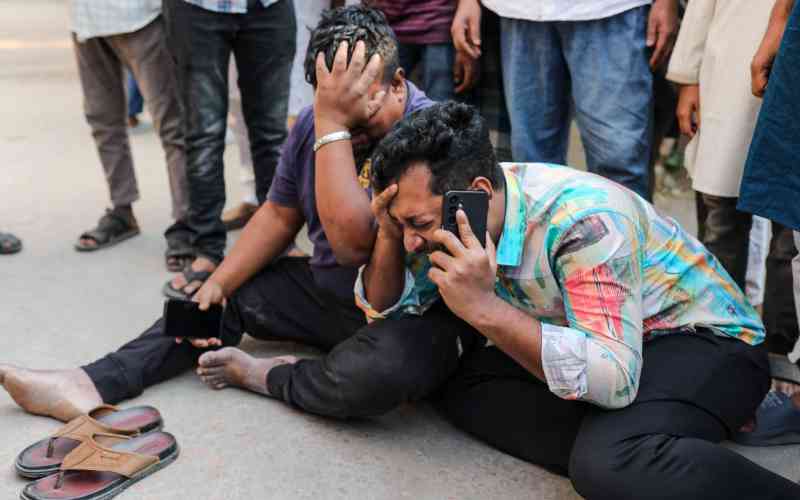
A low-magnitude tremor hit Bangladesh on Saturday, the national meterological service said, a day after a powerful earthquake struck outside the capital Dhaka and killed at least 10 people.Updating earlier tolls from Friday's 5.5-magnitude quake, disaster management official Ishtiaqe Ahmed told AFP that "the number of casualties has reached 10, while a few hundreds were injured."The first earthquake was felt in Dhaka and neighbouring districts, causing widespread destruction.Omar Faruq of the Bangladesh Meteorological Department said another minor jolt was recorded on Saturday at 10:36 am (0436 GMT).Follow The Standard
channel
on WhatsAppThe epicentre of the 3.3-magnitude tremor was in Ashulia, just north of the capital, the meteorologist told AFP.Aftershocks such as this are common after major earthquakes, but for some in Bangladesh, it has added to fears of an even greater disaster."I don't feel safe yet, as there was another jolt this morning in Ashulia. Maybe we are next," said Shahnaj Parvin.The 44-year-old, who lives near the epicentre of Friday's earthquake, told AFP she had never experienced such a tremor.Cracks have developed in dozens of houses in her area, she said."I was hanging my children's clothes on the washing line when the tremor struck," added Parvin."I held onto a mahogany tree, and when I returned home, I found my glassware broken."The government has activated Bangladesh's emergency operation centre to assess the scale of the damage and to coordinate relief and rescue operations.Rubayet Kabir of the Meteorological Department's Earthquake Observation and Research Center said that Bangladesh's geography makes the country of 170 million people prone to quakes."That's why we experience earthquakes quite frequently, though they are not as strong as the one" on Friday, he told AFP."Some small tremors are expected after any major earthquake," Kabir said.Stay informed. Subscribe to our newsletterBy clicking on theSIGN UPbutton, you agree to ourTerms & Conditionsand thePrivacy PolicySIGN UP"There has been no massive earthquake in the last 100 years or more, but Bangladesh has been vulnerable for quite some time."Stay Informed, Stay Empowered: Download the Standard ePaper App!Follow The Standard
channel
on WhatsApp
Updating earlier tolls from Friday's 5.5-magnitude quake, disaster management official Ishtiaqe Ahmed told AFP that "the number of casualties has reached 10, while a few hundreds were injured."The first earthquake was felt in Dhaka and neighbouring districts, causing widespread destruction.Omar Faruq of the Bangladesh Meteorological Department said another minor jolt was recorded on Saturday at 10:36 am (0436 GMT).Follow The Standard
channel
on WhatsAppThe epicentre of the 3.3-magnitude tremor was in Ashulia, just north of the capital, the meteorologist told AFP.Aftershocks such as this are common after major earthquakes, but for some in Bangladesh, it has added to fears of an even greater disaster."I don't feel safe yet, as there was another jolt this morning in Ashulia. Maybe we are next," said Shahnaj Parvin.The 44-year-old, who lives near the epicentre of Friday's earthquake, told AFP she had never experienced such a tremor.Cracks have developed in dozens of houses in her area, she said."I was hanging my children's clothes on the washing line when the tremor struck," added Parvin."I held onto a mahogany tree, and when I returned home, I found my glassware broken."The government has activated Bangladesh's emergency operation centre to assess the scale of the damage and to coordinate relief and rescue operations.Rubayet Kabir of the Meteorological Department's Earthquake Observation and Research Center said that Bangladesh's geography makes the country of 170 million people prone to quakes."That's why we experience earthquakes quite frequently, though they are not as strong as the one" on Friday, he told AFP."Some small tremors are expected after any major earthquake," Kabir said.Stay informed. Subscribe to our newsletterBy clicking on theSIGN UPbutton, you agree to ourTerms & Conditionsand thePrivacy PolicySIGN UP"There has been no massive earthquake in the last 100 years or more, but Bangladesh has been vulnerable for quite some time."Stay Informed, Stay Empowered: Download the Standard ePaper App!Follow The Standard
channel
on WhatsApp
The first earthquake was felt in Dhaka and neighbouring districts, causing widespread destruction.Omar Faruq of the Bangladesh Meteorological Department said another minor jolt was recorded on Saturday at 10:36 am (0436 GMT).Follow The Standard
channel
on WhatsAppThe epicentre of the 3.3-magnitude tremor was in Ashulia, just north of the capital, the meteorologist told AFP.Aftershocks such as this are common after major earthquakes, but for some in Bangladesh, it has added to fears of an even greater disaster."I don't feel safe yet, as there was another jolt this morning in Ashulia. Maybe we are next," said Shahnaj Parvin.The 44-year-old, who lives near the epicentre of Friday's earthquake, told AFP she had never experienced such a tremor.Cracks have developed in dozens of houses in her area, she said."I was hanging my children's clothes on the washing line when the tremor struck," added Parvin."I held onto a mahogany tree, and when I returned home, I found my glassware broken."The government has activated Bangladesh's emergency operation centre to assess the scale of the damage and to coordinate relief and rescue operations.Rubayet Kabir of the Meteorological Department's Earthquake Observation and Research Center said that Bangladesh's geography makes the country of 170 million people prone to quakes."That's why we experience earthquakes quite frequently, though they are not as strong as the one" on Friday, he told AFP."Some small tremors are expected after any major earthquake," Kabir said.Stay informed. Subscribe to our newsletterBy clicking on theSIGN UPbutton, you agree to ourTerms & Conditionsand thePrivacy PolicySIGN UP"There has been no massive earthquake in the last 100 years or more, but Bangladesh has been vulnerable for quite some time."Stay Informed, Stay Empowered: Download the Standard ePaper App!Follow The Standard
channel
on WhatsApp
Omar Faruq of the Bangladesh Meteorological Department said another minor jolt was recorded on Saturday at 10:36 am (0436 GMT).Follow The Standard
channel
on WhatsAppThe epicentre of the 3.3-magnitude tremor was in Ashulia, just north of the capital, the meteorologist told AFP.Aftershocks such as this are common after major earthquakes, but for some in Bangladesh, it has added to fears of an even greater disaster."I don't feel safe yet, as there was another jolt this morning in Ashulia. Maybe we are next," said Shahnaj Parvin.The 44-year-old, who lives near the epicentre of Friday's earthquake, told AFP she had never experienced such a tremor.Cracks have developed in dozens of houses in her area, she said."I was hanging my children's clothes on the washing line when the tremor struck," added Parvin."I held onto a mahogany tree, and when I returned home, I found my glassware broken."The government has activated Bangladesh's emergency operation centre to assess the scale of the damage and to coordinate relief and rescue operations.Rubayet Kabir of the Meteorological Department's Earthquake Observation and Research Center said that Bangladesh's geography makes the country of 170 million people prone to quakes."That's why we experience earthquakes quite frequently, though they are not as strong as the one" on Friday, he told AFP."Some small tremors are expected after any major earthquake," Kabir said.Stay informed. Subscribe to our newsletterBy clicking on theSIGN UPbutton, you agree to ourTerms & Conditionsand thePrivacy PolicySIGN UP"There has been no massive earthquake in the last 100 years or more, but Bangladesh has been vulnerable for quite some time."Stay Informed, Stay Empowered: Download the Standard ePaper App!Follow The Standard
channel
on WhatsApp
The epicentre of the 3.3-magnitude tremor was in Ashulia, just north of the capital, the meteorologist told AFP.Aftershocks such as this are common after major earthquakes, but for some in Bangladesh, it has added to fears of an even greater disaster."I don't feel safe yet, as there was another jolt this morning in Ashulia. Maybe we are next," said Shahnaj Parvin.The 44-year-old, who lives near the epicentre of Friday's earthquake, told AFP she had never experienced such a tremor.Cracks have developed in dozens of houses in her area, she said."I was hanging my children's clothes on the washing line when the tremor struck," added Parvin."I held onto a mahogany tree, and when I returned home, I found my glassware broken."The government has activated Bangladesh's emergency operation centre to assess the scale of the damage and to coordinate relief and rescue operations.Rubayet Kabir of the Meteorological Department's Earthquake Observation and Research Center said that Bangladesh's geography makes the country of 170 million people prone to quakes."That's why we experience earthquakes quite frequently, though they are not as strong as the one" on Friday, he told AFP."Some small tremors are expected after any major earthquake," Kabir said.Stay informed. Subscribe to our newsletterBy clicking on theSIGN UPbutton, you agree to ourTerms & Conditionsand thePrivacy PolicySIGN UP"There has been no massive earthquake in the last 100 years or more, but Bangladesh has been vulnerable for quite some time."Stay Informed, Stay Empowered: Download the Standard ePaper App!Follow The Standard
channel
on WhatsApp
Aftershocks such as this are common after major earthquakes, but for some in Bangladesh, it has added to fears of an even greater disaster."I don't feel safe yet, as there was another jolt this morning in Ashulia. Maybe we are next," said Shahnaj Parvin.The 44-year-old, who lives near the epicentre of Friday's earthquake, told AFP she had never experienced such a tremor.Cracks have developed in dozens of houses in her area, she said."I was hanging my children's clothes on the washing line when the tremor struck," added Parvin."I held onto a mahogany tree, and when I returned home, I found my glassware broken."The government has activated Bangladesh's emergency operation centre to assess the scale of the damage and to coordinate relief and rescue operations.Rubayet Kabir of the Meteorological Department's Earthquake Observation and Research Center said that Bangladesh's geography makes the country of 170 million people prone to quakes."That's why we experience earthquakes quite frequently, though they are not as strong as the one" on Friday, he told AFP."Some small tremors are expected after any major earthquake," Kabir said.Stay informed. Subscribe to our newsletterBy clicking on theSIGN UPbutton, you agree to ourTerms & Conditionsand thePrivacy PolicySIGN UP"There has been no massive earthquake in the last 100 years or more, but Bangladesh has been vulnerable for quite some time."Stay Informed, Stay Empowered: Download the Standard ePaper App!Follow The Standard
channel
on WhatsApp
"I don't feel safe yet, as there was another jolt this morning in Ashulia. Maybe we are next," said Shahnaj Parvin.The 44-year-old, who lives near the epicentre of Friday's earthquake, told AFP she had never experienced such a tremor.Cracks have developed in dozens of houses in her area, she said."I was hanging my children's clothes on the washing line when the tremor struck," added Parvin."I held onto a mahogany tree, and when I returned home, I found my glassware broken."The government has activated Bangladesh's emergency operation centre to assess the scale of the damage and to coordinate relief and rescue operations.Rubayet Kabir of the Meteorological Department's Earthquake Observation and Research Center said that Bangladesh's geography makes the country of 170 million people prone to quakes."That's why we experience earthquakes quite frequently, though they are not as strong as the one" on Friday, he told AFP."Some small tremors are expected after any major earthquake," Kabir said.Stay informed. Subscribe to our newsletterBy clicking on theSIGN UPbutton, you agree to ourTerms & Conditionsand thePrivacy PolicySIGN UP"There has been no massive earthquake in the last 100 years or more, but Bangladesh has been vulnerable for quite some time."Stay Informed, Stay Empowered: Download the Standard ePaper App!Follow The Standard
channel
on WhatsApp
The 44-year-old, who lives near the epicentre of Friday's earthquake, told AFP she had never experienced such a tremor.Cracks have developed in dozens of houses in her area, she said."I was hanging my children's clothes on the washing line when the tremor struck," added Parvin."I held onto a mahogany tree, and when I returned home, I found my glassware broken."The government has activated Bangladesh's emergency operation centre to assess the scale of the damage and to coordinate relief and rescue operations.Rubayet Kabir of the Meteorological Department's Earthquake Observation and Research Center said that Bangladesh's geography makes the country of 170 million people prone to quakes."That's why we experience earthquakes quite frequently, though they are not as strong as the one" on Friday, he told AFP."Some small tremors are expected after any major earthquake," Kabir said.Stay informed. Subscribe to our newsletterBy clicking on theSIGN UPbutton, you agree to ourTerms & Conditionsand thePrivacy PolicySIGN UP"There has been no massive earthquake in the last 100 years or more, but Bangladesh has been vulnerable for quite some time."Stay Informed, Stay Empowered: Download the Standard ePaper App!Follow The Standard
channel
on WhatsApp
Cracks have developed in dozens of houses in her area, she said."I was hanging my children's clothes on the washing line when the tremor struck," added Parvin."I held onto a mahogany tree, and when I returned home, I found my glassware broken."The government has activated Bangladesh's emergency operation centre to assess the scale of the damage and to coordinate relief and rescue operations.Rubayet Kabir of the Meteorological Department's Earthquake Observation and Research Center said that Bangladesh's geography makes the country of 170 million people prone to quakes."That's why we experience earthquakes quite frequently, though they are not as strong as the one" on Friday, he told AFP."Some small tremors are expected after any major earthquake," Kabir said.Stay informed. Subscribe to our newsletterBy clicking on theSIGN UPbutton, you agree to ourTerms & Conditionsand thePrivacy PolicySIGN UP"There has been no massive earthquake in the last 100 years or more, but Bangladesh has been vulnerable for quite some time."Stay Informed, Stay Empowered: Download the Standard ePaper App!Follow The Standard
channel
on WhatsApp
"I was hanging my children's clothes on the washing line when the tremor struck," added Parvin."I held onto a mahogany tree, and when I returned home, I found my glassware broken."The government has activated Bangladesh's emergency operation centre to assess the scale of the damage and to coordinate relief and rescue operations.Rubayet Kabir of the Meteorological Department's Earthquake Observation and Research Center said that Bangladesh's geography makes the country of 170 million people prone to quakes."That's why we experience earthquakes quite frequently, though they are not as strong as the one" on Friday, he told AFP."Some small tremors are expected after any major earthquake," Kabir said.Stay informed. Subscribe to our newsletterBy clicking on theSIGN UPbutton, you agree to ourTerms & Conditionsand thePrivacy PolicySIGN UP"There has been no massive earthquake in the last 100 years or more, but Bangladesh has been vulnerable for quite some time."Stay Informed, Stay Empowered: Download the Standard ePaper App!Follow The Standard
channel
on WhatsApp
"I held onto a mahogany tree, and when I returned home, I found my glassware broken."The government has activated Bangladesh's emergency operation centre to assess the scale of the damage and to coordinate relief and rescue operations.Rubayet Kabir of the Meteorological Department's Earthquake Observation and Research Center said that Bangladesh's geography makes the country of 170 million people prone to quakes."That's why we experience earthquakes quite frequently, though they are not as strong as the one" on Friday, he told AFP."Some small tremors are expected after any major earthquake," Kabir said.Stay informed. Subscribe to our newsletterBy clicking on theSIGN UPbutton, you agree to ourTerms & Conditionsand thePrivacy PolicySIGN UP"There has been no massive earthquake in the last 100 years or more, but Bangladesh has been vulnerable for quite some time."Stay Informed, Stay Empowered: Download the Standard ePaper App!Follow The Standard
channel
on WhatsApp
The government has activated Bangladesh's emergency operation centre to assess the scale of the damage and to coordinate relief and rescue operations.Rubayet Kabir of the Meteorological Department's Earthquake Observation and Research Center said that Bangladesh's geography makes the country of 170 million people prone to quakes."That's why we experience earthquakes quite frequently, though they are not as strong as the one" on Friday, he told AFP."Some small tremors are expected after any major earthquake," Kabir said.Stay informed. Subscribe to our newsletterBy clicking on theSIGN UPbutton, you agree to ourTerms & Conditionsand thePrivacy PolicySIGN UP"There has been no massive earthquake in the last 100 years or more, but Bangladesh has been vulnerable for quite some time."Stay Informed, Stay Empowered: Download the Standard ePaper App!Follow The Standard
channel
on WhatsApp
Rubayet Kabir of the Meteorological Department's Earthquake Observation and Research Center said that Bangladesh's geography makes the country of 170 million people prone to quakes."That's why we experience earthquakes quite frequently, though they are not as strong as the one" on Friday, he told AFP."Some small tremors are expected after any major earthquake," Kabir said.Stay informed. Subscribe to our newsletterBy clicking on theSIGN UPbutton, you agree to ourTerms & Conditionsand thePrivacy PolicySIGN UP"There has been no massive earthquake in the last 100 years or more, but Bangladesh has been vulnerable for quite some time."Stay Informed, Stay Empowered: Download the Standard ePaper App!Follow The Standard
channel
on WhatsApp
"That's why we experience earthquakes quite frequently, though they are not as strong as the one" on Friday, he told AFP."Some small tremors are expected after any major earthquake," Kabir said.Stay informed. Subscribe to our newsletterBy clicking on theSIGN UPbutton, you agree to ourTerms & Conditionsand thePrivacy PolicySIGN UP"There has been no massive earthquake in the last 100 years or more, but Bangladesh has been vulnerable for quite some time."Stay Informed, Stay Empowered: Download the Standard ePaper App!Follow The Standard
channel
on WhatsApp
"Some small tremors are expected after any major earthquake," Kabir said.Stay informed. Subscribe to our newsletterBy clicking on theSIGN UPbutton, you agree to ourTerms & Conditionsand thePrivacy PolicySIGN UP"There has been no massive earthquake in the last 100 years or more, but Bangladesh has been vulnerable for quite some time."Stay Informed, Stay Empowered: Download the Standard ePaper App!Follow The Standard
channel
on WhatsApp
"There has been no massive earthquake in the last 100 years or more, but Bangladesh has been vulnerable for quite some time."Stay Informed, Stay Empowered: Download the Standard ePaper App!Follow The Standard
channel
on WhatsApp
Subscribe to our newsletter and stay updated on the latest developments and special
offers!
Pick your favourite topics below for a tailor made homepage just for you