
Allegations of US involvement in Iran protests not unfounded
Source: The Standard
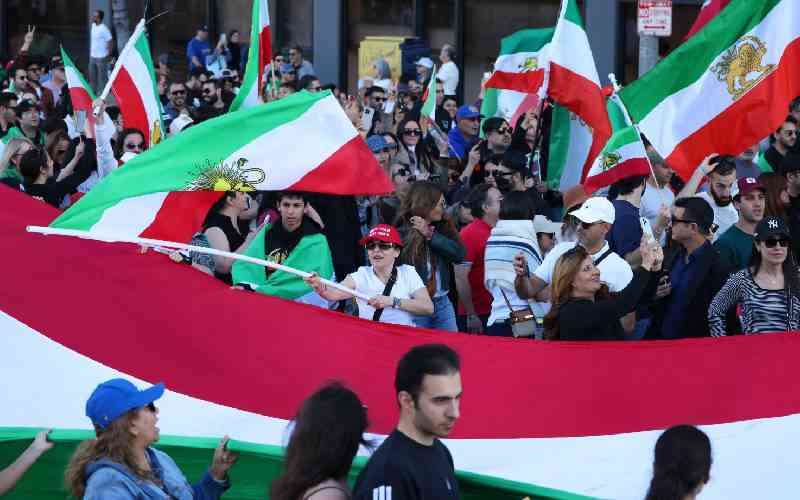
People take part in a “Free Iran” rally in Los Angeles, California, on January 11, 2026.[AFP]
Iran has presented the latest case on American interference, proving that President Donald Trump has indeed been quite busy in his quest to dominate the world. The protests have once again ignited a familiar geopolitical debate, raising questions on whether they are purely organic expressions of popular discontent or are being weaponised by external powers, particularly the United States and Israel.One is inclined to think that this is the case as Iranian officials, alongside regional actors such as Turkey, have accused Mossad and US agencies of exploiting the unrest to destabilise the Iranian state. While such claims are often dismissed outright in Western media as authoritarian deflection, doing so ignores a long and well-documented history of American and allied interventionism strategies across the Global South. The question, then, is not whether Iranians have legitimate grievances, but whether these grievances are being folded into a broader imperial project that extends American hegemony through indirect violence.Iran’s current unrest emerged amid sanction-led economic collapse and currency devaluation. These conditions are real and deeply felt. Nevertheless, history shows that moments of genuine social crisis are precisely when foreign intelligence agencies are most likely to intervene, not only by manufacturing dissent, but also by steering narratives and internationalising internal conflict. Analysts and regional officials have pointed to Israeli intelligence activity in the information space, including Farsi-language messaging aimed at Iranian audiences, and overt political signalling by Israeli and American leaders encouraging the protestors.Follow The Standard
channel
on WhatsAppAs well, social media discussions of the uprising point to popular support from Americans. Considering Trump’s recent worrying actions in Venezuela, it is not far-fetched to assume that imperialism has now been spread to the East.The 2021 Cuban protests provide perhaps the clearest historical parallel. Sparked by economic hardship exacerbated by decades of American sanctions, the protests were immediately framed in the Western media as evidence of socialist failure, whilst American politicians openly called for intervention. The Cuban government’s claims of US-backed destabilisation were widely mocked, despite extensive documentation of American funding for opposition media, activists, and digital mobilisation efforts. What mattered was not whether every protester was a foreign entity, but that legitimate suffering was instrumentalised to advance a long-standing regime-change agenda.The factoring in of sanctions in these situations cannot be ignored. Just like Cuba and Venezuela before it, Iran is subject to multiple sanctions that cripple its development and growth thereby creating room for discontent amongst its people, a recipe for protest in future for those who are not politically inclined. This is not to say that the Khamenei’s rule has been a good one. But circumstances prove that much of the failure is a result of American and Israeli influence. Let us not forget, as well, that Iran is an ally of Cuba and Venezuela.Across these cases, therefore, a consistent logic emerges, whereby populations in the Global South become sites of managed chaos where suffering is tolerated so long as it advances imperial objectives. Protest becomes valuable not because it delivers justice, but because it weakens states that resist American dominance. In Iran’s case, the human cost of unrest is already staggering, with loss of lives being considered the norm. Yet, Western political rhetoric often treats this violence as an acceptable price for freedom, echoing the same moral reasoning applied in Iraq, Libya, Venezuela, and elsewhere.To recognise the role of Mossad, the US, or allied actors in exploiting Iran’s unrest is not to deny Iranian agency or absolve the Iranian state of repression. Rather, it is to reject a false binary that presents protests as either fully organic or fully fabricated. In reality, imperial power operates in the grey zone, amplifying and internationalising dissent to produce outcomes favourable to hegemonic interests. Until this pattern is confronted honestly, protests in the Global South will continue to be selectively celebrated or condemned, not based on principle but on their usefulness to empire and, as a consequence, America will continue to have free reign on the planet to pick and choose what governments survive, with the explicit consent of the watching public.Ms Njahira is an international lawyerFollow The Standard
channel
on WhatsApp
One is inclined to think that this is the case as Iranian officials, alongside regional actors such as Turkey, have accused Mossad and US agencies of exploiting the unrest to destabilise the Iranian state. While such claims are often dismissed outright in Western media as authoritarian deflection, doing so ignores a long and well-documented history of American and allied interventionism strategies across the Global South. The question, then, is not whether Iranians have legitimate grievances, but whether these grievances are being folded into a broader imperial project that extends American hegemony through indirect violence.Iran’s current unrest emerged amid sanction-led economic collapse and currency devaluation. These conditions are real and deeply felt. Nevertheless, history shows that moments of genuine social crisis are precisely when foreign intelligence agencies are most likely to intervene, not only by manufacturing dissent, but also by steering narratives and internationalising internal conflict. Analysts and regional officials have pointed to Israeli intelligence activity in the information space, including Farsi-language messaging aimed at Iranian audiences, and overt political signalling by Israeli and American leaders encouraging the protestors.Follow The Standard
channel
on WhatsAppAs well, social media discussions of the uprising point to popular support from Americans. Considering Trump’s recent worrying actions in Venezuela, it is not far-fetched to assume that imperialism has now been spread to the East.The 2021 Cuban protests provide perhaps the clearest historical parallel. Sparked by economic hardship exacerbated by decades of American sanctions, the protests were immediately framed in the Western media as evidence of socialist failure, whilst American politicians openly called for intervention. The Cuban government’s claims of US-backed destabilisation were widely mocked, despite extensive documentation of American funding for opposition media, activists, and digital mobilisation efforts. What mattered was not whether every protester was a foreign entity, but that legitimate suffering was instrumentalised to advance a long-standing regime-change agenda.The factoring in of sanctions in these situations cannot be ignored. Just like Cuba and Venezuela before it, Iran is subject to multiple sanctions that cripple its development and growth thereby creating room for discontent amongst its people, a recipe for protest in future for those who are not politically inclined. This is not to say that the Khamenei’s rule has been a good one. But circumstances prove that much of the failure is a result of American and Israeli influence. Let us not forget, as well, that Iran is an ally of Cuba and Venezuela.Across these cases, therefore, a consistent logic emerges, whereby populations in the Global South become sites of managed chaos where suffering is tolerated so long as it advances imperial objectives. Protest becomes valuable not because it delivers justice, but because it weakens states that resist American dominance. In Iran’s case, the human cost of unrest is already staggering, with loss of lives being considered the norm. Yet, Western political rhetoric often treats this violence as an acceptable price for freedom, echoing the same moral reasoning applied in Iraq, Libya, Venezuela, and elsewhere.To recognise the role of Mossad, the US, or allied actors in exploiting Iran’s unrest is not to deny Iranian agency or absolve the Iranian state of repression. Rather, it is to reject a false binary that presents protests as either fully organic or fully fabricated. In reality, imperial power operates in the grey zone, amplifying and internationalising dissent to produce outcomes favourable to hegemonic interests. Until this pattern is confronted honestly, protests in the Global South will continue to be selectively celebrated or condemned, not based on principle but on their usefulness to empire and, as a consequence, America will continue to have free reign on the planet to pick and choose what governments survive, with the explicit consent of the watching public.Ms Njahira is an international lawyerFollow The Standard
channel
on WhatsApp
Iran’s current unrest emerged amid sanction-led economic collapse and currency devaluation. These conditions are real and deeply felt. Nevertheless, history shows that moments of genuine social crisis are precisely when foreign intelligence agencies are most likely to intervene, not only by manufacturing dissent, but also by steering narratives and internationalising internal conflict. Analysts and regional officials have pointed to Israeli intelligence activity in the information space, including Farsi-language messaging aimed at Iranian audiences, and overt political signalling by Israeli and American leaders encouraging the protestors.Follow The Standard
channel
on WhatsAppAs well, social media discussions of the uprising point to popular support from Americans. Considering Trump’s recent worrying actions in Venezuela, it is not far-fetched to assume that imperialism has now been spread to the East.The 2021 Cuban protests provide perhaps the clearest historical parallel. Sparked by economic hardship exacerbated by decades of American sanctions, the protests were immediately framed in the Western media as evidence of socialist failure, whilst American politicians openly called for intervention. The Cuban government’s claims of US-backed destabilisation were widely mocked, despite extensive documentation of American funding for opposition media, activists, and digital mobilisation efforts. What mattered was not whether every protester was a foreign entity, but that legitimate suffering was instrumentalised to advance a long-standing regime-change agenda.The factoring in of sanctions in these situations cannot be ignored. Just like Cuba and Venezuela before it, Iran is subject to multiple sanctions that cripple its development and growth thereby creating room for discontent amongst its people, a recipe for protest in future for those who are not politically inclined. This is not to say that the Khamenei’s rule has been a good one. But circumstances prove that much of the failure is a result of American and Israeli influence. Let us not forget, as well, that Iran is an ally of Cuba and Venezuela.Across these cases, therefore, a consistent logic emerges, whereby populations in the Global South become sites of managed chaos where suffering is tolerated so long as it advances imperial objectives. Protest becomes valuable not because it delivers justice, but because it weakens states that resist American dominance. In Iran’s case, the human cost of unrest is already staggering, with loss of lives being considered the norm. Yet, Western political rhetoric often treats this violence as an acceptable price for freedom, echoing the same moral reasoning applied in Iraq, Libya, Venezuela, and elsewhere.To recognise the role of Mossad, the US, or allied actors in exploiting Iran’s unrest is not to deny Iranian agency or absolve the Iranian state of repression. Rather, it is to reject a false binary that presents protests as either fully organic or fully fabricated. In reality, imperial power operates in the grey zone, amplifying and internationalising dissent to produce outcomes favourable to hegemonic interests. Until this pattern is confronted honestly, protests in the Global South will continue to be selectively celebrated or condemned, not based on principle but on their usefulness to empire and, as a consequence, America will continue to have free reign on the planet to pick and choose what governments survive, with the explicit consent of the watching public.Ms Njahira is an international lawyerFollow The Standard
channel
on WhatsApp
As well, social media discussions of the uprising point to popular support from Americans. Considering Trump’s recent worrying actions in Venezuela, it is not far-fetched to assume that imperialism has now been spread to the East.The 2021 Cuban protests provide perhaps the clearest historical parallel. Sparked by economic hardship exacerbated by decades of American sanctions, the protests were immediately framed in the Western media as evidence of socialist failure, whilst American politicians openly called for intervention. The Cuban government’s claims of US-backed destabilisation were widely mocked, despite extensive documentation of American funding for opposition media, activists, and digital mobilisation efforts. What mattered was not whether every protester was a foreign entity, but that legitimate suffering was instrumentalised to advance a long-standing regime-change agenda.The factoring in of sanctions in these situations cannot be ignored. Just like Cuba and Venezuela before it, Iran is subject to multiple sanctions that cripple its development and growth thereby creating room for discontent amongst its people, a recipe for protest in future for those who are not politically inclined. This is not to say that the Khamenei’s rule has been a good one. But circumstances prove that much of the failure is a result of American and Israeli influence. Let us not forget, as well, that Iran is an ally of Cuba and Venezuela.Across these cases, therefore, a consistent logic emerges, whereby populations in the Global South become sites of managed chaos where suffering is tolerated so long as it advances imperial objectives. Protest becomes valuable not because it delivers justice, but because it weakens states that resist American dominance. In Iran’s case, the human cost of unrest is already staggering, with loss of lives being considered the norm. Yet, Western political rhetoric often treats this violence as an acceptable price for freedom, echoing the same moral reasoning applied in Iraq, Libya, Venezuela, and elsewhere.To recognise the role of Mossad, the US, or allied actors in exploiting Iran’s unrest is not to deny Iranian agency or absolve the Iranian state of repression. Rather, it is to reject a false binary that presents protests as either fully organic or fully fabricated. In reality, imperial power operates in the grey zone, amplifying and internationalising dissent to produce outcomes favourable to hegemonic interests. Until this pattern is confronted honestly, protests in the Global South will continue to be selectively celebrated or condemned, not based on principle but on their usefulness to empire and, as a consequence, America will continue to have free reign on the planet to pick and choose what governments survive, with the explicit consent of the watching public.Ms Njahira is an international lawyerFollow The Standard
channel
on WhatsApp
The 2021 Cuban protests provide perhaps the clearest historical parallel. Sparked by economic hardship exacerbated by decades of American sanctions, the protests were immediately framed in the Western media as evidence of socialist failure, whilst American politicians openly called for intervention. The Cuban government’s claims of US-backed destabilisation were widely mocked, despite extensive documentation of American funding for opposition media, activists, and digital mobilisation efforts. What mattered was not whether every protester was a foreign entity, but that legitimate suffering was instrumentalised to advance a long-standing regime-change agenda.The factoring in of sanctions in these situations cannot be ignored. Just like Cuba and Venezuela before it, Iran is subject to multiple sanctions that cripple its development and growth thereby creating room for discontent amongst its people, a recipe for protest in future for those who are not politically inclined. This is not to say that the Khamenei’s rule has been a good one. But circumstances prove that much of the failure is a result of American and Israeli influence. Let us not forget, as well, that Iran is an ally of Cuba and Venezuela.Across these cases, therefore, a consistent logic emerges, whereby populations in the Global South become sites of managed chaos where suffering is tolerated so long as it advances imperial objectives. Protest becomes valuable not because it delivers justice, but because it weakens states that resist American dominance. In Iran’s case, the human cost of unrest is already staggering, with loss of lives being considered the norm. Yet, Western political rhetoric often treats this violence as an acceptable price for freedom, echoing the same moral reasoning applied in Iraq, Libya, Venezuela, and elsewhere.To recognise the role of Mossad, the US, or allied actors in exploiting Iran’s unrest is not to deny Iranian agency or absolve the Iranian state of repression. Rather, it is to reject a false binary that presents protests as either fully organic or fully fabricated. In reality, imperial power operates in the grey zone, amplifying and internationalising dissent to produce outcomes favourable to hegemonic interests. Until this pattern is confronted honestly, protests in the Global South will continue to be selectively celebrated or condemned, not based on principle but on their usefulness to empire and, as a consequence, America will continue to have free reign on the planet to pick and choose what governments survive, with the explicit consent of the watching public.Ms Njahira is an international lawyerFollow The Standard
channel
on WhatsApp
The factoring in of sanctions in these situations cannot be ignored. Just like Cuba and Venezuela before it, Iran is subject to multiple sanctions that cripple its development and growth thereby creating room for discontent amongst its people, a recipe for protest in future for those who are not politically inclined. This is not to say that the Khamenei’s rule has been a good one. But circumstances prove that much of the failure is a result of American and Israeli influence. Let us not forget, as well, that Iran is an ally of Cuba and Venezuela.Across these cases, therefore, a consistent logic emerges, whereby populations in the Global South become sites of managed chaos where suffering is tolerated so long as it advances imperial objectives. Protest becomes valuable not because it delivers justice, but because it weakens states that resist American dominance. In Iran’s case, the human cost of unrest is already staggering, with loss of lives being considered the norm. Yet, Western political rhetoric often treats this violence as an acceptable price for freedom, echoing the same moral reasoning applied in Iraq, Libya, Venezuela, and elsewhere.To recognise the role of Mossad, the US, or allied actors in exploiting Iran’s unrest is not to deny Iranian agency or absolve the Iranian state of repression. Rather, it is to reject a false binary that presents protests as either fully organic or fully fabricated. In reality, imperial power operates in the grey zone, amplifying and internationalising dissent to produce outcomes favourable to hegemonic interests. Until this pattern is confronted honestly, protests in the Global South will continue to be selectively celebrated or condemned, not based on principle but on their usefulness to empire and, as a consequence, America will continue to have free reign on the planet to pick and choose what governments survive, with the explicit consent of the watching public.Ms Njahira is an international lawyerFollow The Standard
channel
on WhatsApp
Across these cases, therefore, a consistent logic emerges, whereby populations in the Global South become sites of managed chaos where suffering is tolerated so long as it advances imperial objectives. Protest becomes valuable not because it delivers justice, but because it weakens states that resist American dominance. In Iran’s case, the human cost of unrest is already staggering, with loss of lives being considered the norm. Yet, Western political rhetoric often treats this violence as an acceptable price for freedom, echoing the same moral reasoning applied in Iraq, Libya, Venezuela, and elsewhere.To recognise the role of Mossad, the US, or allied actors in exploiting Iran’s unrest is not to deny Iranian agency or absolve the Iranian state of repression. Rather, it is to reject a false binary that presents protests as either fully organic or fully fabricated. In reality, imperial power operates in the grey zone, amplifying and internationalising dissent to produce outcomes favourable to hegemonic interests. Until this pattern is confronted honestly, protests in the Global South will continue to be selectively celebrated or condemned, not based on principle but on their usefulness to empire and, as a consequence, America will continue to have free reign on the planet to pick and choose what governments survive, with the explicit consent of the watching public.Ms Njahira is an international lawyerFollow The Standard
channel
on WhatsApp
To recognise the role of Mossad, the US, or allied actors in exploiting Iran’s unrest is not to deny Iranian agency or absolve the Iranian state of repression. Rather, it is to reject a false binary that presents protests as either fully organic or fully fabricated. In reality, imperial power operates in the grey zone, amplifying and internationalising dissent to produce outcomes favourable to hegemonic interests. Until this pattern is confronted honestly, protests in the Global South will continue to be selectively celebrated or condemned, not based on principle but on their usefulness to empire and, as a consequence, America will continue to have free reign on the planet to pick and choose what governments survive, with the explicit consent of the watching public.Ms Njahira is an international lawyerFollow The Standard
channel
on WhatsApp
Ms Njahira is an international lawyerFollow The Standard
channel
on WhatsApp
Subscribe to our newsletter and stay updated on the latest developments and special
offers!
Pick your favourite topics below for a tailor made homepage just for you