
Bottom-up thinking has transformed schools in Kuria
Source: The Standard
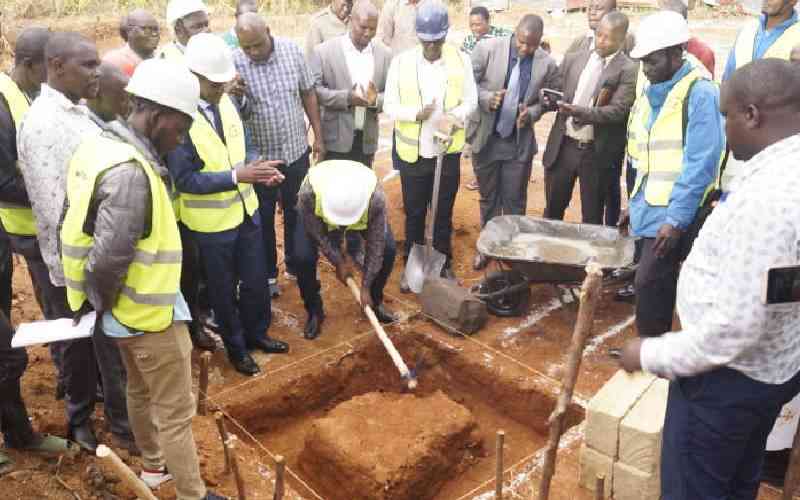
Migori Deputy Governor Gimunta Mahiri during the groundbreaking for a modern dormitory at Kebaroti Mixed Secondary School in Kuria East Sub-County, Migori County.[File, Standard]
For a long time, Kuria was defined by farming and livestock keeping, with education playing a secondary role in household priorities.As recently as three decades ago, most families struggled to afford secondary school fees, and educating girls was often discouraged because the perceived benefits would be realised elsewhere through marriage.At that time, the entire region relied on barely six established secondary schools, and university entry from Kuria was rare enough to be counted in tens rather than hundreds.Follow The Standard
channel
on WhatsAppThat reality has changed profoundly. Quietly and without spectacle, Kuria has begun to mirror the logic of President William Ruto’s Bottom-Up Economic Transformation Agenda by investing in the most reliable engine of social mobility: Education.Over the last three decades, the number of secondary schools across Mabera, Kuria West, Kuria East, and Ntimaru has expanded from fewer than 10 to more than 60. This growth has not merely widened access; it has improved outcomes.Where fewer than 20 learners once qualified for direct university entry in a year, Kuria now produces more than 2,000, including placements in institutions beyond the region. Several schools now consistently post mean grades of C-plus and above, a signal that the region is no longer just participating but competing.This transformation has been made possible by deliberate policy choices that reflect bottom-up thinking. Government capitation, bursaries, scholarships, and devolved financing have eased the burden on households that were once locked out by school fees alone. Education has shifted from being an elite aspiration to a realistic pathway for ordinary families, allowing talent to rise from the grassroots.Academic giantsAlongside this support, a new generation of schools has emerged with clear leadership, discipline, and community ownership.Institutions such as Kionyo, Maeta, Nyamagongwi, Makararangwe, Mathias Nyanchabo, Gokeharaka, Nyamaharaga, Nyametaburo, and Ikerege have shown that rural schools can grow into academic giants when teachers are supported, infrastructure improved, and expectations are raised.Recent examination results from some of these schools show that more than half of candidates attained direct university entry, despite persistent social and economic challenges.The journey, however, is not complete. Performance gaps remain, and poverty, limited learning resources, and weak foundations in early education still hold back some learners. For Kuria to fully convert alignment into acceleration, investment must deepen in teacher development, learner welfare, STEM facilities, technical and vocational training, and accountable school leadership.Even so, the direction is clear. Kuria is no longer waiting on the margins of development. Through education led growth and strong grassroots institutions, the region is building a pipeline of professionals, entrepreneurs, and public servants who will shape its future and contribute meaningfully to Kenya’s national transformation.The rise of new giant schools in Kuria is not an accident. It is evidence that when bottom-up policies meet community resolve, lasting economic and social change follows.Stay informed. Subscribe to our newsletterBy clicking on theSIGN UPbutton, you agree to ourTerms & Conditionsand thePrivacy PolicySIGN UPMr Nokwi is a senior economist and the Municipal Manager for Kehancha MunicipalityStay Informed, Stay Empowered: Download the Standard ePaper App!Follow The Standard
channel
on WhatsApp
As recently as three decades ago, most families struggled to afford secondary school fees, and educating girls was often discouraged because the perceived benefits would be realised elsewhere through marriage.At that time, the entire region relied on barely six established secondary schools, and university entry from Kuria was rare enough to be counted in tens rather than hundreds.Follow The Standard
channel
on WhatsAppThat reality has changed profoundly. Quietly and without spectacle, Kuria has begun to mirror the logic of President William Ruto’s Bottom-Up Economic Transformation Agenda by investing in the most reliable engine of social mobility: Education.Over the last three decades, the number of secondary schools across Mabera, Kuria West, Kuria East, and Ntimaru has expanded from fewer than 10 to more than 60. This growth has not merely widened access; it has improved outcomes.Where fewer than 20 learners once qualified for direct university entry in a year, Kuria now produces more than 2,000, including placements in institutions beyond the region. Several schools now consistently post mean grades of C-plus and above, a signal that the region is no longer just participating but competing.This transformation has been made possible by deliberate policy choices that reflect bottom-up thinking. Government capitation, bursaries, scholarships, and devolved financing have eased the burden on households that were once locked out by school fees alone. Education has shifted from being an elite aspiration to a realistic pathway for ordinary families, allowing talent to rise from the grassroots.Academic giantsAlongside this support, a new generation of schools has emerged with clear leadership, discipline, and community ownership.Institutions such as Kionyo, Maeta, Nyamagongwi, Makararangwe, Mathias Nyanchabo, Gokeharaka, Nyamaharaga, Nyametaburo, and Ikerege have shown that rural schools can grow into academic giants when teachers are supported, infrastructure improved, and expectations are raised.Recent examination results from some of these schools show that more than half of candidates attained direct university entry, despite persistent social and economic challenges.The journey, however, is not complete. Performance gaps remain, and poverty, limited learning resources, and weak foundations in early education still hold back some learners. For Kuria to fully convert alignment into acceleration, investment must deepen in teacher development, learner welfare, STEM facilities, technical and vocational training, and accountable school leadership.Even so, the direction is clear. Kuria is no longer waiting on the margins of development. Through education led growth and strong grassroots institutions, the region is building a pipeline of professionals, entrepreneurs, and public servants who will shape its future and contribute meaningfully to Kenya’s national transformation.The rise of new giant schools in Kuria is not an accident. It is evidence that when bottom-up policies meet community resolve, lasting economic and social change follows.Stay informed. Subscribe to our newsletterBy clicking on theSIGN UPbutton, you agree to ourTerms & Conditionsand thePrivacy PolicySIGN UPMr Nokwi is a senior economist and the Municipal Manager for Kehancha MunicipalityStay Informed, Stay Empowered: Download the Standard ePaper App!Follow The Standard
channel
on WhatsApp
At that time, the entire region relied on barely six established secondary schools, and university entry from Kuria was rare enough to be counted in tens rather than hundreds.Follow The Standard
channel
on WhatsAppThat reality has changed profoundly. Quietly and without spectacle, Kuria has begun to mirror the logic of President William Ruto’s Bottom-Up Economic Transformation Agenda by investing in the most reliable engine of social mobility: Education.Over the last three decades, the number of secondary schools across Mabera, Kuria West, Kuria East, and Ntimaru has expanded from fewer than 10 to more than 60. This growth has not merely widened access; it has improved outcomes.Where fewer than 20 learners once qualified for direct university entry in a year, Kuria now produces more than 2,000, including placements in institutions beyond the region. Several schools now consistently post mean grades of C-plus and above, a signal that the region is no longer just participating but competing.This transformation has been made possible by deliberate policy choices that reflect bottom-up thinking. Government capitation, bursaries, scholarships, and devolved financing have eased the burden on households that were once locked out by school fees alone. Education has shifted from being an elite aspiration to a realistic pathway for ordinary families, allowing talent to rise from the grassroots.Academic giantsAlongside this support, a new generation of schools has emerged with clear leadership, discipline, and community ownership.Institutions such as Kionyo, Maeta, Nyamagongwi, Makararangwe, Mathias Nyanchabo, Gokeharaka, Nyamaharaga, Nyametaburo, and Ikerege have shown that rural schools can grow into academic giants when teachers are supported, infrastructure improved, and expectations are raised.Recent examination results from some of these schools show that more than half of candidates attained direct university entry, despite persistent social and economic challenges.The journey, however, is not complete. Performance gaps remain, and poverty, limited learning resources, and weak foundations in early education still hold back some learners. For Kuria to fully convert alignment into acceleration, investment must deepen in teacher development, learner welfare, STEM facilities, technical and vocational training, and accountable school leadership.Even so, the direction is clear. Kuria is no longer waiting on the margins of development. Through education led growth and strong grassroots institutions, the region is building a pipeline of professionals, entrepreneurs, and public servants who will shape its future and contribute meaningfully to Kenya’s national transformation.The rise of new giant schools in Kuria is not an accident. It is evidence that when bottom-up policies meet community resolve, lasting economic and social change follows.Stay informed. Subscribe to our newsletterBy clicking on theSIGN UPbutton, you agree to ourTerms & Conditionsand thePrivacy PolicySIGN UPMr Nokwi is a senior economist and the Municipal Manager for Kehancha MunicipalityStay Informed, Stay Empowered: Download the Standard ePaper App!Follow The Standard
channel
on WhatsApp
That reality has changed profoundly. Quietly and without spectacle, Kuria has begun to mirror the logic of President William Ruto’s Bottom-Up Economic Transformation Agenda by investing in the most reliable engine of social mobility: Education.Over the last three decades, the number of secondary schools across Mabera, Kuria West, Kuria East, and Ntimaru has expanded from fewer than 10 to more than 60. This growth has not merely widened access; it has improved outcomes.Where fewer than 20 learners once qualified for direct university entry in a year, Kuria now produces more than 2,000, including placements in institutions beyond the region. Several schools now consistently post mean grades of C-plus and above, a signal that the region is no longer just participating but competing.This transformation has been made possible by deliberate policy choices that reflect bottom-up thinking. Government capitation, bursaries, scholarships, and devolved financing have eased the burden on households that were once locked out by school fees alone. Education has shifted from being an elite aspiration to a realistic pathway for ordinary families, allowing talent to rise from the grassroots.Academic giantsAlongside this support, a new generation of schools has emerged with clear leadership, discipline, and community ownership.Institutions such as Kionyo, Maeta, Nyamagongwi, Makararangwe, Mathias Nyanchabo, Gokeharaka, Nyamaharaga, Nyametaburo, and Ikerege have shown that rural schools can grow into academic giants when teachers are supported, infrastructure improved, and expectations are raised.Recent examination results from some of these schools show that more than half of candidates attained direct university entry, despite persistent social and economic challenges.The journey, however, is not complete. Performance gaps remain, and poverty, limited learning resources, and weak foundations in early education still hold back some learners. For Kuria to fully convert alignment into acceleration, investment must deepen in teacher development, learner welfare, STEM facilities, technical and vocational training, and accountable school leadership.Even so, the direction is clear. Kuria is no longer waiting on the margins of development. Through education led growth and strong grassroots institutions, the region is building a pipeline of professionals, entrepreneurs, and public servants who will shape its future and contribute meaningfully to Kenya’s national transformation.The rise of new giant schools in Kuria is not an accident. It is evidence that when bottom-up policies meet community resolve, lasting economic and social change follows.Stay informed. Subscribe to our newsletterBy clicking on theSIGN UPbutton, you agree to ourTerms & Conditionsand thePrivacy PolicySIGN UPMr Nokwi is a senior economist and the Municipal Manager for Kehancha MunicipalityStay Informed, Stay Empowered: Download the Standard ePaper App!Follow The Standard
channel
on WhatsApp
Over the last three decades, the number of secondary schools across Mabera, Kuria West, Kuria East, and Ntimaru has expanded from fewer than 10 to more than 60. This growth has not merely widened access; it has improved outcomes.Where fewer than 20 learners once qualified for direct university entry in a year, Kuria now produces more than 2,000, including placements in institutions beyond the region. Several schools now consistently post mean grades of C-plus and above, a signal that the region is no longer just participating but competing.This transformation has been made possible by deliberate policy choices that reflect bottom-up thinking. Government capitation, bursaries, scholarships, and devolved financing have eased the burden on households that were once locked out by school fees alone. Education has shifted from being an elite aspiration to a realistic pathway for ordinary families, allowing talent to rise from the grassroots.Academic giantsAlongside this support, a new generation of schools has emerged with clear leadership, discipline, and community ownership.Institutions such as Kionyo, Maeta, Nyamagongwi, Makararangwe, Mathias Nyanchabo, Gokeharaka, Nyamaharaga, Nyametaburo, and Ikerege have shown that rural schools can grow into academic giants when teachers are supported, infrastructure improved, and expectations are raised.Recent examination results from some of these schools show that more than half of candidates attained direct university entry, despite persistent social and economic challenges.The journey, however, is not complete. Performance gaps remain, and poverty, limited learning resources, and weak foundations in early education still hold back some learners. For Kuria to fully convert alignment into acceleration, investment must deepen in teacher development, learner welfare, STEM facilities, technical and vocational training, and accountable school leadership.Even so, the direction is clear. Kuria is no longer waiting on the margins of development. Through education led growth and strong grassroots institutions, the region is building a pipeline of professionals, entrepreneurs, and public servants who will shape its future and contribute meaningfully to Kenya’s national transformation.The rise of new giant schools in Kuria is not an accident. It is evidence that when bottom-up policies meet community resolve, lasting economic and social change follows.Stay informed. Subscribe to our newsletterBy clicking on theSIGN UPbutton, you agree to ourTerms & Conditionsand thePrivacy PolicySIGN UPMr Nokwi is a senior economist and the Municipal Manager for Kehancha MunicipalityStay Informed, Stay Empowered: Download the Standard ePaper App!Follow The Standard
channel
on WhatsApp
Where fewer than 20 learners once qualified for direct university entry in a year, Kuria now produces more than 2,000, including placements in institutions beyond the region. Several schools now consistently post mean grades of C-plus and above, a signal that the region is no longer just participating but competing.This transformation has been made possible by deliberate policy choices that reflect bottom-up thinking. Government capitation, bursaries, scholarships, and devolved financing have eased the burden on households that were once locked out by school fees alone. Education has shifted from being an elite aspiration to a realistic pathway for ordinary families, allowing talent to rise from the grassroots.Academic giantsAlongside this support, a new generation of schools has emerged with clear leadership, discipline, and community ownership.Institutions such as Kionyo, Maeta, Nyamagongwi, Makararangwe, Mathias Nyanchabo, Gokeharaka, Nyamaharaga, Nyametaburo, and Ikerege have shown that rural schools can grow into academic giants when teachers are supported, infrastructure improved, and expectations are raised.Recent examination results from some of these schools show that more than half of candidates attained direct university entry, despite persistent social and economic challenges.The journey, however, is not complete. Performance gaps remain, and poverty, limited learning resources, and weak foundations in early education still hold back some learners. For Kuria to fully convert alignment into acceleration, investment must deepen in teacher development, learner welfare, STEM facilities, technical and vocational training, and accountable school leadership.Even so, the direction is clear. Kuria is no longer waiting on the margins of development. Through education led growth and strong grassroots institutions, the region is building a pipeline of professionals, entrepreneurs, and public servants who will shape its future and contribute meaningfully to Kenya’s national transformation.The rise of new giant schools in Kuria is not an accident. It is evidence that when bottom-up policies meet community resolve, lasting economic and social change follows.Stay informed. Subscribe to our newsletterBy clicking on theSIGN UPbutton, you agree to ourTerms & Conditionsand thePrivacy PolicySIGN UPMr Nokwi is a senior economist and the Municipal Manager for Kehancha MunicipalityStay Informed, Stay Empowered: Download the Standard ePaper App!Follow The Standard
channel
on WhatsApp
This transformation has been made possible by deliberate policy choices that reflect bottom-up thinking. Government capitation, bursaries, scholarships, and devolved financing have eased the burden on households that were once locked out by school fees alone. Education has shifted from being an elite aspiration to a realistic pathway for ordinary families, allowing talent to rise from the grassroots.Academic giantsAlongside this support, a new generation of schools has emerged with clear leadership, discipline, and community ownership.Institutions such as Kionyo, Maeta, Nyamagongwi, Makararangwe, Mathias Nyanchabo, Gokeharaka, Nyamaharaga, Nyametaburo, and Ikerege have shown that rural schools can grow into academic giants when teachers are supported, infrastructure improved, and expectations are raised.Recent examination results from some of these schools show that more than half of candidates attained direct university entry, despite persistent social and economic challenges.The journey, however, is not complete. Performance gaps remain, and poverty, limited learning resources, and weak foundations in early education still hold back some learners. For Kuria to fully convert alignment into acceleration, investment must deepen in teacher development, learner welfare, STEM facilities, technical and vocational training, and accountable school leadership.Even so, the direction is clear. Kuria is no longer waiting on the margins of development. Through education led growth and strong grassroots institutions, the region is building a pipeline of professionals, entrepreneurs, and public servants who will shape its future and contribute meaningfully to Kenya’s national transformation.The rise of new giant schools in Kuria is not an accident. It is evidence that when bottom-up policies meet community resolve, lasting economic and social change follows.Stay informed. Subscribe to our newsletterBy clicking on theSIGN UPbutton, you agree to ourTerms & Conditionsand thePrivacy PolicySIGN UPMr Nokwi is a senior economist and the Municipal Manager for Kehancha MunicipalityStay Informed, Stay Empowered: Download the Standard ePaper App!Follow The Standard
channel
on WhatsApp
Academic giantsAlongside this support, a new generation of schools has emerged with clear leadership, discipline, and community ownership.Institutions such as Kionyo, Maeta, Nyamagongwi, Makararangwe, Mathias Nyanchabo, Gokeharaka, Nyamaharaga, Nyametaburo, and Ikerege have shown that rural schools can grow into academic giants when teachers are supported, infrastructure improved, and expectations are raised.Recent examination results from some of these schools show that more than half of candidates attained direct university entry, despite persistent social and economic challenges.The journey, however, is not complete. Performance gaps remain, and poverty, limited learning resources, and weak foundations in early education still hold back some learners. For Kuria to fully convert alignment into acceleration, investment must deepen in teacher development, learner welfare, STEM facilities, technical and vocational training, and accountable school leadership.Even so, the direction is clear. Kuria is no longer waiting on the margins of development. Through education led growth and strong grassroots institutions, the region is building a pipeline of professionals, entrepreneurs, and public servants who will shape its future and contribute meaningfully to Kenya’s national transformation.The rise of new giant schools in Kuria is not an accident. It is evidence that when bottom-up policies meet community resolve, lasting economic and social change follows.Stay informed. Subscribe to our newsletterBy clicking on theSIGN UPbutton, you agree to ourTerms & Conditionsand thePrivacy PolicySIGN UPMr Nokwi is a senior economist and the Municipal Manager for Kehancha MunicipalityStay Informed, Stay Empowered: Download the Standard ePaper App!Follow The Standard
channel
on WhatsApp
Alongside this support, a new generation of schools has emerged with clear leadership, discipline, and community ownership.Institutions such as Kionyo, Maeta, Nyamagongwi, Makararangwe, Mathias Nyanchabo, Gokeharaka, Nyamaharaga, Nyametaburo, and Ikerege have shown that rural schools can grow into academic giants when teachers are supported, infrastructure improved, and expectations are raised.Recent examination results from some of these schools show that more than half of candidates attained direct university entry, despite persistent social and economic challenges.The journey, however, is not complete. Performance gaps remain, and poverty, limited learning resources, and weak foundations in early education still hold back some learners. For Kuria to fully convert alignment into acceleration, investment must deepen in teacher development, learner welfare, STEM facilities, technical and vocational training, and accountable school leadership.Even so, the direction is clear. Kuria is no longer waiting on the margins of development. Through education led growth and strong grassroots institutions, the region is building a pipeline of professionals, entrepreneurs, and public servants who will shape its future and contribute meaningfully to Kenya’s national transformation.The rise of new giant schools in Kuria is not an accident. It is evidence that when bottom-up policies meet community resolve, lasting economic and social change follows.Stay informed. Subscribe to our newsletterBy clicking on theSIGN UPbutton, you agree to ourTerms & Conditionsand thePrivacy PolicySIGN UPMr Nokwi is a senior economist and the Municipal Manager for Kehancha MunicipalityStay Informed, Stay Empowered: Download the Standard ePaper App!Follow The Standard
channel
on WhatsApp
Institutions such as Kionyo, Maeta, Nyamagongwi, Makararangwe, Mathias Nyanchabo, Gokeharaka, Nyamaharaga, Nyametaburo, and Ikerege have shown that rural schools can grow into academic giants when teachers are supported, infrastructure improved, and expectations are raised.Recent examination results from some of these schools show that more than half of candidates attained direct university entry, despite persistent social and economic challenges.The journey, however, is not complete. Performance gaps remain, and poverty, limited learning resources, and weak foundations in early education still hold back some learners. For Kuria to fully convert alignment into acceleration, investment must deepen in teacher development, learner welfare, STEM facilities, technical and vocational training, and accountable school leadership.Even so, the direction is clear. Kuria is no longer waiting on the margins of development. Through education led growth and strong grassroots institutions, the region is building a pipeline of professionals, entrepreneurs, and public servants who will shape its future and contribute meaningfully to Kenya’s national transformation.The rise of new giant schools in Kuria is not an accident. It is evidence that when bottom-up policies meet community resolve, lasting economic and social change follows.Stay informed. Subscribe to our newsletterBy clicking on theSIGN UPbutton, you agree to ourTerms & Conditionsand thePrivacy PolicySIGN UPMr Nokwi is a senior economist and the Municipal Manager for Kehancha MunicipalityStay Informed, Stay Empowered: Download the Standard ePaper App!Follow The Standard
channel
on WhatsApp
Recent examination results from some of these schools show that more than half of candidates attained direct university entry, despite persistent social and economic challenges.The journey, however, is not complete. Performance gaps remain, and poverty, limited learning resources, and weak foundations in early education still hold back some learners. For Kuria to fully convert alignment into acceleration, investment must deepen in teacher development, learner welfare, STEM facilities, technical and vocational training, and accountable school leadership.Even so, the direction is clear. Kuria is no longer waiting on the margins of development. Through education led growth and strong grassroots institutions, the region is building a pipeline of professionals, entrepreneurs, and public servants who will shape its future and contribute meaningfully to Kenya’s national transformation.The rise of new giant schools in Kuria is not an accident. It is evidence that when bottom-up policies meet community resolve, lasting economic and social change follows.Stay informed. Subscribe to our newsletterBy clicking on theSIGN UPbutton, you agree to ourTerms & Conditionsand thePrivacy PolicySIGN UPMr Nokwi is a senior economist and the Municipal Manager for Kehancha MunicipalityStay Informed, Stay Empowered: Download the Standard ePaper App!Follow The Standard
channel
on WhatsApp
The journey, however, is not complete. Performance gaps remain, and poverty, limited learning resources, and weak foundations in early education still hold back some learners. For Kuria to fully convert alignment into acceleration, investment must deepen in teacher development, learner welfare, STEM facilities, technical and vocational training, and accountable school leadership.Even so, the direction is clear. Kuria is no longer waiting on the margins of development. Through education led growth and strong grassroots institutions, the region is building a pipeline of professionals, entrepreneurs, and public servants who will shape its future and contribute meaningfully to Kenya’s national transformation.The rise of new giant schools in Kuria is not an accident. It is evidence that when bottom-up policies meet community resolve, lasting economic and social change follows.Stay informed. Subscribe to our newsletterBy clicking on theSIGN UPbutton, you agree to ourTerms & Conditionsand thePrivacy PolicySIGN UPMr Nokwi is a senior economist and the Municipal Manager for Kehancha MunicipalityStay Informed, Stay Empowered: Download the Standard ePaper App!Follow The Standard
channel
on WhatsApp
Even so, the direction is clear. Kuria is no longer waiting on the margins of development. Through education led growth and strong grassroots institutions, the region is building a pipeline of professionals, entrepreneurs, and public servants who will shape its future and contribute meaningfully to Kenya’s national transformation.The rise of new giant schools in Kuria is not an accident. It is evidence that when bottom-up policies meet community resolve, lasting economic and social change follows.Stay informed. Subscribe to our newsletterBy clicking on theSIGN UPbutton, you agree to ourTerms & Conditionsand thePrivacy PolicySIGN UPMr Nokwi is a senior economist and the Municipal Manager for Kehancha MunicipalityStay Informed, Stay Empowered: Download the Standard ePaper App!Follow The Standard
channel
on WhatsApp
The rise of new giant schools in Kuria is not an accident. It is evidence that when bottom-up policies meet community resolve, lasting economic and social change follows.Stay informed. Subscribe to our newsletterBy clicking on theSIGN UPbutton, you agree to ourTerms & Conditionsand thePrivacy PolicySIGN UPMr Nokwi is a senior economist and the Municipal Manager for Kehancha MunicipalityStay Informed, Stay Empowered: Download the Standard ePaper App!Follow The Standard
channel
on WhatsApp
Mr Nokwi is a senior economist and the Municipal Manager for Kehancha MunicipalityStay Informed, Stay Empowered: Download the Standard ePaper App!Follow The Standard
channel
on WhatsApp
Subscribe to our newsletter and stay updated on the latest developments and special
offers!
Pick your favourite topics below for a tailor made homepage just for you