
Dairy farmers in Meru and Tharaka Nithi counties embrace insurance
Source: The Standard
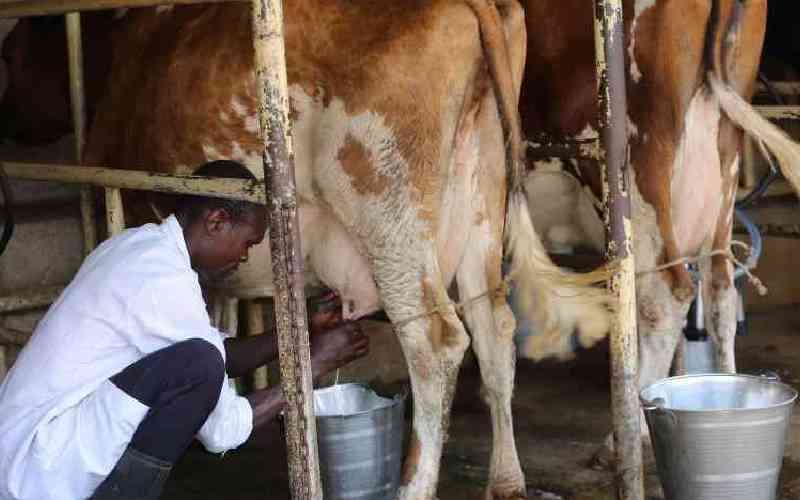
With a dairy herd of 60 cows, David Mwenda says he had to insure them against various risks, including disease.Mr Mwenda is among thousandsof dairy farmers in Meru and Tharaka Nithi counties who have taken steps to insure their ventures, owing to the huge investments they made.A majority of farmers in both counties deliver their yields to the Kenneth Gitonga -ledmilk production, a union that encouraged farmers to think about insurance.Mwenda, who delivers around 600 litres daily to the Meru dairy union, Kenya's largest processor, said he took insurance from a major company for all his animals.Follow The Standard
channel
on WhatsAppHe said the venture is replete with risks, including accidents and disease."I have taken insurance for all the animals. With 60 animals, you cannot take that big risk of not insuring," Mwenda, who is also the chairman of Uruku Dairy Society in South Imenti.He added, "There is always a risk of a cow slipping, and a cow can die during the period of calving," Mwenda said.He said the insurer sent people to determine the value of each animal."It has insurance for farmers, especially dairy farmers.They are doing it at a premiumof four per cent of the value of the animal. If the value of an animal is Sh200, 000, you insure at four per cent of that," Mwenda said.In Tharaka Nithi county, where Governor Muthomi Njuki has said they have recorded a significant growth in milk production, over 10,000 farmers have so far insured their livestock and received advance bonuses of Sh100 million.The county’s production grew by six million litres from 128m litres in 2023 to 134 million litres in 2024, a milestone that Governor Njuki credited to interventions in breed improvement, pasture development, farmer training, and extension services, which address herd health."Our focus is to strengthen livestock farming so that it remains productive, sustainable, and profitable for our farmers,” Mr Njuki said.The county chief said livestock production is a pillar of livelihoods, providing food, income, and environmental and socio-cultural benefits for families.Amid climate change and reduced farm yields, Njuki said his administration had prioritised livestock production as a significant means for economic diversification and resilience.The devolved unit organised training for more than 10,000 farmers on livestock production, value addition, and associated value chains.Stay informed. Subscribe to our newsletterBy clicking on theSIGN UPbutton, you agree to ourTerms & Conditionsand thePrivacy PolicySIGN UPIt plans additional investments to support over 30 farmers' cooperatives and dairy societies, including the installation of more milk cooling plants of different capacities to curb post-harvest losses and enhance market access.Stay Informed, Stay Empowered: Download the Standard ePaper App!Speaking at Kathwana, Governor Njuki said his administration remains committed to improving artificial insemination services through timely insemination and consistent supply of quality semen to boost livestock ventures.More than 500,000 animals have been vaccinated against diseases such as Anthrax, Black Quarter, Lumpy Skin Disease, Foot and Mouth Disease, Contagious Caprine Disease, Sheep and Goat Pox, and Rabies.Follow The Standard
channel
on WhatsApp
Mr Mwenda is among thousandsof dairy farmers in Meru and Tharaka Nithi counties who have taken steps to insure their ventures, owing to the huge investments they made.A majority of farmers in both counties deliver their yields to the Kenneth Gitonga -ledmilk production, a union that encouraged farmers to think about insurance.Mwenda, who delivers around 600 litres daily to the Meru dairy union, Kenya's largest processor, said he took insurance from a major company for all his animals.Follow The Standard
channel
on WhatsAppHe said the venture is replete with risks, including accidents and disease."I have taken insurance for all the animals. With 60 animals, you cannot take that big risk of not insuring," Mwenda, who is also the chairman of Uruku Dairy Society in South Imenti.He added, "There is always a risk of a cow slipping, and a cow can die during the period of calving," Mwenda said.He said the insurer sent people to determine the value of each animal."It has insurance for farmers, especially dairy farmers.They are doing it at a premiumof four per cent of the value of the animal. If the value of an animal is Sh200, 000, you insure at four per cent of that," Mwenda said.In Tharaka Nithi county, where Governor Muthomi Njuki has said they have recorded a significant growth in milk production, over 10,000 farmers have so far insured their livestock and received advance bonuses of Sh100 million.The county’s production grew by six million litres from 128m litres in 2023 to 134 million litres in 2024, a milestone that Governor Njuki credited to interventions in breed improvement, pasture development, farmer training, and extension services, which address herd health."Our focus is to strengthen livestock farming so that it remains productive, sustainable, and profitable for our farmers,” Mr Njuki said.The county chief said livestock production is a pillar of livelihoods, providing food, income, and environmental and socio-cultural benefits for families.Amid climate change and reduced farm yields, Njuki said his administration had prioritised livestock production as a significant means for economic diversification and resilience.The devolved unit organised training for more than 10,000 farmers on livestock production, value addition, and associated value chains.Stay informed. Subscribe to our newsletterBy clicking on theSIGN UPbutton, you agree to ourTerms & Conditionsand thePrivacy PolicySIGN UPIt plans additional investments to support over 30 farmers' cooperatives and dairy societies, including the installation of more milk cooling plants of different capacities to curb post-harvest losses and enhance market access.Stay Informed, Stay Empowered: Download the Standard ePaper App!Speaking at Kathwana, Governor Njuki said his administration remains committed to improving artificial insemination services through timely insemination and consistent supply of quality semen to boost livestock ventures.More than 500,000 animals have been vaccinated against diseases such as Anthrax, Black Quarter, Lumpy Skin Disease, Foot and Mouth Disease, Contagious Caprine Disease, Sheep and Goat Pox, and Rabies.Follow The Standard
channel
on WhatsApp
A majority of farmers in both counties deliver their yields to the Kenneth Gitonga -ledmilk production, a union that encouraged farmers to think about insurance.Mwenda, who delivers around 600 litres daily to the Meru dairy union, Kenya's largest processor, said he took insurance from a major company for all his animals.Follow The Standard
channel
on WhatsAppHe said the venture is replete with risks, including accidents and disease."I have taken insurance for all the animals. With 60 animals, you cannot take that big risk of not insuring," Mwenda, who is also the chairman of Uruku Dairy Society in South Imenti.He added, "There is always a risk of a cow slipping, and a cow can die during the period of calving," Mwenda said.He said the insurer sent people to determine the value of each animal."It has insurance for farmers, especially dairy farmers.They are doing it at a premiumof four per cent of the value of the animal. If the value of an animal is Sh200, 000, you insure at four per cent of that," Mwenda said.In Tharaka Nithi county, where Governor Muthomi Njuki has said they have recorded a significant growth in milk production, over 10,000 farmers have so far insured their livestock and received advance bonuses of Sh100 million.The county’s production grew by six million litres from 128m litres in 2023 to 134 million litres in 2024, a milestone that Governor Njuki credited to interventions in breed improvement, pasture development, farmer training, and extension services, which address herd health."Our focus is to strengthen livestock farming so that it remains productive, sustainable, and profitable for our farmers,” Mr Njuki said.The county chief said livestock production is a pillar of livelihoods, providing food, income, and environmental and socio-cultural benefits for families.Amid climate change and reduced farm yields, Njuki said his administration had prioritised livestock production as a significant means for economic diversification and resilience.The devolved unit organised training for more than 10,000 farmers on livestock production, value addition, and associated value chains.Stay informed. Subscribe to our newsletterBy clicking on theSIGN UPbutton, you agree to ourTerms & Conditionsand thePrivacy PolicySIGN UPIt plans additional investments to support over 30 farmers' cooperatives and dairy societies, including the installation of more milk cooling plants of different capacities to curb post-harvest losses and enhance market access.Stay Informed, Stay Empowered: Download the Standard ePaper App!Speaking at Kathwana, Governor Njuki said his administration remains committed to improving artificial insemination services through timely insemination and consistent supply of quality semen to boost livestock ventures.More than 500,000 animals have been vaccinated against diseases such as Anthrax, Black Quarter, Lumpy Skin Disease, Foot and Mouth Disease, Contagious Caprine Disease, Sheep and Goat Pox, and Rabies.Follow The Standard
channel
on WhatsApp
Mwenda, who delivers around 600 litres daily to the Meru dairy union, Kenya's largest processor, said he took insurance from a major company for all his animals.Follow The Standard
channel
on WhatsAppHe said the venture is replete with risks, including accidents and disease."I have taken insurance for all the animals. With 60 animals, you cannot take that big risk of not insuring," Mwenda, who is also the chairman of Uruku Dairy Society in South Imenti.He added, "There is always a risk of a cow slipping, and a cow can die during the period of calving," Mwenda said.He said the insurer sent people to determine the value of each animal."It has insurance for farmers, especially dairy farmers.They are doing it at a premiumof four per cent of the value of the animal. If the value of an animal is Sh200, 000, you insure at four per cent of that," Mwenda said.In Tharaka Nithi county, where Governor Muthomi Njuki has said they have recorded a significant growth in milk production, over 10,000 farmers have so far insured their livestock and received advance bonuses of Sh100 million.The county’s production grew by six million litres from 128m litres in 2023 to 134 million litres in 2024, a milestone that Governor Njuki credited to interventions in breed improvement, pasture development, farmer training, and extension services, which address herd health."Our focus is to strengthen livestock farming so that it remains productive, sustainable, and profitable for our farmers,” Mr Njuki said.The county chief said livestock production is a pillar of livelihoods, providing food, income, and environmental and socio-cultural benefits for families.Amid climate change and reduced farm yields, Njuki said his administration had prioritised livestock production as a significant means for economic diversification and resilience.The devolved unit organised training for more than 10,000 farmers on livestock production, value addition, and associated value chains.Stay informed. Subscribe to our newsletterBy clicking on theSIGN UPbutton, you agree to ourTerms & Conditionsand thePrivacy PolicySIGN UPIt plans additional investments to support over 30 farmers' cooperatives and dairy societies, including the installation of more milk cooling plants of different capacities to curb post-harvest losses and enhance market access.Stay Informed, Stay Empowered: Download the Standard ePaper App!Speaking at Kathwana, Governor Njuki said his administration remains committed to improving artificial insemination services through timely insemination and consistent supply of quality semen to boost livestock ventures.More than 500,000 animals have been vaccinated against diseases such as Anthrax, Black Quarter, Lumpy Skin Disease, Foot and Mouth Disease, Contagious Caprine Disease, Sheep and Goat Pox, and Rabies.Follow The Standard
channel
on WhatsApp
He said the venture is replete with risks, including accidents and disease."I have taken insurance for all the animals. With 60 animals, you cannot take that big risk of not insuring," Mwenda, who is also the chairman of Uruku Dairy Society in South Imenti.He added, "There is always a risk of a cow slipping, and a cow can die during the period of calving," Mwenda said.He said the insurer sent people to determine the value of each animal."It has insurance for farmers, especially dairy farmers.They are doing it at a premiumof four per cent of the value of the animal. If the value of an animal is Sh200, 000, you insure at four per cent of that," Mwenda said.In Tharaka Nithi county, where Governor Muthomi Njuki has said they have recorded a significant growth in milk production, over 10,000 farmers have so far insured their livestock and received advance bonuses of Sh100 million.The county’s production grew by six million litres from 128m litres in 2023 to 134 million litres in 2024, a milestone that Governor Njuki credited to interventions in breed improvement, pasture development, farmer training, and extension services, which address herd health."Our focus is to strengthen livestock farming so that it remains productive, sustainable, and profitable for our farmers,” Mr Njuki said.The county chief said livestock production is a pillar of livelihoods, providing food, income, and environmental and socio-cultural benefits for families.Amid climate change and reduced farm yields, Njuki said his administration had prioritised livestock production as a significant means for economic diversification and resilience.The devolved unit organised training for more than 10,000 farmers on livestock production, value addition, and associated value chains.Stay informed. Subscribe to our newsletterBy clicking on theSIGN UPbutton, you agree to ourTerms & Conditionsand thePrivacy PolicySIGN UPIt plans additional investments to support over 30 farmers' cooperatives and dairy societies, including the installation of more milk cooling plants of different capacities to curb post-harvest losses and enhance market access.Stay Informed, Stay Empowered: Download the Standard ePaper App!Speaking at Kathwana, Governor Njuki said his administration remains committed to improving artificial insemination services through timely insemination and consistent supply of quality semen to boost livestock ventures.More than 500,000 animals have been vaccinated against diseases such as Anthrax, Black Quarter, Lumpy Skin Disease, Foot and Mouth Disease, Contagious Caprine Disease, Sheep and Goat Pox, and Rabies.Follow The Standard
channel
on WhatsApp
"I have taken insurance for all the animals. With 60 animals, you cannot take that big risk of not insuring," Mwenda, who is also the chairman of Uruku Dairy Society in South Imenti.He added, "There is always a risk of a cow slipping, and a cow can die during the period of calving," Mwenda said.He said the insurer sent people to determine the value of each animal."It has insurance for farmers, especially dairy farmers.They are doing it at a premiumof four per cent of the value of the animal. If the value of an animal is Sh200, 000, you insure at four per cent of that," Mwenda said.In Tharaka Nithi county, where Governor Muthomi Njuki has said they have recorded a significant growth in milk production, over 10,000 farmers have so far insured their livestock and received advance bonuses of Sh100 million.The county’s production grew by six million litres from 128m litres in 2023 to 134 million litres in 2024, a milestone that Governor Njuki credited to interventions in breed improvement, pasture development, farmer training, and extension services, which address herd health."Our focus is to strengthen livestock farming so that it remains productive, sustainable, and profitable for our farmers,” Mr Njuki said.The county chief said livestock production is a pillar of livelihoods, providing food, income, and environmental and socio-cultural benefits for families.Amid climate change and reduced farm yields, Njuki said his administration had prioritised livestock production as a significant means for economic diversification and resilience.The devolved unit organised training for more than 10,000 farmers on livestock production, value addition, and associated value chains.Stay informed. Subscribe to our newsletterBy clicking on theSIGN UPbutton, you agree to ourTerms & Conditionsand thePrivacy PolicySIGN UPIt plans additional investments to support over 30 farmers' cooperatives and dairy societies, including the installation of more milk cooling plants of different capacities to curb post-harvest losses and enhance market access.Stay Informed, Stay Empowered: Download the Standard ePaper App!Speaking at Kathwana, Governor Njuki said his administration remains committed to improving artificial insemination services through timely insemination and consistent supply of quality semen to boost livestock ventures.More than 500,000 animals have been vaccinated against diseases such as Anthrax, Black Quarter, Lumpy Skin Disease, Foot and Mouth Disease, Contagious Caprine Disease, Sheep and Goat Pox, and Rabies.Follow The Standard
channel
on WhatsApp
He added, "There is always a risk of a cow slipping, and a cow can die during the period of calving," Mwenda said.He said the insurer sent people to determine the value of each animal."It has insurance for farmers, especially dairy farmers.They are doing it at a premiumof four per cent of the value of the animal. If the value of an animal is Sh200, 000, you insure at four per cent of that," Mwenda said.In Tharaka Nithi county, where Governor Muthomi Njuki has said they have recorded a significant growth in milk production, over 10,000 farmers have so far insured their livestock and received advance bonuses of Sh100 million.The county’s production grew by six million litres from 128m litres in 2023 to 134 million litres in 2024, a milestone that Governor Njuki credited to interventions in breed improvement, pasture development, farmer training, and extension services, which address herd health."Our focus is to strengthen livestock farming so that it remains productive, sustainable, and profitable for our farmers,” Mr Njuki said.The county chief said livestock production is a pillar of livelihoods, providing food, income, and environmental and socio-cultural benefits for families.Amid climate change and reduced farm yields, Njuki said his administration had prioritised livestock production as a significant means for economic diversification and resilience.The devolved unit organised training for more than 10,000 farmers on livestock production, value addition, and associated value chains.Stay informed. Subscribe to our newsletterBy clicking on theSIGN UPbutton, you agree to ourTerms & Conditionsand thePrivacy PolicySIGN UPIt plans additional investments to support over 30 farmers' cooperatives and dairy societies, including the installation of more milk cooling plants of different capacities to curb post-harvest losses and enhance market access.Stay Informed, Stay Empowered: Download the Standard ePaper App!Speaking at Kathwana, Governor Njuki said his administration remains committed to improving artificial insemination services through timely insemination and consistent supply of quality semen to boost livestock ventures.More than 500,000 animals have been vaccinated against diseases such as Anthrax, Black Quarter, Lumpy Skin Disease, Foot and Mouth Disease, Contagious Caprine Disease, Sheep and Goat Pox, and Rabies.Follow The Standard
channel
on WhatsApp
He said the insurer sent people to determine the value of each animal."It has insurance for farmers, especially dairy farmers.They are doing it at a premiumof four per cent of the value of the animal. If the value of an animal is Sh200, 000, you insure at four per cent of that," Mwenda said.In Tharaka Nithi county, where Governor Muthomi Njuki has said they have recorded a significant growth in milk production, over 10,000 farmers have so far insured their livestock and received advance bonuses of Sh100 million.The county’s production grew by six million litres from 128m litres in 2023 to 134 million litres in 2024, a milestone that Governor Njuki credited to interventions in breed improvement, pasture development, farmer training, and extension services, which address herd health."Our focus is to strengthen livestock farming so that it remains productive, sustainable, and profitable for our farmers,” Mr Njuki said.The county chief said livestock production is a pillar of livelihoods, providing food, income, and environmental and socio-cultural benefits for families.Amid climate change and reduced farm yields, Njuki said his administration had prioritised livestock production as a significant means for economic diversification and resilience.The devolved unit organised training for more than 10,000 farmers on livestock production, value addition, and associated value chains.Stay informed. Subscribe to our newsletterBy clicking on theSIGN UPbutton, you agree to ourTerms & Conditionsand thePrivacy PolicySIGN UPIt plans additional investments to support over 30 farmers' cooperatives and dairy societies, including the installation of more milk cooling plants of different capacities to curb post-harvest losses and enhance market access.Stay Informed, Stay Empowered: Download the Standard ePaper App!Speaking at Kathwana, Governor Njuki said his administration remains committed to improving artificial insemination services through timely insemination and consistent supply of quality semen to boost livestock ventures.More than 500,000 animals have been vaccinated against diseases such as Anthrax, Black Quarter, Lumpy Skin Disease, Foot and Mouth Disease, Contagious Caprine Disease, Sheep and Goat Pox, and Rabies.Follow The Standard
channel
on WhatsApp
"It has insurance for farmers, especially dairy farmers.They are doing it at a premiumof four per cent of the value of the animal. If the value of an animal is Sh200, 000, you insure at four per cent of that," Mwenda said.In Tharaka Nithi county, where Governor Muthomi Njuki has said they have recorded a significant growth in milk production, over 10,000 farmers have so far insured their livestock and received advance bonuses of Sh100 million.The county’s production grew by six million litres from 128m litres in 2023 to 134 million litres in 2024, a milestone that Governor Njuki credited to interventions in breed improvement, pasture development, farmer training, and extension services, which address herd health."Our focus is to strengthen livestock farming so that it remains productive, sustainable, and profitable for our farmers,” Mr Njuki said.The county chief said livestock production is a pillar of livelihoods, providing food, income, and environmental and socio-cultural benefits for families.Amid climate change and reduced farm yields, Njuki said his administration had prioritised livestock production as a significant means for economic diversification and resilience.The devolved unit organised training for more than 10,000 farmers on livestock production, value addition, and associated value chains.Stay informed. Subscribe to our newsletterBy clicking on theSIGN UPbutton, you agree to ourTerms & Conditionsand thePrivacy PolicySIGN UPIt plans additional investments to support over 30 farmers' cooperatives and dairy societies, including the installation of more milk cooling plants of different capacities to curb post-harvest losses and enhance market access.Stay Informed, Stay Empowered: Download the Standard ePaper App!Speaking at Kathwana, Governor Njuki said his administration remains committed to improving artificial insemination services through timely insemination and consistent supply of quality semen to boost livestock ventures.More than 500,000 animals have been vaccinated against diseases such as Anthrax, Black Quarter, Lumpy Skin Disease, Foot and Mouth Disease, Contagious Caprine Disease, Sheep and Goat Pox, and Rabies.Follow The Standard
channel
on WhatsApp
In Tharaka Nithi county, where Governor Muthomi Njuki has said they have recorded a significant growth in milk production, over 10,000 farmers have so far insured their livestock and received advance bonuses of Sh100 million.The county’s production grew by six million litres from 128m litres in 2023 to 134 million litres in 2024, a milestone that Governor Njuki credited to interventions in breed improvement, pasture development, farmer training, and extension services, which address herd health."Our focus is to strengthen livestock farming so that it remains productive, sustainable, and profitable for our farmers,” Mr Njuki said.The county chief said livestock production is a pillar of livelihoods, providing food, income, and environmental and socio-cultural benefits for families.Amid climate change and reduced farm yields, Njuki said his administration had prioritised livestock production as a significant means for economic diversification and resilience.The devolved unit organised training for more than 10,000 farmers on livestock production, value addition, and associated value chains.Stay informed. Subscribe to our newsletterBy clicking on theSIGN UPbutton, you agree to ourTerms & Conditionsand thePrivacy PolicySIGN UPIt plans additional investments to support over 30 farmers' cooperatives and dairy societies, including the installation of more milk cooling plants of different capacities to curb post-harvest losses and enhance market access.Stay Informed, Stay Empowered: Download the Standard ePaper App!Speaking at Kathwana, Governor Njuki said his administration remains committed to improving artificial insemination services through timely insemination and consistent supply of quality semen to boost livestock ventures.More than 500,000 animals have been vaccinated against diseases such as Anthrax, Black Quarter, Lumpy Skin Disease, Foot and Mouth Disease, Contagious Caprine Disease, Sheep and Goat Pox, and Rabies.Follow The Standard
channel
on WhatsApp
The county’s production grew by six million litres from 128m litres in 2023 to 134 million litres in 2024, a milestone that Governor Njuki credited to interventions in breed improvement, pasture development, farmer training, and extension services, which address herd health."Our focus is to strengthen livestock farming so that it remains productive, sustainable, and profitable for our farmers,” Mr Njuki said.The county chief said livestock production is a pillar of livelihoods, providing food, income, and environmental and socio-cultural benefits for families.Amid climate change and reduced farm yields, Njuki said his administration had prioritised livestock production as a significant means for economic diversification and resilience.The devolved unit organised training for more than 10,000 farmers on livestock production, value addition, and associated value chains.Stay informed. Subscribe to our newsletterBy clicking on theSIGN UPbutton, you agree to ourTerms & Conditionsand thePrivacy PolicySIGN UPIt plans additional investments to support over 30 farmers' cooperatives and dairy societies, including the installation of more milk cooling plants of different capacities to curb post-harvest losses and enhance market access.Stay Informed, Stay Empowered: Download the Standard ePaper App!Speaking at Kathwana, Governor Njuki said his administration remains committed to improving artificial insemination services through timely insemination and consistent supply of quality semen to boost livestock ventures.More than 500,000 animals have been vaccinated against diseases such as Anthrax, Black Quarter, Lumpy Skin Disease, Foot and Mouth Disease, Contagious Caprine Disease, Sheep and Goat Pox, and Rabies.Follow The Standard
channel
on WhatsApp
"Our focus is to strengthen livestock farming so that it remains productive, sustainable, and profitable for our farmers,” Mr Njuki said.The county chief said livestock production is a pillar of livelihoods, providing food, income, and environmental and socio-cultural benefits for families.Amid climate change and reduced farm yields, Njuki said his administration had prioritised livestock production as a significant means for economic diversification and resilience.The devolved unit organised training for more than 10,000 farmers on livestock production, value addition, and associated value chains.Stay informed. Subscribe to our newsletterBy clicking on theSIGN UPbutton, you agree to ourTerms & Conditionsand thePrivacy PolicySIGN UPIt plans additional investments to support over 30 farmers' cooperatives and dairy societies, including the installation of more milk cooling plants of different capacities to curb post-harvest losses and enhance market access.Stay Informed, Stay Empowered: Download the Standard ePaper App!Speaking at Kathwana, Governor Njuki said his administration remains committed to improving artificial insemination services through timely insemination and consistent supply of quality semen to boost livestock ventures.More than 500,000 animals have been vaccinated against diseases such as Anthrax, Black Quarter, Lumpy Skin Disease, Foot and Mouth Disease, Contagious Caprine Disease, Sheep and Goat Pox, and Rabies.Follow The Standard
channel
on WhatsApp
The county chief said livestock production is a pillar of livelihoods, providing food, income, and environmental and socio-cultural benefits for families.Amid climate change and reduced farm yields, Njuki said his administration had prioritised livestock production as a significant means for economic diversification and resilience.The devolved unit organised training for more than 10,000 farmers on livestock production, value addition, and associated value chains.Stay informed. Subscribe to our newsletterBy clicking on theSIGN UPbutton, you agree to ourTerms & Conditionsand thePrivacy PolicySIGN UPIt plans additional investments to support over 30 farmers' cooperatives and dairy societies, including the installation of more milk cooling plants of different capacities to curb post-harvest losses and enhance market access.Stay Informed, Stay Empowered: Download the Standard ePaper App!Speaking at Kathwana, Governor Njuki said his administration remains committed to improving artificial insemination services through timely insemination and consistent supply of quality semen to boost livestock ventures.More than 500,000 animals have been vaccinated against diseases such as Anthrax, Black Quarter, Lumpy Skin Disease, Foot and Mouth Disease, Contagious Caprine Disease, Sheep and Goat Pox, and Rabies.Follow The Standard
channel
on WhatsApp
Amid climate change and reduced farm yields, Njuki said his administration had prioritised livestock production as a significant means for economic diversification and resilience.The devolved unit organised training for more than 10,000 farmers on livestock production, value addition, and associated value chains.Stay informed. Subscribe to our newsletterBy clicking on theSIGN UPbutton, you agree to ourTerms & Conditionsand thePrivacy PolicySIGN UPIt plans additional investments to support over 30 farmers' cooperatives and dairy societies, including the installation of more milk cooling plants of different capacities to curb post-harvest losses and enhance market access.Stay Informed, Stay Empowered: Download the Standard ePaper App!Speaking at Kathwana, Governor Njuki said his administration remains committed to improving artificial insemination services through timely insemination and consistent supply of quality semen to boost livestock ventures.More than 500,000 animals have been vaccinated against diseases such as Anthrax, Black Quarter, Lumpy Skin Disease, Foot and Mouth Disease, Contagious Caprine Disease, Sheep and Goat Pox, and Rabies.Follow The Standard
channel
on WhatsApp
The devolved unit organised training for more than 10,000 farmers on livestock production, value addition, and associated value chains.Stay informed. Subscribe to our newsletterBy clicking on theSIGN UPbutton, you agree to ourTerms & Conditionsand thePrivacy PolicySIGN UPIt plans additional investments to support over 30 farmers' cooperatives and dairy societies, including the installation of more milk cooling plants of different capacities to curb post-harvest losses and enhance market access.Stay Informed, Stay Empowered: Download the Standard ePaper App!Speaking at Kathwana, Governor Njuki said his administration remains committed to improving artificial insemination services through timely insemination and consistent supply of quality semen to boost livestock ventures.More than 500,000 animals have been vaccinated against diseases such as Anthrax, Black Quarter, Lumpy Skin Disease, Foot and Mouth Disease, Contagious Caprine Disease, Sheep and Goat Pox, and Rabies.Follow The Standard
channel
on WhatsApp
It plans additional investments to support over 30 farmers' cooperatives and dairy societies, including the installation of more milk cooling plants of different capacities to curb post-harvest losses and enhance market access.Stay Informed, Stay Empowered: Download the Standard ePaper App!Speaking at Kathwana, Governor Njuki said his administration remains committed to improving artificial insemination services through timely insemination and consistent supply of quality semen to boost livestock ventures.More than 500,000 animals have been vaccinated against diseases such as Anthrax, Black Quarter, Lumpy Skin Disease, Foot and Mouth Disease, Contagious Caprine Disease, Sheep and Goat Pox, and Rabies.Follow The Standard
channel
on WhatsApp
Speaking at Kathwana, Governor Njuki said his administration remains committed to improving artificial insemination services through timely insemination and consistent supply of quality semen to boost livestock ventures.More than 500,000 animals have been vaccinated against diseases such as Anthrax, Black Quarter, Lumpy Skin Disease, Foot and Mouth Disease, Contagious Caprine Disease, Sheep and Goat Pox, and Rabies.Follow The Standard
channel
on WhatsApp
More than 500,000 animals have been vaccinated against diseases such as Anthrax, Black Quarter, Lumpy Skin Disease, Foot and Mouth Disease, Contagious Caprine Disease, Sheep and Goat Pox, and Rabies.Follow The Standard
channel
on WhatsApp
Subscribe to our newsletter and stay updated on the latest developments and special
offers!
Pick your favourite topics below for a tailor made homepage just for you