
EAC mulls new strategy to improve blue economy
Source: The Standard
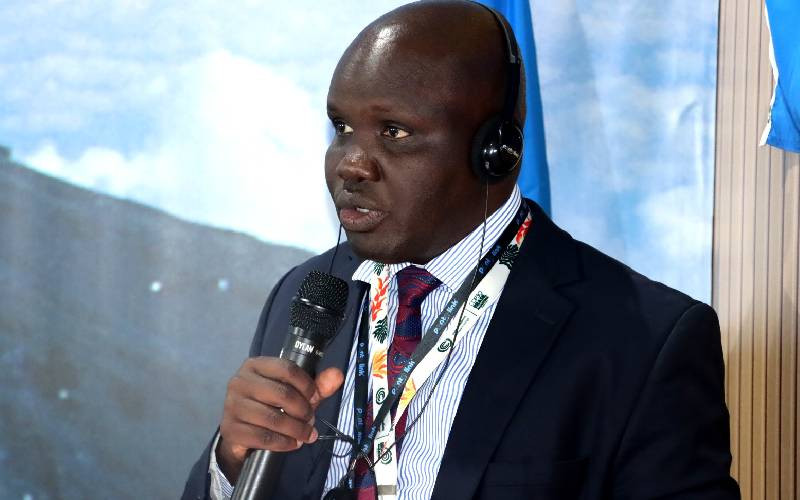
The East African Community(EAC) is pursuing an ambitious plan to transform the sustainable use and conservation of the region's fragile blue economy.The move is part of an effort to incorporate regional integration to help achieve environmental sustainability while enhancing food security in the region.The EAC has partnered with the United Nations Economic Commission for Africa (UNECA) to develop a Regional Blue Economy Strategy and Action Plan to help implement this goal. The strategy is to guide operations between 2025–2034.The strategy provides a comprehensive framework for the sustainable use and conservation of aquatic resources including oceans, lakes, and rivers to drive socio-economic development and enhance food security across the East African Community.Follow The Standard
channel
on WhatsAppIts primary objectives are to maximize economic potential through job creation and value addition, alleviate poverty, and promote regional cooperation, all while ensuring environmental sustainability.Deputy Secretary-General in charge of Infrastructure, Productive, Social, and Political Sectors, Hon. Andrea Ariik, made the announcement during a side event at the United Nations Climate Change Conference (COP 30) in Belém, Brazil.The EAC hosted a side event titled “Blue Horizons: Accelerating Climate Action through the Blue Economy,” which was attended by stakeholders from EAC Partner States.The Blue Economy in East Africa encompasses the sustainable use of aquatic resources, both coastal and inland, to drive economic growth, social development, and environmental sustainability.Its components can be grouped into key sectors and activities, each with economic, ecological, and social dimensions.Among the compoents include fisheries and acquacukture,maritime transport and ports,coastal and marine tourism,and water and transport inland water ways“Over the last two decades, climate change has emerged as a cross-cutting issue affecting agriculture, energy, infrastructure, natural resources, and health,” Ariik noted.He added, “The East African Community is richly endowed with blue economy resources, spanning both coastal and inland waters. Our lakes, rivers, and ocean coastlines sustain millions of livelihoods and present enormous opportunities for climate-smart development.”The Deputy Secretary-General also highlighted the recent expansion of the EAC’s resource base following the accession of the Federal Republic of Somalia and the Democratic Republic of Congo (DRC).Somalia adds over 3,000 km of Indian Ocean coastline, complementing Kenya and Tanzania’s 2,000 km, while DRC provides access to the Congo River and the Atlantic Ocean.This Strategy and Action Plan was formulated with technical and financial support from the Sub-Regional Office of Eastern Africa of UNECA (SRO-EA).Stay informed. Subscribe to our newsletterBy clicking on theSIGN UPbutton, you agree to ourTerms & Conditionsand thePrivacy PolicySIGN UPCritically, the strategy is directly linked to climate action. It promotes low-carbon development and strengthens the region’s climate resilience by protecting and restoring vital aquatic ecosystems, such as mangroves and coral reefs, which act as natural defenses and essential blue carbon sinks.Stay Informed, Stay Empowered: Download the Standard ePaper App!Additionally, the Strategy aims to guide the implementation of Blue Economy activities at both national and regional levels, enhance regional integration, and strengthen support to Partner States in translating policies into concrete actions.The Strategy is now awaiting final approval by the EAC Council of Ministers in the upcoming meeting.
The move is part of an effort to incorporate regional integration to help achieve environmental sustainability while enhancing food security in the region.The EAC has partnered with the United Nations Economic Commission for Africa (UNECA) to develop a Regional Blue Economy Strategy and Action Plan to help implement this goal. The strategy is to guide operations between 2025–2034.The strategy provides a comprehensive framework for the sustainable use and conservation of aquatic resources including oceans, lakes, and rivers to drive socio-economic development and enhance food security across the East African Community.Follow The Standard
channel
on WhatsAppIts primary objectives are to maximize economic potential through job creation and value addition, alleviate poverty, and promote regional cooperation, all while ensuring environmental sustainability.Deputy Secretary-General in charge of Infrastructure, Productive, Social, and Political Sectors, Hon. Andrea Ariik, made the announcement during a side event at the United Nations Climate Change Conference (COP 30) in Belém, Brazil.The EAC hosted a side event titled “Blue Horizons: Accelerating Climate Action through the Blue Economy,” which was attended by stakeholders from EAC Partner States.The Blue Economy in East Africa encompasses the sustainable use of aquatic resources, both coastal and inland, to drive economic growth, social development, and environmental sustainability.Its components can be grouped into key sectors and activities, each with economic, ecological, and social dimensions.Among the compoents include fisheries and acquacukture,maritime transport and ports,coastal and marine tourism,and water and transport inland water ways“Over the last two decades, climate change has emerged as a cross-cutting issue affecting agriculture, energy, infrastructure, natural resources, and health,” Ariik noted.He added, “The East African Community is richly endowed with blue economy resources, spanning both coastal and inland waters. Our lakes, rivers, and ocean coastlines sustain millions of livelihoods and present enormous opportunities for climate-smart development.”The Deputy Secretary-General also highlighted the recent expansion of the EAC’s resource base following the accession of the Federal Republic of Somalia and the Democratic Republic of Congo (DRC).Somalia adds over 3,000 km of Indian Ocean coastline, complementing Kenya and Tanzania’s 2,000 km, while DRC provides access to the Congo River and the Atlantic Ocean.This Strategy and Action Plan was formulated with technical and financial support from the Sub-Regional Office of Eastern Africa of UNECA (SRO-EA).Stay informed. Subscribe to our newsletterBy clicking on theSIGN UPbutton, you agree to ourTerms & Conditionsand thePrivacy PolicySIGN UPCritically, the strategy is directly linked to climate action. It promotes low-carbon development and strengthens the region’s climate resilience by protecting and restoring vital aquatic ecosystems, such as mangroves and coral reefs, which act as natural defenses and essential blue carbon sinks.Stay Informed, Stay Empowered: Download the Standard ePaper App!Additionally, the Strategy aims to guide the implementation of Blue Economy activities at both national and regional levels, enhance regional integration, and strengthen support to Partner States in translating policies into concrete actions.The Strategy is now awaiting final approval by the EAC Council of Ministers in the upcoming meeting.
The EAC has partnered with the United Nations Economic Commission for Africa (UNECA) to develop a Regional Blue Economy Strategy and Action Plan to help implement this goal. The strategy is to guide operations between 2025–2034.The strategy provides a comprehensive framework for the sustainable use and conservation of aquatic resources including oceans, lakes, and rivers to drive socio-economic development and enhance food security across the East African Community.Follow The Standard
channel
on WhatsAppIts primary objectives are to maximize economic potential through job creation and value addition, alleviate poverty, and promote regional cooperation, all while ensuring environmental sustainability.Deputy Secretary-General in charge of Infrastructure, Productive, Social, and Political Sectors, Hon. Andrea Ariik, made the announcement during a side event at the United Nations Climate Change Conference (COP 30) in Belém, Brazil.The EAC hosted a side event titled “Blue Horizons: Accelerating Climate Action through the Blue Economy,” which was attended by stakeholders from EAC Partner States.The Blue Economy in East Africa encompasses the sustainable use of aquatic resources, both coastal and inland, to drive economic growth, social development, and environmental sustainability.Its components can be grouped into key sectors and activities, each with economic, ecological, and social dimensions.Among the compoents include fisheries and acquacukture,maritime transport and ports,coastal and marine tourism,and water and transport inland water ways“Over the last two decades, climate change has emerged as a cross-cutting issue affecting agriculture, energy, infrastructure, natural resources, and health,” Ariik noted.He added, “The East African Community is richly endowed with blue economy resources, spanning both coastal and inland waters. Our lakes, rivers, and ocean coastlines sustain millions of livelihoods and present enormous opportunities for climate-smart development.”The Deputy Secretary-General also highlighted the recent expansion of the EAC’s resource base following the accession of the Federal Republic of Somalia and the Democratic Republic of Congo (DRC).Somalia adds over 3,000 km of Indian Ocean coastline, complementing Kenya and Tanzania’s 2,000 km, while DRC provides access to the Congo River and the Atlantic Ocean.This Strategy and Action Plan was formulated with technical and financial support from the Sub-Regional Office of Eastern Africa of UNECA (SRO-EA).Stay informed. Subscribe to our newsletterBy clicking on theSIGN UPbutton, you agree to ourTerms & Conditionsand thePrivacy PolicySIGN UPCritically, the strategy is directly linked to climate action. It promotes low-carbon development and strengthens the region’s climate resilience by protecting and restoring vital aquatic ecosystems, such as mangroves and coral reefs, which act as natural defenses and essential blue carbon sinks.Stay Informed, Stay Empowered: Download the Standard ePaper App!Additionally, the Strategy aims to guide the implementation of Blue Economy activities at both national and regional levels, enhance regional integration, and strengthen support to Partner States in translating policies into concrete actions.The Strategy is now awaiting final approval by the EAC Council of Ministers in the upcoming meeting.
The strategy provides a comprehensive framework for the sustainable use and conservation of aquatic resources including oceans, lakes, and rivers to drive socio-economic development and enhance food security across the East African Community.Follow The Standard
channel
on WhatsAppIts primary objectives are to maximize economic potential through job creation and value addition, alleviate poverty, and promote regional cooperation, all while ensuring environmental sustainability.Deputy Secretary-General in charge of Infrastructure, Productive, Social, and Political Sectors, Hon. Andrea Ariik, made the announcement during a side event at the United Nations Climate Change Conference (COP 30) in Belém, Brazil.The EAC hosted a side event titled “Blue Horizons: Accelerating Climate Action through the Blue Economy,” which was attended by stakeholders from EAC Partner States.The Blue Economy in East Africa encompasses the sustainable use of aquatic resources, both coastal and inland, to drive economic growth, social development, and environmental sustainability.Its components can be grouped into key sectors and activities, each with economic, ecological, and social dimensions.Among the compoents include fisheries and acquacukture,maritime transport and ports,coastal and marine tourism,and water and transport inland water ways“Over the last two decades, climate change has emerged as a cross-cutting issue affecting agriculture, energy, infrastructure, natural resources, and health,” Ariik noted.He added, “The East African Community is richly endowed with blue economy resources, spanning both coastal and inland waters. Our lakes, rivers, and ocean coastlines sustain millions of livelihoods and present enormous opportunities for climate-smart development.”The Deputy Secretary-General also highlighted the recent expansion of the EAC’s resource base following the accession of the Federal Republic of Somalia and the Democratic Republic of Congo (DRC).Somalia adds over 3,000 km of Indian Ocean coastline, complementing Kenya and Tanzania’s 2,000 km, while DRC provides access to the Congo River and the Atlantic Ocean.This Strategy and Action Plan was formulated with technical and financial support from the Sub-Regional Office of Eastern Africa of UNECA (SRO-EA).Stay informed. Subscribe to our newsletterBy clicking on theSIGN UPbutton, you agree to ourTerms & Conditionsand thePrivacy PolicySIGN UPCritically, the strategy is directly linked to climate action. It promotes low-carbon development and strengthens the region’s climate resilience by protecting and restoring vital aquatic ecosystems, such as mangroves and coral reefs, which act as natural defenses and essential blue carbon sinks.Stay Informed, Stay Empowered: Download the Standard ePaper App!Additionally, the Strategy aims to guide the implementation of Blue Economy activities at both national and regional levels, enhance regional integration, and strengthen support to Partner States in translating policies into concrete actions.The Strategy is now awaiting final approval by the EAC Council of Ministers in the upcoming meeting.
Its primary objectives are to maximize economic potential through job creation and value addition, alleviate poverty, and promote regional cooperation, all while ensuring environmental sustainability.Deputy Secretary-General in charge of Infrastructure, Productive, Social, and Political Sectors, Hon. Andrea Ariik, made the announcement during a side event at the United Nations Climate Change Conference (COP 30) in Belém, Brazil.The EAC hosted a side event titled “Blue Horizons: Accelerating Climate Action through the Blue Economy,” which was attended by stakeholders from EAC Partner States.The Blue Economy in East Africa encompasses the sustainable use of aquatic resources, both coastal and inland, to drive economic growth, social development, and environmental sustainability.Its components can be grouped into key sectors and activities, each with economic, ecological, and social dimensions.Among the compoents include fisheries and acquacukture,maritime transport and ports,coastal and marine tourism,and water and transport inland water ways“Over the last two decades, climate change has emerged as a cross-cutting issue affecting agriculture, energy, infrastructure, natural resources, and health,” Ariik noted.He added, “The East African Community is richly endowed with blue economy resources, spanning both coastal and inland waters. Our lakes, rivers, and ocean coastlines sustain millions of livelihoods and present enormous opportunities for climate-smart development.”The Deputy Secretary-General also highlighted the recent expansion of the EAC’s resource base following the accession of the Federal Republic of Somalia and the Democratic Republic of Congo (DRC).Somalia adds over 3,000 km of Indian Ocean coastline, complementing Kenya and Tanzania’s 2,000 km, while DRC provides access to the Congo River and the Atlantic Ocean.This Strategy and Action Plan was formulated with technical and financial support from the Sub-Regional Office of Eastern Africa of UNECA (SRO-EA).Stay informed. Subscribe to our newsletterBy clicking on theSIGN UPbutton, you agree to ourTerms & Conditionsand thePrivacy PolicySIGN UPCritically, the strategy is directly linked to climate action. It promotes low-carbon development and strengthens the region’s climate resilience by protecting and restoring vital aquatic ecosystems, such as mangroves and coral reefs, which act as natural defenses and essential blue carbon sinks.Stay Informed, Stay Empowered: Download the Standard ePaper App!Additionally, the Strategy aims to guide the implementation of Blue Economy activities at both national and regional levels, enhance regional integration, and strengthen support to Partner States in translating policies into concrete actions.The Strategy is now awaiting final approval by the EAC Council of Ministers in the upcoming meeting.
Deputy Secretary-General in charge of Infrastructure, Productive, Social, and Political Sectors, Hon. Andrea Ariik, made the announcement during a side event at the United Nations Climate Change Conference (COP 30) in Belém, Brazil.The EAC hosted a side event titled “Blue Horizons: Accelerating Climate Action through the Blue Economy,” which was attended by stakeholders from EAC Partner States.The Blue Economy in East Africa encompasses the sustainable use of aquatic resources, both coastal and inland, to drive economic growth, social development, and environmental sustainability.Its components can be grouped into key sectors and activities, each with economic, ecological, and social dimensions.Among the compoents include fisheries and acquacukture,maritime transport and ports,coastal and marine tourism,and water and transport inland water ways“Over the last two decades, climate change has emerged as a cross-cutting issue affecting agriculture, energy, infrastructure, natural resources, and health,” Ariik noted.He added, “The East African Community is richly endowed with blue economy resources, spanning both coastal and inland waters. Our lakes, rivers, and ocean coastlines sustain millions of livelihoods and present enormous opportunities for climate-smart development.”The Deputy Secretary-General also highlighted the recent expansion of the EAC’s resource base following the accession of the Federal Republic of Somalia and the Democratic Republic of Congo (DRC).Somalia adds over 3,000 km of Indian Ocean coastline, complementing Kenya and Tanzania’s 2,000 km, while DRC provides access to the Congo River and the Atlantic Ocean.This Strategy and Action Plan was formulated with technical and financial support from the Sub-Regional Office of Eastern Africa of UNECA (SRO-EA).Stay informed. Subscribe to our newsletterBy clicking on theSIGN UPbutton, you agree to ourTerms & Conditionsand thePrivacy PolicySIGN UPCritically, the strategy is directly linked to climate action. It promotes low-carbon development and strengthens the region’s climate resilience by protecting and restoring vital aquatic ecosystems, such as mangroves and coral reefs, which act as natural defenses and essential blue carbon sinks.Stay Informed, Stay Empowered: Download the Standard ePaper App!Additionally, the Strategy aims to guide the implementation of Blue Economy activities at both national and regional levels, enhance regional integration, and strengthen support to Partner States in translating policies into concrete actions.The Strategy is now awaiting final approval by the EAC Council of Ministers in the upcoming meeting.
The EAC hosted a side event titled “Blue Horizons: Accelerating Climate Action through the Blue Economy,” which was attended by stakeholders from EAC Partner States.The Blue Economy in East Africa encompasses the sustainable use of aquatic resources, both coastal and inland, to drive economic growth, social development, and environmental sustainability.Its components can be grouped into key sectors and activities, each with economic, ecological, and social dimensions.Among the compoents include fisheries and acquacukture,maritime transport and ports,coastal and marine tourism,and water and transport inland water ways“Over the last two decades, climate change has emerged as a cross-cutting issue affecting agriculture, energy, infrastructure, natural resources, and health,” Ariik noted.He added, “The East African Community is richly endowed with blue economy resources, spanning both coastal and inland waters. Our lakes, rivers, and ocean coastlines sustain millions of livelihoods and present enormous opportunities for climate-smart development.”The Deputy Secretary-General also highlighted the recent expansion of the EAC’s resource base following the accession of the Federal Republic of Somalia and the Democratic Republic of Congo (DRC).Somalia adds over 3,000 km of Indian Ocean coastline, complementing Kenya and Tanzania’s 2,000 km, while DRC provides access to the Congo River and the Atlantic Ocean.This Strategy and Action Plan was formulated with technical and financial support from the Sub-Regional Office of Eastern Africa of UNECA (SRO-EA).Stay informed. Subscribe to our newsletterBy clicking on theSIGN UPbutton, you agree to ourTerms & Conditionsand thePrivacy PolicySIGN UPCritically, the strategy is directly linked to climate action. It promotes low-carbon development and strengthens the region’s climate resilience by protecting and restoring vital aquatic ecosystems, such as mangroves and coral reefs, which act as natural defenses and essential blue carbon sinks.Stay Informed, Stay Empowered: Download the Standard ePaper App!Additionally, the Strategy aims to guide the implementation of Blue Economy activities at both national and regional levels, enhance regional integration, and strengthen support to Partner States in translating policies into concrete actions.The Strategy is now awaiting final approval by the EAC Council of Ministers in the upcoming meeting.
The Blue Economy in East Africa encompasses the sustainable use of aquatic resources, both coastal and inland, to drive economic growth, social development, and environmental sustainability.Its components can be grouped into key sectors and activities, each with economic, ecological, and social dimensions.Among the compoents include fisheries and acquacukture,maritime transport and ports,coastal and marine tourism,and water and transport inland water ways“Over the last two decades, climate change has emerged as a cross-cutting issue affecting agriculture, energy, infrastructure, natural resources, and health,” Ariik noted.He added, “The East African Community is richly endowed with blue economy resources, spanning both coastal and inland waters. Our lakes, rivers, and ocean coastlines sustain millions of livelihoods and present enormous opportunities for climate-smart development.”The Deputy Secretary-General also highlighted the recent expansion of the EAC’s resource base following the accession of the Federal Republic of Somalia and the Democratic Republic of Congo (DRC).Somalia adds over 3,000 km of Indian Ocean coastline, complementing Kenya and Tanzania’s 2,000 km, while DRC provides access to the Congo River and the Atlantic Ocean.This Strategy and Action Plan was formulated with technical and financial support from the Sub-Regional Office of Eastern Africa of UNECA (SRO-EA).Stay informed. Subscribe to our newsletterBy clicking on theSIGN UPbutton, you agree to ourTerms & Conditionsand thePrivacy PolicySIGN UPCritically, the strategy is directly linked to climate action. It promotes low-carbon development and strengthens the region’s climate resilience by protecting and restoring vital aquatic ecosystems, such as mangroves and coral reefs, which act as natural defenses and essential blue carbon sinks.Stay Informed, Stay Empowered: Download the Standard ePaper App!Additionally, the Strategy aims to guide the implementation of Blue Economy activities at both national and regional levels, enhance regional integration, and strengthen support to Partner States in translating policies into concrete actions.The Strategy is now awaiting final approval by the EAC Council of Ministers in the upcoming meeting.
Its components can be grouped into key sectors and activities, each with economic, ecological, and social dimensions.Among the compoents include fisheries and acquacukture,maritime transport and ports,coastal and marine tourism,and water and transport inland water ways“Over the last two decades, climate change has emerged as a cross-cutting issue affecting agriculture, energy, infrastructure, natural resources, and health,” Ariik noted.He added, “The East African Community is richly endowed with blue economy resources, spanning both coastal and inland waters. Our lakes, rivers, and ocean coastlines sustain millions of livelihoods and present enormous opportunities for climate-smart development.”The Deputy Secretary-General also highlighted the recent expansion of the EAC’s resource base following the accession of the Federal Republic of Somalia and the Democratic Republic of Congo (DRC).Somalia adds over 3,000 km of Indian Ocean coastline, complementing Kenya and Tanzania’s 2,000 km, while DRC provides access to the Congo River and the Atlantic Ocean.This Strategy and Action Plan was formulated with technical and financial support from the Sub-Regional Office of Eastern Africa of UNECA (SRO-EA).Stay informed. Subscribe to our newsletterBy clicking on theSIGN UPbutton, you agree to ourTerms & Conditionsand thePrivacy PolicySIGN UPCritically, the strategy is directly linked to climate action. It promotes low-carbon development and strengthens the region’s climate resilience by protecting and restoring vital aquatic ecosystems, such as mangroves and coral reefs, which act as natural defenses and essential blue carbon sinks.Stay Informed, Stay Empowered: Download the Standard ePaper App!Additionally, the Strategy aims to guide the implementation of Blue Economy activities at both national and regional levels, enhance regional integration, and strengthen support to Partner States in translating policies into concrete actions.The Strategy is now awaiting final approval by the EAC Council of Ministers in the upcoming meeting.
Among the compoents include fisheries and acquacukture,maritime transport and ports,coastal and marine tourism,and water and transport inland water ways“Over the last two decades, climate change has emerged as a cross-cutting issue affecting agriculture, energy, infrastructure, natural resources, and health,” Ariik noted.He added, “The East African Community is richly endowed with blue economy resources, spanning both coastal and inland waters. Our lakes, rivers, and ocean coastlines sustain millions of livelihoods and present enormous opportunities for climate-smart development.”The Deputy Secretary-General also highlighted the recent expansion of the EAC’s resource base following the accession of the Federal Republic of Somalia and the Democratic Republic of Congo (DRC).Somalia adds over 3,000 km of Indian Ocean coastline, complementing Kenya and Tanzania’s 2,000 km, while DRC provides access to the Congo River and the Atlantic Ocean.This Strategy and Action Plan was formulated with technical and financial support from the Sub-Regional Office of Eastern Africa of UNECA (SRO-EA).Stay informed. Subscribe to our newsletterBy clicking on theSIGN UPbutton, you agree to ourTerms & Conditionsand thePrivacy PolicySIGN UPCritically, the strategy is directly linked to climate action. It promotes low-carbon development and strengthens the region’s climate resilience by protecting and restoring vital aquatic ecosystems, such as mangroves and coral reefs, which act as natural defenses and essential blue carbon sinks.Stay Informed, Stay Empowered: Download the Standard ePaper App!Additionally, the Strategy aims to guide the implementation of Blue Economy activities at both national and regional levels, enhance regional integration, and strengthen support to Partner States in translating policies into concrete actions.The Strategy is now awaiting final approval by the EAC Council of Ministers in the upcoming meeting.
“Over the last two decades, climate change has emerged as a cross-cutting issue affecting agriculture, energy, infrastructure, natural resources, and health,” Ariik noted.He added, “The East African Community is richly endowed with blue economy resources, spanning both coastal and inland waters. Our lakes, rivers, and ocean coastlines sustain millions of livelihoods and present enormous opportunities for climate-smart development.”The Deputy Secretary-General also highlighted the recent expansion of the EAC’s resource base following the accession of the Federal Republic of Somalia and the Democratic Republic of Congo (DRC).Somalia adds over 3,000 km of Indian Ocean coastline, complementing Kenya and Tanzania’s 2,000 km, while DRC provides access to the Congo River and the Atlantic Ocean.This Strategy and Action Plan was formulated with technical and financial support from the Sub-Regional Office of Eastern Africa of UNECA (SRO-EA).Stay informed. Subscribe to our newsletterBy clicking on theSIGN UPbutton, you agree to ourTerms & Conditionsand thePrivacy PolicySIGN UPCritically, the strategy is directly linked to climate action. It promotes low-carbon development and strengthens the region’s climate resilience by protecting and restoring vital aquatic ecosystems, such as mangroves and coral reefs, which act as natural defenses and essential blue carbon sinks.Stay Informed, Stay Empowered: Download the Standard ePaper App!Additionally, the Strategy aims to guide the implementation of Blue Economy activities at both national and regional levels, enhance regional integration, and strengthen support to Partner States in translating policies into concrete actions.The Strategy is now awaiting final approval by the EAC Council of Ministers in the upcoming meeting.
He added, “The East African Community is richly endowed with blue economy resources, spanning both coastal and inland waters. Our lakes, rivers, and ocean coastlines sustain millions of livelihoods and present enormous opportunities for climate-smart development.”The Deputy Secretary-General also highlighted the recent expansion of the EAC’s resource base following the accession of the Federal Republic of Somalia and the Democratic Republic of Congo (DRC).Somalia adds over 3,000 km of Indian Ocean coastline, complementing Kenya and Tanzania’s 2,000 km, while DRC provides access to the Congo River and the Atlantic Ocean.This Strategy and Action Plan was formulated with technical and financial support from the Sub-Regional Office of Eastern Africa of UNECA (SRO-EA).Stay informed. Subscribe to our newsletterBy clicking on theSIGN UPbutton, you agree to ourTerms & Conditionsand thePrivacy PolicySIGN UPCritically, the strategy is directly linked to climate action. It promotes low-carbon development and strengthens the region’s climate resilience by protecting and restoring vital aquatic ecosystems, such as mangroves and coral reefs, which act as natural defenses and essential blue carbon sinks.Stay Informed, Stay Empowered: Download the Standard ePaper App!Additionally, the Strategy aims to guide the implementation of Blue Economy activities at both national and regional levels, enhance regional integration, and strengthen support to Partner States in translating policies into concrete actions.The Strategy is now awaiting final approval by the EAC Council of Ministers in the upcoming meeting.
The Deputy Secretary-General also highlighted the recent expansion of the EAC’s resource base following the accession of the Federal Republic of Somalia and the Democratic Republic of Congo (DRC).Somalia adds over 3,000 km of Indian Ocean coastline, complementing Kenya and Tanzania’s 2,000 km, while DRC provides access to the Congo River and the Atlantic Ocean.This Strategy and Action Plan was formulated with technical and financial support from the Sub-Regional Office of Eastern Africa of UNECA (SRO-EA).Stay informed. Subscribe to our newsletterBy clicking on theSIGN UPbutton, you agree to ourTerms & Conditionsand thePrivacy PolicySIGN UPCritically, the strategy is directly linked to climate action. It promotes low-carbon development and strengthens the region’s climate resilience by protecting and restoring vital aquatic ecosystems, such as mangroves and coral reefs, which act as natural defenses and essential blue carbon sinks.Stay Informed, Stay Empowered: Download the Standard ePaper App!Additionally, the Strategy aims to guide the implementation of Blue Economy activities at both national and regional levels, enhance regional integration, and strengthen support to Partner States in translating policies into concrete actions.The Strategy is now awaiting final approval by the EAC Council of Ministers in the upcoming meeting.
Somalia adds over 3,000 km of Indian Ocean coastline, complementing Kenya and Tanzania’s 2,000 km, while DRC provides access to the Congo River and the Atlantic Ocean.This Strategy and Action Plan was formulated with technical and financial support from the Sub-Regional Office of Eastern Africa of UNECA (SRO-EA).Stay informed. Subscribe to our newsletterBy clicking on theSIGN UPbutton, you agree to ourTerms & Conditionsand thePrivacy PolicySIGN UPCritically, the strategy is directly linked to climate action. It promotes low-carbon development and strengthens the region’s climate resilience by protecting and restoring vital aquatic ecosystems, such as mangroves and coral reefs, which act as natural defenses and essential blue carbon sinks.Stay Informed, Stay Empowered: Download the Standard ePaper App!Additionally, the Strategy aims to guide the implementation of Blue Economy activities at both national and regional levels, enhance regional integration, and strengthen support to Partner States in translating policies into concrete actions.The Strategy is now awaiting final approval by the EAC Council of Ministers in the upcoming meeting.
This Strategy and Action Plan was formulated with technical and financial support from the Sub-Regional Office of Eastern Africa of UNECA (SRO-EA).Stay informed. Subscribe to our newsletterBy clicking on theSIGN UPbutton, you agree to ourTerms & Conditionsand thePrivacy PolicySIGN UPCritically, the strategy is directly linked to climate action. It promotes low-carbon development and strengthens the region’s climate resilience by protecting and restoring vital aquatic ecosystems, such as mangroves and coral reefs, which act as natural defenses and essential blue carbon sinks.Stay Informed, Stay Empowered: Download the Standard ePaper App!Additionally, the Strategy aims to guide the implementation of Blue Economy activities at both national and regional levels, enhance regional integration, and strengthen support to Partner States in translating policies into concrete actions.The Strategy is now awaiting final approval by the EAC Council of Ministers in the upcoming meeting.
Critically, the strategy is directly linked to climate action. It promotes low-carbon development and strengthens the region’s climate resilience by protecting and restoring vital aquatic ecosystems, such as mangroves and coral reefs, which act as natural defenses and essential blue carbon sinks.Stay Informed, Stay Empowered: Download the Standard ePaper App!Additionally, the Strategy aims to guide the implementation of Blue Economy activities at both national and regional levels, enhance regional integration, and strengthen support to Partner States in translating policies into concrete actions.The Strategy is now awaiting final approval by the EAC Council of Ministers in the upcoming meeting.
Additionally, the Strategy aims to guide the implementation of Blue Economy activities at both national and regional levels, enhance regional integration, and strengthen support to Partner States in translating policies into concrete actions.The Strategy is now awaiting final approval by the EAC Council of Ministers in the upcoming meeting.
The Strategy is now awaiting final approval by the EAC Council of Ministers in the upcoming meeting.
Subscribe to our newsletter and stay updated on the latest developments and special
offers!
Pick your favourite topics below for a tailor made homepage just for you