
Farmers count losses as Climate Change drives monkeys into homes
Source: The Standard
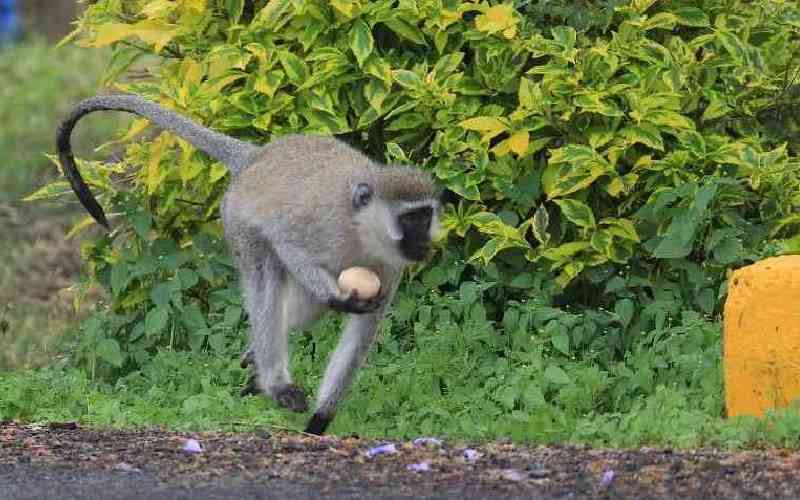
At first light in Kuoyo village, Yimbo East, Boniface Ochieng walks through his fruit farm, stopping occasionally to lift a fallen mango or inspect a broken banana stem. Most of the fruits lie half-eaten on the ground.“They came in the morning and by evening,the farm was empty," he says quietly.For Ochieng, the destruction is no longer an isolated incident but a routine loss, one he links directly to a changing climate that has pushed monkeys from the forest into human settlements.Ochieng has grown bananas, mangoes and pawpaws for over a decade on his three-acre piece of land. The farm supported his family and paid school fees for his children. But over the past few years, unpredictable rains and prolonged droughts have changed everything.Follow The Standard
channel
on WhatsApp“We experienced drought that ravaged our farms then the monkeys followed the food," he tells The Standard.Villagers recall a time when monkeys rarely crossed into farms. Nearby thickets provided wild fruits, seeds, and water throughout the year. That balance has since collapsed.Erratic rainfall, extended dry spells, and shrinking tree cover have reduced natural food sources in the wild. Trees that once fruited reliably now dry before maturity. Seasonal streams disappear early.Last season alone, Ochieng estimateshis losses at more than Sh70,000, an income he depended on for school fees and food.Across Kuoyo, farmers report similar losses. Some have abandoned farming altogether. Others harvest crops early to avoid total destruction, sacrificing quality and income.For women like Eunice Atieno, they now cook indoors with doors shut. Children are warned not to carry food outside.What was once a peaceful village has turned into a daily standoff between farmers and wildlife.Atieno says the monkeys have grown bolder and no longer fleeing when chased. Some bare teeth at farmers. Others snatch food from children’s hands.While wildlife laws protect monkeys, compensation for destroyed crops is rare. Reports to authorities often yield no response, leaving farmers feeling trapped between conservation rules and hunger."I've made several trips to the KWS offices in Siaya but they've come to help us," said Ochieng.Some villagers have whispered about poisoning, some have appealed to KWS to help them relocate the monkeys.Stay informed. Subscribe to our newsletterBy clicking on theSIGN UPbutton, you agree to ourTerms & Conditionsand thePrivacy PolicySIGN UPEnvironmental experts say Kuoyo’s experience reflects a wider pattern across rural Kenya, where climate change is breaking down natural ecosystems and forcing wildlife into human spaces.Stay Informed, Stay Empowered: Download the Standard ePaper App!Standing beside his stripped orchard, Daniel Omollo, another farmer looks toward the fading tree line.“We used to fear hunger from drought but it has now come with the invasion by monkeys," says Omollo.Follow The Standard
channel
on WhatsApp
“They came in the morning and by evening,the farm was empty," he says quietly.For Ochieng, the destruction is no longer an isolated incident but a routine loss, one he links directly to a changing climate that has pushed monkeys from the forest into human settlements.Ochieng has grown bananas, mangoes and pawpaws for over a decade on his three-acre piece of land. The farm supported his family and paid school fees for his children. But over the past few years, unpredictable rains and prolonged droughts have changed everything.Follow The Standard
channel
on WhatsApp“We experienced drought that ravaged our farms then the monkeys followed the food," he tells The Standard.Villagers recall a time when monkeys rarely crossed into farms. Nearby thickets provided wild fruits, seeds, and water throughout the year. That balance has since collapsed.Erratic rainfall, extended dry spells, and shrinking tree cover have reduced natural food sources in the wild. Trees that once fruited reliably now dry before maturity. Seasonal streams disappear early.Last season alone, Ochieng estimateshis losses at more than Sh70,000, an income he depended on for school fees and food.Across Kuoyo, farmers report similar losses. Some have abandoned farming altogether. Others harvest crops early to avoid total destruction, sacrificing quality and income.For women like Eunice Atieno, they now cook indoors with doors shut. Children are warned not to carry food outside.What was once a peaceful village has turned into a daily standoff between farmers and wildlife.Atieno says the monkeys have grown bolder and no longer fleeing when chased. Some bare teeth at farmers. Others snatch food from children’s hands.While wildlife laws protect monkeys, compensation for destroyed crops is rare. Reports to authorities often yield no response, leaving farmers feeling trapped between conservation rules and hunger."I've made several trips to the KWS offices in Siaya but they've come to help us," said Ochieng.Some villagers have whispered about poisoning, some have appealed to KWS to help them relocate the monkeys.Stay informed. Subscribe to our newsletterBy clicking on theSIGN UPbutton, you agree to ourTerms & Conditionsand thePrivacy PolicySIGN UPEnvironmental experts say Kuoyo’s experience reflects a wider pattern across rural Kenya, where climate change is breaking down natural ecosystems and forcing wildlife into human spaces.Stay Informed, Stay Empowered: Download the Standard ePaper App!Standing beside his stripped orchard, Daniel Omollo, another farmer looks toward the fading tree line.“We used to fear hunger from drought but it has now come with the invasion by monkeys," says Omollo.Follow The Standard
channel
on WhatsApp
For Ochieng, the destruction is no longer an isolated incident but a routine loss, one he links directly to a changing climate that has pushed monkeys from the forest into human settlements.Ochieng has grown bananas, mangoes and pawpaws for over a decade on his three-acre piece of land. The farm supported his family and paid school fees for his children. But over the past few years, unpredictable rains and prolonged droughts have changed everything.Follow The Standard
channel
on WhatsApp“We experienced drought that ravaged our farms then the monkeys followed the food," he tells The Standard.Villagers recall a time when monkeys rarely crossed into farms. Nearby thickets provided wild fruits, seeds, and water throughout the year. That balance has since collapsed.Erratic rainfall, extended dry spells, and shrinking tree cover have reduced natural food sources in the wild. Trees that once fruited reliably now dry before maturity. Seasonal streams disappear early.Last season alone, Ochieng estimateshis losses at more than Sh70,000, an income he depended on for school fees and food.Across Kuoyo, farmers report similar losses. Some have abandoned farming altogether. Others harvest crops early to avoid total destruction, sacrificing quality and income.For women like Eunice Atieno, they now cook indoors with doors shut. Children are warned not to carry food outside.What was once a peaceful village has turned into a daily standoff between farmers and wildlife.Atieno says the monkeys have grown bolder and no longer fleeing when chased. Some bare teeth at farmers. Others snatch food from children’s hands.While wildlife laws protect monkeys, compensation for destroyed crops is rare. Reports to authorities often yield no response, leaving farmers feeling trapped between conservation rules and hunger."I've made several trips to the KWS offices in Siaya but they've come to help us," said Ochieng.Some villagers have whispered about poisoning, some have appealed to KWS to help them relocate the monkeys.Stay informed. Subscribe to our newsletterBy clicking on theSIGN UPbutton, you agree to ourTerms & Conditionsand thePrivacy PolicySIGN UPEnvironmental experts say Kuoyo’s experience reflects a wider pattern across rural Kenya, where climate change is breaking down natural ecosystems and forcing wildlife into human spaces.Stay Informed, Stay Empowered: Download the Standard ePaper App!Standing beside his stripped orchard, Daniel Omollo, another farmer looks toward the fading tree line.“We used to fear hunger from drought but it has now come with the invasion by monkeys," says Omollo.Follow The Standard
channel
on WhatsApp
Ochieng has grown bananas, mangoes and pawpaws for over a decade on his three-acre piece of land. The farm supported his family and paid school fees for his children. But over the past few years, unpredictable rains and prolonged droughts have changed everything.Follow The Standard
channel
on WhatsApp“We experienced drought that ravaged our farms then the monkeys followed the food," he tells The Standard.Villagers recall a time when monkeys rarely crossed into farms. Nearby thickets provided wild fruits, seeds, and water throughout the year. That balance has since collapsed.Erratic rainfall, extended dry spells, and shrinking tree cover have reduced natural food sources in the wild. Trees that once fruited reliably now dry before maturity. Seasonal streams disappear early.Last season alone, Ochieng estimateshis losses at more than Sh70,000, an income he depended on for school fees and food.Across Kuoyo, farmers report similar losses. Some have abandoned farming altogether. Others harvest crops early to avoid total destruction, sacrificing quality and income.For women like Eunice Atieno, they now cook indoors with doors shut. Children are warned not to carry food outside.What was once a peaceful village has turned into a daily standoff between farmers and wildlife.Atieno says the monkeys have grown bolder and no longer fleeing when chased. Some bare teeth at farmers. Others snatch food from children’s hands.While wildlife laws protect monkeys, compensation for destroyed crops is rare. Reports to authorities often yield no response, leaving farmers feeling trapped between conservation rules and hunger."I've made several trips to the KWS offices in Siaya but they've come to help us," said Ochieng.Some villagers have whispered about poisoning, some have appealed to KWS to help them relocate the monkeys.Stay informed. Subscribe to our newsletterBy clicking on theSIGN UPbutton, you agree to ourTerms & Conditionsand thePrivacy PolicySIGN UPEnvironmental experts say Kuoyo’s experience reflects a wider pattern across rural Kenya, where climate change is breaking down natural ecosystems and forcing wildlife into human spaces.Stay Informed, Stay Empowered: Download the Standard ePaper App!Standing beside his stripped orchard, Daniel Omollo, another farmer looks toward the fading tree line.“We used to fear hunger from drought but it has now come with the invasion by monkeys," says Omollo.Follow The Standard
channel
on WhatsApp
“We experienced drought that ravaged our farms then the monkeys followed the food," he tells The Standard.Villagers recall a time when monkeys rarely crossed into farms. Nearby thickets provided wild fruits, seeds, and water throughout the year. That balance has since collapsed.Erratic rainfall, extended dry spells, and shrinking tree cover have reduced natural food sources in the wild. Trees that once fruited reliably now dry before maturity. Seasonal streams disappear early.Last season alone, Ochieng estimateshis losses at more than Sh70,000, an income he depended on for school fees and food.Across Kuoyo, farmers report similar losses. Some have abandoned farming altogether. Others harvest crops early to avoid total destruction, sacrificing quality and income.For women like Eunice Atieno, they now cook indoors with doors shut. Children are warned not to carry food outside.What was once a peaceful village has turned into a daily standoff between farmers and wildlife.Atieno says the monkeys have grown bolder and no longer fleeing when chased. Some bare teeth at farmers. Others snatch food from children’s hands.While wildlife laws protect monkeys, compensation for destroyed crops is rare. Reports to authorities often yield no response, leaving farmers feeling trapped between conservation rules and hunger."I've made several trips to the KWS offices in Siaya but they've come to help us," said Ochieng.Some villagers have whispered about poisoning, some have appealed to KWS to help them relocate the monkeys.Stay informed. Subscribe to our newsletterBy clicking on theSIGN UPbutton, you agree to ourTerms & Conditionsand thePrivacy PolicySIGN UPEnvironmental experts say Kuoyo’s experience reflects a wider pattern across rural Kenya, where climate change is breaking down natural ecosystems and forcing wildlife into human spaces.Stay Informed, Stay Empowered: Download the Standard ePaper App!Standing beside his stripped orchard, Daniel Omollo, another farmer looks toward the fading tree line.“We used to fear hunger from drought but it has now come with the invasion by monkeys," says Omollo.Follow The Standard
channel
on WhatsApp
Villagers recall a time when monkeys rarely crossed into farms. Nearby thickets provided wild fruits, seeds, and water throughout the year. That balance has since collapsed.Erratic rainfall, extended dry spells, and shrinking tree cover have reduced natural food sources in the wild. Trees that once fruited reliably now dry before maturity. Seasonal streams disappear early.Last season alone, Ochieng estimateshis losses at more than Sh70,000, an income he depended on for school fees and food.Across Kuoyo, farmers report similar losses. Some have abandoned farming altogether. Others harvest crops early to avoid total destruction, sacrificing quality and income.For women like Eunice Atieno, they now cook indoors with doors shut. Children are warned not to carry food outside.What was once a peaceful village has turned into a daily standoff between farmers and wildlife.Atieno says the monkeys have grown bolder and no longer fleeing when chased. Some bare teeth at farmers. Others snatch food from children’s hands.While wildlife laws protect monkeys, compensation for destroyed crops is rare. Reports to authorities often yield no response, leaving farmers feeling trapped between conservation rules and hunger."I've made several trips to the KWS offices in Siaya but they've come to help us," said Ochieng.Some villagers have whispered about poisoning, some have appealed to KWS to help them relocate the monkeys.Stay informed. Subscribe to our newsletterBy clicking on theSIGN UPbutton, you agree to ourTerms & Conditionsand thePrivacy PolicySIGN UPEnvironmental experts say Kuoyo’s experience reflects a wider pattern across rural Kenya, where climate change is breaking down natural ecosystems and forcing wildlife into human spaces.Stay Informed, Stay Empowered: Download the Standard ePaper App!Standing beside his stripped orchard, Daniel Omollo, another farmer looks toward the fading tree line.“We used to fear hunger from drought but it has now come with the invasion by monkeys," says Omollo.Follow The Standard
channel
on WhatsApp
Erratic rainfall, extended dry spells, and shrinking tree cover have reduced natural food sources in the wild. Trees that once fruited reliably now dry before maturity. Seasonal streams disappear early.Last season alone, Ochieng estimateshis losses at more than Sh70,000, an income he depended on for school fees and food.Across Kuoyo, farmers report similar losses. Some have abandoned farming altogether. Others harvest crops early to avoid total destruction, sacrificing quality and income.For women like Eunice Atieno, they now cook indoors with doors shut. Children are warned not to carry food outside.What was once a peaceful village has turned into a daily standoff between farmers and wildlife.Atieno says the monkeys have grown bolder and no longer fleeing when chased. Some bare teeth at farmers. Others snatch food from children’s hands.While wildlife laws protect monkeys, compensation for destroyed crops is rare. Reports to authorities often yield no response, leaving farmers feeling trapped between conservation rules and hunger."I've made several trips to the KWS offices in Siaya but they've come to help us," said Ochieng.Some villagers have whispered about poisoning, some have appealed to KWS to help them relocate the monkeys.Stay informed. Subscribe to our newsletterBy clicking on theSIGN UPbutton, you agree to ourTerms & Conditionsand thePrivacy PolicySIGN UPEnvironmental experts say Kuoyo’s experience reflects a wider pattern across rural Kenya, where climate change is breaking down natural ecosystems and forcing wildlife into human spaces.Stay Informed, Stay Empowered: Download the Standard ePaper App!Standing beside his stripped orchard, Daniel Omollo, another farmer looks toward the fading tree line.“We used to fear hunger from drought but it has now come with the invasion by monkeys," says Omollo.Follow The Standard
channel
on WhatsApp
Last season alone, Ochieng estimateshis losses at more than Sh70,000, an income he depended on for school fees and food.Across Kuoyo, farmers report similar losses. Some have abandoned farming altogether. Others harvest crops early to avoid total destruction, sacrificing quality and income.For women like Eunice Atieno, they now cook indoors with doors shut. Children are warned not to carry food outside.What was once a peaceful village has turned into a daily standoff between farmers and wildlife.Atieno says the monkeys have grown bolder and no longer fleeing when chased. Some bare teeth at farmers. Others snatch food from children’s hands.While wildlife laws protect monkeys, compensation for destroyed crops is rare. Reports to authorities often yield no response, leaving farmers feeling trapped between conservation rules and hunger."I've made several trips to the KWS offices in Siaya but they've come to help us," said Ochieng.Some villagers have whispered about poisoning, some have appealed to KWS to help them relocate the monkeys.Stay informed. Subscribe to our newsletterBy clicking on theSIGN UPbutton, you agree to ourTerms & Conditionsand thePrivacy PolicySIGN UPEnvironmental experts say Kuoyo’s experience reflects a wider pattern across rural Kenya, where climate change is breaking down natural ecosystems and forcing wildlife into human spaces.Stay Informed, Stay Empowered: Download the Standard ePaper App!Standing beside his stripped orchard, Daniel Omollo, another farmer looks toward the fading tree line.“We used to fear hunger from drought but it has now come with the invasion by monkeys," says Omollo.Follow The Standard
channel
on WhatsApp
Across Kuoyo, farmers report similar losses. Some have abandoned farming altogether. Others harvest crops early to avoid total destruction, sacrificing quality and income.For women like Eunice Atieno, they now cook indoors with doors shut. Children are warned not to carry food outside.What was once a peaceful village has turned into a daily standoff between farmers and wildlife.Atieno says the monkeys have grown bolder and no longer fleeing when chased. Some bare teeth at farmers. Others snatch food from children’s hands.While wildlife laws protect monkeys, compensation for destroyed crops is rare. Reports to authorities often yield no response, leaving farmers feeling trapped between conservation rules and hunger."I've made several trips to the KWS offices in Siaya but they've come to help us," said Ochieng.Some villagers have whispered about poisoning, some have appealed to KWS to help them relocate the monkeys.Stay informed. Subscribe to our newsletterBy clicking on theSIGN UPbutton, you agree to ourTerms & Conditionsand thePrivacy PolicySIGN UPEnvironmental experts say Kuoyo’s experience reflects a wider pattern across rural Kenya, where climate change is breaking down natural ecosystems and forcing wildlife into human spaces.Stay Informed, Stay Empowered: Download the Standard ePaper App!Standing beside his stripped orchard, Daniel Omollo, another farmer looks toward the fading tree line.“We used to fear hunger from drought but it has now come with the invasion by monkeys," says Omollo.Follow The Standard
channel
on WhatsApp
For women like Eunice Atieno, they now cook indoors with doors shut. Children are warned not to carry food outside.What was once a peaceful village has turned into a daily standoff between farmers and wildlife.Atieno says the monkeys have grown bolder and no longer fleeing when chased. Some bare teeth at farmers. Others snatch food from children’s hands.While wildlife laws protect monkeys, compensation for destroyed crops is rare. Reports to authorities often yield no response, leaving farmers feeling trapped between conservation rules and hunger."I've made several trips to the KWS offices in Siaya but they've come to help us," said Ochieng.Some villagers have whispered about poisoning, some have appealed to KWS to help them relocate the monkeys.Stay informed. Subscribe to our newsletterBy clicking on theSIGN UPbutton, you agree to ourTerms & Conditionsand thePrivacy PolicySIGN UPEnvironmental experts say Kuoyo’s experience reflects a wider pattern across rural Kenya, where climate change is breaking down natural ecosystems and forcing wildlife into human spaces.Stay Informed, Stay Empowered: Download the Standard ePaper App!Standing beside his stripped orchard, Daniel Omollo, another farmer looks toward the fading tree line.“We used to fear hunger from drought but it has now come with the invasion by monkeys," says Omollo.Follow The Standard
channel
on WhatsApp
What was once a peaceful village has turned into a daily standoff between farmers and wildlife.Atieno says the monkeys have grown bolder and no longer fleeing when chased. Some bare teeth at farmers. Others snatch food from children’s hands.While wildlife laws protect monkeys, compensation for destroyed crops is rare. Reports to authorities often yield no response, leaving farmers feeling trapped between conservation rules and hunger."I've made several trips to the KWS offices in Siaya but they've come to help us," said Ochieng.Some villagers have whispered about poisoning, some have appealed to KWS to help them relocate the monkeys.Stay informed. Subscribe to our newsletterBy clicking on theSIGN UPbutton, you agree to ourTerms & Conditionsand thePrivacy PolicySIGN UPEnvironmental experts say Kuoyo’s experience reflects a wider pattern across rural Kenya, where climate change is breaking down natural ecosystems and forcing wildlife into human spaces.Stay Informed, Stay Empowered: Download the Standard ePaper App!Standing beside his stripped orchard, Daniel Omollo, another farmer looks toward the fading tree line.“We used to fear hunger from drought but it has now come with the invasion by monkeys," says Omollo.Follow The Standard
channel
on WhatsApp
Atieno says the monkeys have grown bolder and no longer fleeing when chased. Some bare teeth at farmers. Others snatch food from children’s hands.While wildlife laws protect monkeys, compensation for destroyed crops is rare. Reports to authorities often yield no response, leaving farmers feeling trapped between conservation rules and hunger."I've made several trips to the KWS offices in Siaya but they've come to help us," said Ochieng.Some villagers have whispered about poisoning, some have appealed to KWS to help them relocate the monkeys.Stay informed. Subscribe to our newsletterBy clicking on theSIGN UPbutton, you agree to ourTerms & Conditionsand thePrivacy PolicySIGN UPEnvironmental experts say Kuoyo’s experience reflects a wider pattern across rural Kenya, where climate change is breaking down natural ecosystems and forcing wildlife into human spaces.Stay Informed, Stay Empowered: Download the Standard ePaper App!Standing beside his stripped orchard, Daniel Omollo, another farmer looks toward the fading tree line.“We used to fear hunger from drought but it has now come with the invasion by monkeys," says Omollo.Follow The Standard
channel
on WhatsApp
While wildlife laws protect monkeys, compensation for destroyed crops is rare. Reports to authorities often yield no response, leaving farmers feeling trapped between conservation rules and hunger."I've made several trips to the KWS offices in Siaya but they've come to help us," said Ochieng.Some villagers have whispered about poisoning, some have appealed to KWS to help them relocate the monkeys.Stay informed. Subscribe to our newsletterBy clicking on theSIGN UPbutton, you agree to ourTerms & Conditionsand thePrivacy PolicySIGN UPEnvironmental experts say Kuoyo’s experience reflects a wider pattern across rural Kenya, where climate change is breaking down natural ecosystems and forcing wildlife into human spaces.Stay Informed, Stay Empowered: Download the Standard ePaper App!Standing beside his stripped orchard, Daniel Omollo, another farmer looks toward the fading tree line.“We used to fear hunger from drought but it has now come with the invasion by monkeys," says Omollo.Follow The Standard
channel
on WhatsApp
"I've made several trips to the KWS offices in Siaya but they've come to help us," said Ochieng.Some villagers have whispered about poisoning, some have appealed to KWS to help them relocate the monkeys.Stay informed. Subscribe to our newsletterBy clicking on theSIGN UPbutton, you agree to ourTerms & Conditionsand thePrivacy PolicySIGN UPEnvironmental experts say Kuoyo’s experience reflects a wider pattern across rural Kenya, where climate change is breaking down natural ecosystems and forcing wildlife into human spaces.Stay Informed, Stay Empowered: Download the Standard ePaper App!Standing beside his stripped orchard, Daniel Omollo, another farmer looks toward the fading tree line.“We used to fear hunger from drought but it has now come with the invasion by monkeys," says Omollo.Follow The Standard
channel
on WhatsApp
Some villagers have whispered about poisoning, some have appealed to KWS to help them relocate the monkeys.Stay informed. Subscribe to our newsletterBy clicking on theSIGN UPbutton, you agree to ourTerms & Conditionsand thePrivacy PolicySIGN UPEnvironmental experts say Kuoyo’s experience reflects a wider pattern across rural Kenya, where climate change is breaking down natural ecosystems and forcing wildlife into human spaces.Stay Informed, Stay Empowered: Download the Standard ePaper App!Standing beside his stripped orchard, Daniel Omollo, another farmer looks toward the fading tree line.“We used to fear hunger from drought but it has now come with the invasion by monkeys," says Omollo.Follow The Standard
channel
on WhatsApp
Environmental experts say Kuoyo’s experience reflects a wider pattern across rural Kenya, where climate change is breaking down natural ecosystems and forcing wildlife into human spaces.Stay Informed, Stay Empowered: Download the Standard ePaper App!Standing beside his stripped orchard, Daniel Omollo, another farmer looks toward the fading tree line.“We used to fear hunger from drought but it has now come with the invasion by monkeys," says Omollo.Follow The Standard
channel
on WhatsApp
Standing beside his stripped orchard, Daniel Omollo, another farmer looks toward the fading tree line.“We used to fear hunger from drought but it has now come with the invasion by monkeys," says Omollo.Follow The Standard
channel
on WhatsApp
“We used to fear hunger from drought but it has now come with the invasion by monkeys," says Omollo.Follow The Standard
channel
on WhatsApp
Subscribe to our newsletter and stay updated on the latest developments and special
offers!
Pick your favourite topics below for a tailor made homepage just for you