
KJSEA results: Only 32pc of learners meet math expectations
Source: The Standard
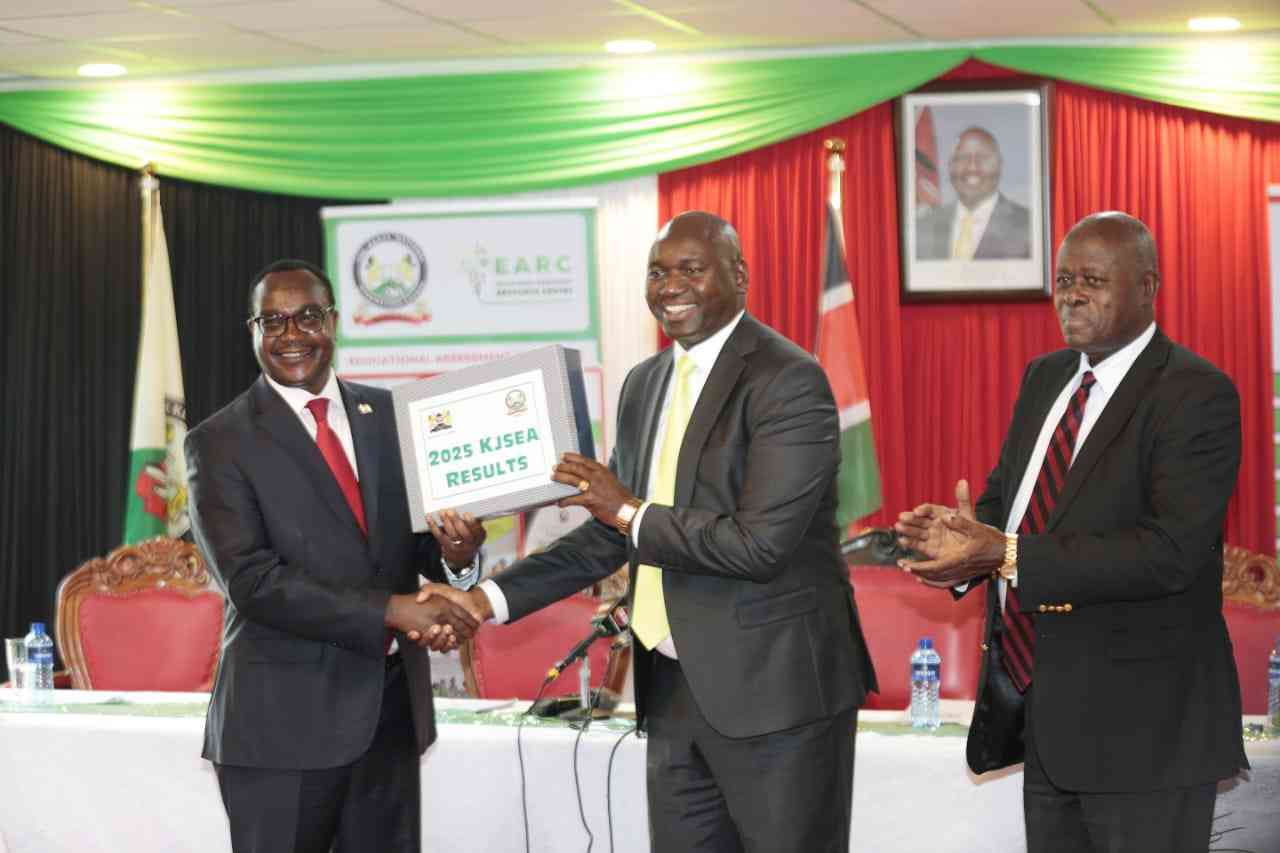
Mathematics emerged as the weakest subject in the 2025 Kenya Junior Secondary Education Assessment (KJSEA), with only 32.44 percent of the 1,130,459 learners meeting or exceeding expectations.Education Cabinet Secretary Julius Ogamba said on Thursday, December 11.Kenyan Sign Language posted an even lower performance at 22.14 percent, making the two subjects’ areas of critical concern as the country prepares to place learners in senior schools next week."Girls continue to demonstrate stronger competencies in languages and humanities. We must now channel similar effort to improving numeracy and inclusive learning," Ogamba said.Follow The Standard
channel
on WhatsAppThe poor mathematics performance contrasts sharply with Hindu Religious Education (HRE), which led all subjects at 84.62 percent, followed by Integrated Science at 61.77 percent and Social Studies at 58.56 pe rcent.Creative Arts and Sports recorded 96.84 percent of learners attaining approaching expectation 2 and above, the highest overall outcome across all subjects.Despite the low mathematics scores, 59.09 percent of learners demonstrated readiness for Science, Technology, Engineering and Mathematics (STEM) pathways, while 46.52 percent qualified for Social Sciences and 48.73 percent for Arts and Sports.Girls outperformed boys in 10 of the 12 subjects tested, with the widest gaps in Kiswahili at 64.86 percent for girls against 51.41 percent for boys, Christian Religious Education (CRE) at 59.77 percent against 48.39 percent, English at 52.86 percent against 48.45 percent and Social Studies at 62.98 percent against 54.35 percent.Placement begins next week and will be completed by December 20, with learners having five days to review their pathways. Grade 10 learners will report to their respective senior schools on January 12."We have a senior school capacity of 2.2 million seats. Every child who sat the KJSEA will transition to an appropriate pathway," Ogamba noted.Nairobi led the country with 71,022 candidates, followed by Kakamega with 59,384 and Nakuru with 54,028.The assessment, sat between October 27 and November 3, comprised 578,630 male candidates and 551,829 female candidates.Seven subjects recorded more than half of learners performing at meeting or exceeding expectations, including HRE at 84.62 percent, Integrated Science at 61.77 percent, Social Studies at 58.56 percent, Creative Arts and Sports at 58.04 percent, Kiswahili at 57.98 percent, CRE at 53.96 percent and Agriculture at 52.26 percent.Forty-one counties presented more male than female candidates. Mombasa emerged as the only county with perfect gender parity at 50–50, while Isiolo, Nairobi, Samburu, Marsabit and West Pokot recorded more female than male candidates.Most learners, 642,620 or 56.84 percent, fell within the appropriate age bracket of 14 to 15 years. Another 35,270 learners were underage at 13 years and below, while 415,059 were aged 16 to 17.Stay informed. Subscribe to our newsletterBy clicking on theSIGN UPbutton, you agree to ourTerms & Conditionsand thePrivacy PolicySIGN UPStay Informed, Stay Empowered: Download the Standard ePaper App!Follow The Standard
channel
on WhatsApp
Education Cabinet Secretary Julius Ogamba said on Thursday, December 11.Kenyan Sign Language posted an even lower performance at 22.14 percent, making the two subjects’ areas of critical concern as the country prepares to place learners in senior schools next week."Girls continue to demonstrate stronger competencies in languages and humanities. We must now channel similar effort to improving numeracy and inclusive learning," Ogamba said.Follow The Standard
channel
on WhatsAppThe poor mathematics performance contrasts sharply with Hindu Religious Education (HRE), which led all subjects at 84.62 percent, followed by Integrated Science at 61.77 percent and Social Studies at 58.56 pe rcent.Creative Arts and Sports recorded 96.84 percent of learners attaining approaching expectation 2 and above, the highest overall outcome across all subjects.Despite the low mathematics scores, 59.09 percent of learners demonstrated readiness for Science, Technology, Engineering and Mathematics (STEM) pathways, while 46.52 percent qualified for Social Sciences and 48.73 percent for Arts and Sports.Girls outperformed boys in 10 of the 12 subjects tested, with the widest gaps in Kiswahili at 64.86 percent for girls against 51.41 percent for boys, Christian Religious Education (CRE) at 59.77 percent against 48.39 percent, English at 52.86 percent against 48.45 percent and Social Studies at 62.98 percent against 54.35 percent.Placement begins next week and will be completed by December 20, with learners having five days to review their pathways. Grade 10 learners will report to their respective senior schools on January 12."We have a senior school capacity of 2.2 million seats. Every child who sat the KJSEA will transition to an appropriate pathway," Ogamba noted.Nairobi led the country with 71,022 candidates, followed by Kakamega with 59,384 and Nakuru with 54,028.The assessment, sat between October 27 and November 3, comprised 578,630 male candidates and 551,829 female candidates.Seven subjects recorded more than half of learners performing at meeting or exceeding expectations, including HRE at 84.62 percent, Integrated Science at 61.77 percent, Social Studies at 58.56 percent, Creative Arts and Sports at 58.04 percent, Kiswahili at 57.98 percent, CRE at 53.96 percent and Agriculture at 52.26 percent.Forty-one counties presented more male than female candidates. Mombasa emerged as the only county with perfect gender parity at 50–50, while Isiolo, Nairobi, Samburu, Marsabit and West Pokot recorded more female than male candidates.Most learners, 642,620 or 56.84 percent, fell within the appropriate age bracket of 14 to 15 years. Another 35,270 learners were underage at 13 years and below, while 415,059 were aged 16 to 17.Stay informed. Subscribe to our newsletterBy clicking on theSIGN UPbutton, you agree to ourTerms & Conditionsand thePrivacy PolicySIGN UPStay Informed, Stay Empowered: Download the Standard ePaper App!Follow The Standard
channel
on WhatsApp
Kenyan Sign Language posted an even lower performance at 22.14 percent, making the two subjects’ areas of critical concern as the country prepares to place learners in senior schools next week."Girls continue to demonstrate stronger competencies in languages and humanities. We must now channel similar effort to improving numeracy and inclusive learning," Ogamba said.Follow The Standard
channel
on WhatsAppThe poor mathematics performance contrasts sharply with Hindu Religious Education (HRE), which led all subjects at 84.62 percent, followed by Integrated Science at 61.77 percent and Social Studies at 58.56 pe rcent.Creative Arts and Sports recorded 96.84 percent of learners attaining approaching expectation 2 and above, the highest overall outcome across all subjects.Despite the low mathematics scores, 59.09 percent of learners demonstrated readiness for Science, Technology, Engineering and Mathematics (STEM) pathways, while 46.52 percent qualified for Social Sciences and 48.73 percent for Arts and Sports.Girls outperformed boys in 10 of the 12 subjects tested, with the widest gaps in Kiswahili at 64.86 percent for girls against 51.41 percent for boys, Christian Religious Education (CRE) at 59.77 percent against 48.39 percent, English at 52.86 percent against 48.45 percent and Social Studies at 62.98 percent against 54.35 percent.Placement begins next week and will be completed by December 20, with learners having five days to review their pathways. Grade 10 learners will report to their respective senior schools on January 12."We have a senior school capacity of 2.2 million seats. Every child who sat the KJSEA will transition to an appropriate pathway," Ogamba noted.Nairobi led the country with 71,022 candidates, followed by Kakamega with 59,384 and Nakuru with 54,028.The assessment, sat between October 27 and November 3, comprised 578,630 male candidates and 551,829 female candidates.Seven subjects recorded more than half of learners performing at meeting or exceeding expectations, including HRE at 84.62 percent, Integrated Science at 61.77 percent, Social Studies at 58.56 percent, Creative Arts and Sports at 58.04 percent, Kiswahili at 57.98 percent, CRE at 53.96 percent and Agriculture at 52.26 percent.Forty-one counties presented more male than female candidates. Mombasa emerged as the only county with perfect gender parity at 50–50, while Isiolo, Nairobi, Samburu, Marsabit and West Pokot recorded more female than male candidates.Most learners, 642,620 or 56.84 percent, fell within the appropriate age bracket of 14 to 15 years. Another 35,270 learners were underage at 13 years and below, while 415,059 were aged 16 to 17.Stay informed. Subscribe to our newsletterBy clicking on theSIGN UPbutton, you agree to ourTerms & Conditionsand thePrivacy PolicySIGN UPStay Informed, Stay Empowered: Download the Standard ePaper App!Follow The Standard
channel
on WhatsApp
"Girls continue to demonstrate stronger competencies in languages and humanities. We must now channel similar effort to improving numeracy and inclusive learning," Ogamba said.Follow The Standard
channel
on WhatsAppThe poor mathematics performance contrasts sharply with Hindu Religious Education (HRE), which led all subjects at 84.62 percent, followed by Integrated Science at 61.77 percent and Social Studies at 58.56 pe rcent.Creative Arts and Sports recorded 96.84 percent of learners attaining approaching expectation 2 and above, the highest overall outcome across all subjects.Despite the low mathematics scores, 59.09 percent of learners demonstrated readiness for Science, Technology, Engineering and Mathematics (STEM) pathways, while 46.52 percent qualified for Social Sciences and 48.73 percent for Arts and Sports.Girls outperformed boys in 10 of the 12 subjects tested, with the widest gaps in Kiswahili at 64.86 percent for girls against 51.41 percent for boys, Christian Religious Education (CRE) at 59.77 percent against 48.39 percent, English at 52.86 percent against 48.45 percent and Social Studies at 62.98 percent against 54.35 percent.Placement begins next week and will be completed by December 20, with learners having five days to review their pathways. Grade 10 learners will report to their respective senior schools on January 12."We have a senior school capacity of 2.2 million seats. Every child who sat the KJSEA will transition to an appropriate pathway," Ogamba noted.Nairobi led the country with 71,022 candidates, followed by Kakamega with 59,384 and Nakuru with 54,028.The assessment, sat between October 27 and November 3, comprised 578,630 male candidates and 551,829 female candidates.Seven subjects recorded more than half of learners performing at meeting or exceeding expectations, including HRE at 84.62 percent, Integrated Science at 61.77 percent, Social Studies at 58.56 percent, Creative Arts and Sports at 58.04 percent, Kiswahili at 57.98 percent, CRE at 53.96 percent and Agriculture at 52.26 percent.Forty-one counties presented more male than female candidates. Mombasa emerged as the only county with perfect gender parity at 50–50, while Isiolo, Nairobi, Samburu, Marsabit and West Pokot recorded more female than male candidates.Most learners, 642,620 or 56.84 percent, fell within the appropriate age bracket of 14 to 15 years. Another 35,270 learners were underage at 13 years and below, while 415,059 were aged 16 to 17.Stay informed. Subscribe to our newsletterBy clicking on theSIGN UPbutton, you agree to ourTerms & Conditionsand thePrivacy PolicySIGN UPStay Informed, Stay Empowered: Download the Standard ePaper App!Follow The Standard
channel
on WhatsApp
The poor mathematics performance contrasts sharply with Hindu Religious Education (HRE), which led all subjects at 84.62 percent, followed by Integrated Science at 61.77 percent and Social Studies at 58.56 pe rcent.Creative Arts and Sports recorded 96.84 percent of learners attaining approaching expectation 2 and above, the highest overall outcome across all subjects.Despite the low mathematics scores, 59.09 percent of learners demonstrated readiness for Science, Technology, Engineering and Mathematics (STEM) pathways, while 46.52 percent qualified for Social Sciences and 48.73 percent for Arts and Sports.Girls outperformed boys in 10 of the 12 subjects tested, with the widest gaps in Kiswahili at 64.86 percent for girls against 51.41 percent for boys, Christian Religious Education (CRE) at 59.77 percent against 48.39 percent, English at 52.86 percent against 48.45 percent and Social Studies at 62.98 percent against 54.35 percent.Placement begins next week and will be completed by December 20, with learners having five days to review their pathways. Grade 10 learners will report to their respective senior schools on January 12."We have a senior school capacity of 2.2 million seats. Every child who sat the KJSEA will transition to an appropriate pathway," Ogamba noted.Nairobi led the country with 71,022 candidates, followed by Kakamega with 59,384 and Nakuru with 54,028.The assessment, sat between October 27 and November 3, comprised 578,630 male candidates and 551,829 female candidates.Seven subjects recorded more than half of learners performing at meeting or exceeding expectations, including HRE at 84.62 percent, Integrated Science at 61.77 percent, Social Studies at 58.56 percent, Creative Arts and Sports at 58.04 percent, Kiswahili at 57.98 percent, CRE at 53.96 percent and Agriculture at 52.26 percent.Forty-one counties presented more male than female candidates. Mombasa emerged as the only county with perfect gender parity at 50–50, while Isiolo, Nairobi, Samburu, Marsabit and West Pokot recorded more female than male candidates.Most learners, 642,620 or 56.84 percent, fell within the appropriate age bracket of 14 to 15 years. Another 35,270 learners were underage at 13 years and below, while 415,059 were aged 16 to 17.Stay informed. Subscribe to our newsletterBy clicking on theSIGN UPbutton, you agree to ourTerms & Conditionsand thePrivacy PolicySIGN UPStay Informed, Stay Empowered: Download the Standard ePaper App!Follow The Standard
channel
on WhatsApp
Creative Arts and Sports recorded 96.84 percent of learners attaining approaching expectation 2 and above, the highest overall outcome across all subjects.Despite the low mathematics scores, 59.09 percent of learners demonstrated readiness for Science, Technology, Engineering and Mathematics (STEM) pathways, while 46.52 percent qualified for Social Sciences and 48.73 percent for Arts and Sports.Girls outperformed boys in 10 of the 12 subjects tested, with the widest gaps in Kiswahili at 64.86 percent for girls against 51.41 percent for boys, Christian Religious Education (CRE) at 59.77 percent against 48.39 percent, English at 52.86 percent against 48.45 percent and Social Studies at 62.98 percent against 54.35 percent.Placement begins next week and will be completed by December 20, with learners having five days to review their pathways. Grade 10 learners will report to their respective senior schools on January 12."We have a senior school capacity of 2.2 million seats. Every child who sat the KJSEA will transition to an appropriate pathway," Ogamba noted.Nairobi led the country with 71,022 candidates, followed by Kakamega with 59,384 and Nakuru with 54,028.The assessment, sat between October 27 and November 3, comprised 578,630 male candidates and 551,829 female candidates.Seven subjects recorded more than half of learners performing at meeting or exceeding expectations, including HRE at 84.62 percent, Integrated Science at 61.77 percent, Social Studies at 58.56 percent, Creative Arts and Sports at 58.04 percent, Kiswahili at 57.98 percent, CRE at 53.96 percent and Agriculture at 52.26 percent.Forty-one counties presented more male than female candidates. Mombasa emerged as the only county with perfect gender parity at 50–50, while Isiolo, Nairobi, Samburu, Marsabit and West Pokot recorded more female than male candidates.Most learners, 642,620 or 56.84 percent, fell within the appropriate age bracket of 14 to 15 years. Another 35,270 learners were underage at 13 years and below, while 415,059 were aged 16 to 17.Stay informed. Subscribe to our newsletterBy clicking on theSIGN UPbutton, you agree to ourTerms & Conditionsand thePrivacy PolicySIGN UPStay Informed, Stay Empowered: Download the Standard ePaper App!Follow The Standard
channel
on WhatsApp
Despite the low mathematics scores, 59.09 percent of learners demonstrated readiness for Science, Technology, Engineering and Mathematics (STEM) pathways, while 46.52 percent qualified for Social Sciences and 48.73 percent for Arts and Sports.Girls outperformed boys in 10 of the 12 subjects tested, with the widest gaps in Kiswahili at 64.86 percent for girls against 51.41 percent for boys, Christian Religious Education (CRE) at 59.77 percent against 48.39 percent, English at 52.86 percent against 48.45 percent and Social Studies at 62.98 percent against 54.35 percent.Placement begins next week and will be completed by December 20, with learners having five days to review their pathways. Grade 10 learners will report to their respective senior schools on January 12."We have a senior school capacity of 2.2 million seats. Every child who sat the KJSEA will transition to an appropriate pathway," Ogamba noted.Nairobi led the country with 71,022 candidates, followed by Kakamega with 59,384 and Nakuru with 54,028.The assessment, sat between October 27 and November 3, comprised 578,630 male candidates and 551,829 female candidates.Seven subjects recorded more than half of learners performing at meeting or exceeding expectations, including HRE at 84.62 percent, Integrated Science at 61.77 percent, Social Studies at 58.56 percent, Creative Arts and Sports at 58.04 percent, Kiswahili at 57.98 percent, CRE at 53.96 percent and Agriculture at 52.26 percent.Forty-one counties presented more male than female candidates. Mombasa emerged as the only county with perfect gender parity at 50–50, while Isiolo, Nairobi, Samburu, Marsabit and West Pokot recorded more female than male candidates.Most learners, 642,620 or 56.84 percent, fell within the appropriate age bracket of 14 to 15 years. Another 35,270 learners were underage at 13 years and below, while 415,059 were aged 16 to 17.Stay informed. Subscribe to our newsletterBy clicking on theSIGN UPbutton, you agree to ourTerms & Conditionsand thePrivacy PolicySIGN UPStay Informed, Stay Empowered: Download the Standard ePaper App!Follow The Standard
channel
on WhatsApp
Girls outperformed boys in 10 of the 12 subjects tested, with the widest gaps in Kiswahili at 64.86 percent for girls against 51.41 percent for boys, Christian Religious Education (CRE) at 59.77 percent against 48.39 percent, English at 52.86 percent against 48.45 percent and Social Studies at 62.98 percent against 54.35 percent.Placement begins next week and will be completed by December 20, with learners having five days to review their pathways. Grade 10 learners will report to their respective senior schools on January 12."We have a senior school capacity of 2.2 million seats. Every child who sat the KJSEA will transition to an appropriate pathway," Ogamba noted.Nairobi led the country with 71,022 candidates, followed by Kakamega with 59,384 and Nakuru with 54,028.The assessment, sat between October 27 and November 3, comprised 578,630 male candidates and 551,829 female candidates.Seven subjects recorded more than half of learners performing at meeting or exceeding expectations, including HRE at 84.62 percent, Integrated Science at 61.77 percent, Social Studies at 58.56 percent, Creative Arts and Sports at 58.04 percent, Kiswahili at 57.98 percent, CRE at 53.96 percent and Agriculture at 52.26 percent.Forty-one counties presented more male than female candidates. Mombasa emerged as the only county with perfect gender parity at 50–50, while Isiolo, Nairobi, Samburu, Marsabit and West Pokot recorded more female than male candidates.Most learners, 642,620 or 56.84 percent, fell within the appropriate age bracket of 14 to 15 years. Another 35,270 learners were underage at 13 years and below, while 415,059 were aged 16 to 17.Stay informed. Subscribe to our newsletterBy clicking on theSIGN UPbutton, you agree to ourTerms & Conditionsand thePrivacy PolicySIGN UPStay Informed, Stay Empowered: Download the Standard ePaper App!Follow The Standard
channel
on WhatsApp
Placement begins next week and will be completed by December 20, with learners having five days to review their pathways. Grade 10 learners will report to their respective senior schools on January 12."We have a senior school capacity of 2.2 million seats. Every child who sat the KJSEA will transition to an appropriate pathway," Ogamba noted.Nairobi led the country with 71,022 candidates, followed by Kakamega with 59,384 and Nakuru with 54,028.The assessment, sat between October 27 and November 3, comprised 578,630 male candidates and 551,829 female candidates.Seven subjects recorded more than half of learners performing at meeting or exceeding expectations, including HRE at 84.62 percent, Integrated Science at 61.77 percent, Social Studies at 58.56 percent, Creative Arts and Sports at 58.04 percent, Kiswahili at 57.98 percent, CRE at 53.96 percent and Agriculture at 52.26 percent.Forty-one counties presented more male than female candidates. Mombasa emerged as the only county with perfect gender parity at 50–50, while Isiolo, Nairobi, Samburu, Marsabit and West Pokot recorded more female than male candidates.Most learners, 642,620 or 56.84 percent, fell within the appropriate age bracket of 14 to 15 years. Another 35,270 learners were underage at 13 years and below, while 415,059 were aged 16 to 17.Stay informed. Subscribe to our newsletterBy clicking on theSIGN UPbutton, you agree to ourTerms & Conditionsand thePrivacy PolicySIGN UPStay Informed, Stay Empowered: Download the Standard ePaper App!Follow The Standard
channel
on WhatsApp
"We have a senior school capacity of 2.2 million seats. Every child who sat the KJSEA will transition to an appropriate pathway," Ogamba noted.Nairobi led the country with 71,022 candidates, followed by Kakamega with 59,384 and Nakuru with 54,028.The assessment, sat between October 27 and November 3, comprised 578,630 male candidates and 551,829 female candidates.Seven subjects recorded more than half of learners performing at meeting or exceeding expectations, including HRE at 84.62 percent, Integrated Science at 61.77 percent, Social Studies at 58.56 percent, Creative Arts and Sports at 58.04 percent, Kiswahili at 57.98 percent, CRE at 53.96 percent and Agriculture at 52.26 percent.Forty-one counties presented more male than female candidates. Mombasa emerged as the only county with perfect gender parity at 50–50, while Isiolo, Nairobi, Samburu, Marsabit and West Pokot recorded more female than male candidates.Most learners, 642,620 or 56.84 percent, fell within the appropriate age bracket of 14 to 15 years. Another 35,270 learners were underage at 13 years and below, while 415,059 were aged 16 to 17.Stay informed. Subscribe to our newsletterBy clicking on theSIGN UPbutton, you agree to ourTerms & Conditionsand thePrivacy PolicySIGN UPStay Informed, Stay Empowered: Download the Standard ePaper App!Follow The Standard
channel
on WhatsApp
Nairobi led the country with 71,022 candidates, followed by Kakamega with 59,384 and Nakuru with 54,028.The assessment, sat between October 27 and November 3, comprised 578,630 male candidates and 551,829 female candidates.Seven subjects recorded more than half of learners performing at meeting or exceeding expectations, including HRE at 84.62 percent, Integrated Science at 61.77 percent, Social Studies at 58.56 percent, Creative Arts and Sports at 58.04 percent, Kiswahili at 57.98 percent, CRE at 53.96 percent and Agriculture at 52.26 percent.Forty-one counties presented more male than female candidates. Mombasa emerged as the only county with perfect gender parity at 50–50, while Isiolo, Nairobi, Samburu, Marsabit and West Pokot recorded more female than male candidates.Most learners, 642,620 or 56.84 percent, fell within the appropriate age bracket of 14 to 15 years. Another 35,270 learners were underage at 13 years and below, while 415,059 were aged 16 to 17.Stay informed. Subscribe to our newsletterBy clicking on theSIGN UPbutton, you agree to ourTerms & Conditionsand thePrivacy PolicySIGN UPStay Informed, Stay Empowered: Download the Standard ePaper App!Follow The Standard
channel
on WhatsApp
The assessment, sat between October 27 and November 3, comprised 578,630 male candidates and 551,829 female candidates.Seven subjects recorded more than half of learners performing at meeting or exceeding expectations, including HRE at 84.62 percent, Integrated Science at 61.77 percent, Social Studies at 58.56 percent, Creative Arts and Sports at 58.04 percent, Kiswahili at 57.98 percent, CRE at 53.96 percent and Agriculture at 52.26 percent.Forty-one counties presented more male than female candidates. Mombasa emerged as the only county with perfect gender parity at 50–50, while Isiolo, Nairobi, Samburu, Marsabit and West Pokot recorded more female than male candidates.Most learners, 642,620 or 56.84 percent, fell within the appropriate age bracket of 14 to 15 years. Another 35,270 learners were underage at 13 years and below, while 415,059 were aged 16 to 17.Stay informed. Subscribe to our newsletterBy clicking on theSIGN UPbutton, you agree to ourTerms & Conditionsand thePrivacy PolicySIGN UPStay Informed, Stay Empowered: Download the Standard ePaper App!Follow The Standard
channel
on WhatsApp
Seven subjects recorded more than half of learners performing at meeting or exceeding expectations, including HRE at 84.62 percent, Integrated Science at 61.77 percent, Social Studies at 58.56 percent, Creative Arts and Sports at 58.04 percent, Kiswahili at 57.98 percent, CRE at 53.96 percent and Agriculture at 52.26 percent.Forty-one counties presented more male than female candidates. Mombasa emerged as the only county with perfect gender parity at 50–50, while Isiolo, Nairobi, Samburu, Marsabit and West Pokot recorded more female than male candidates.Most learners, 642,620 or 56.84 percent, fell within the appropriate age bracket of 14 to 15 years. Another 35,270 learners were underage at 13 years and below, while 415,059 were aged 16 to 17.Stay informed. Subscribe to our newsletterBy clicking on theSIGN UPbutton, you agree to ourTerms & Conditionsand thePrivacy PolicySIGN UPStay Informed, Stay Empowered: Download the Standard ePaper App!Follow The Standard
channel
on WhatsApp
Forty-one counties presented more male than female candidates. Mombasa emerged as the only county with perfect gender parity at 50–50, while Isiolo, Nairobi, Samburu, Marsabit and West Pokot recorded more female than male candidates.Most learners, 642,620 or 56.84 percent, fell within the appropriate age bracket of 14 to 15 years. Another 35,270 learners were underage at 13 years and below, while 415,059 were aged 16 to 17.Stay informed. Subscribe to our newsletterBy clicking on theSIGN UPbutton, you agree to ourTerms & Conditionsand thePrivacy PolicySIGN UPStay Informed, Stay Empowered: Download the Standard ePaper App!Follow The Standard
channel
on WhatsApp
Most learners, 642,620 or 56.84 percent, fell within the appropriate age bracket of 14 to 15 years. Another 35,270 learners were underage at 13 years and below, while 415,059 were aged 16 to 17.Stay informed. Subscribe to our newsletterBy clicking on theSIGN UPbutton, you agree to ourTerms & Conditionsand thePrivacy PolicySIGN UPStay Informed, Stay Empowered: Download the Standard ePaper App!Follow The Standard
channel
on WhatsApp
Subscribe to our newsletter and stay updated on the latest developments and special
offers!
Pick your favourite topics below for a tailor made homepage just for you