
KWAL banks on solar power to expand green footprint at Tatu City
Source: The Standard
Kenya Wine Agencies Limited (KWAL) has commissioned a 700-kilovolt (kV) solar power plant at its Tatu City facility, marking a major step in the company’s transition to renewable energy as manufacturers across Kenya seek relief from high electricity costs and grid unreliability.The move also signals a growing trendamong local industries to adopt clean energy solutions to enhance competitiveness and sustainability.It is noted that Kenya’s escalating power demand driven by population growth and the government’s industrialisation agenda continues to strain the national grid.President William Ruto has recently emphasized that reliable, affordable electricity is critical for competitiveness as manufacturers face frequent outages and tariffs surpassing Sh25 per kilowatt-hour.Follow The Standard
channel
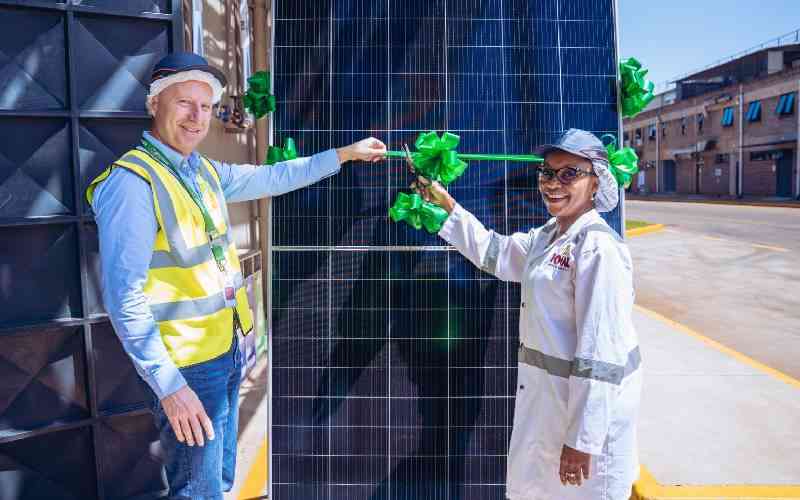
on WhatsAppHeineken Beverages Managing Director Jordi Borrut (left) and KWAL Managing Director Lina Githuka (right) officially commission the new 700 KV solar plant at KWAL’s state-of-the-art Tatu City manufacturing facility.[Juliet Omelo, Standard]The high cost of electricity has long been cited as a major challenge for industrial growth, making renewable energy adoption increasingly urgent.KWAL’s new solar installation is designed to supply roughly 15 per cent of the company’s annual electricity needs, lowering its yearly energy bill by an estimated 7.5 per cent.Managing Director Lina Githuka said the investment reflects the company’s commitment to long-term sustainability.“This solar project strengthens our operational efficiency, reduces our environmental footprint, and positions KWAL at the forefront of Kenya’s renewable energy transition. It is a significant step in our mission to craft a better world while delivering value to our consumers and stakeholders,” she stated.She added that the plant represents a model that other manufacturers can emulate to build resilience and reduce costs.The project was executed under a Power Purchase Agreement (PPA) with OFGEN Africa, enabling KWAL to source solar-generated electricity at a pre-arranged rate without the heavy capital investment required to build and own the system.This financing model has gained traction among manufacturers seeking cost stability and reduced exposure to grid volatility, providing a commercially viable route to adopt renewable energy at scale.An aerial view of the newly installed solar panels on the rooftop of KWAL’s manufacturing plant at Tatu.[Juliet Omelo, Standard]Completed in eight months, the grid-tied solar system prioritizes solar during peak daylight hours and transitions automatically to the national grid when generation decreases, ensuring uninterrupted power supply for industrial operations.According to the director of supply chain Mwenda Kageenu, KWAL intends to expand the solar plant to 1,500kV.He said the phased expansion will allow the company to maximise our use of renewable energy and strengthen its long-term energy independence, supporting the company’s broader environmental and operational goals.The Tatu City facility already holds an EDGE certification for resource-efficient design, and the solar project further strengthens its standing as a model for sustainable manufacturing.Stay informed. Subscribe to our newsletterBy clicking on theSIGN UPbutton, you agree to ourTerms & Conditionsand thePrivacy PolicySIGN UPAll necessary approvals were secured from the Energy and Petroleum Regulatory Authority (EPRA) and Tatu Power.Stay Informed, Stay Empowered: Download the Standard ePaper App!With Kenya targeting 100 per cent renewable energy by 2030, KWAL’s investment demonstrates a viable pathway for manufacturers seeking to manage rising energy costs, enhance resilience, and support the country’s transition to a greener industrial economy.Follow The Standard
channel
on WhatsApp
The move also signals a growing trendamong local industries to adopt clean energy solutions to enhance competitiveness and sustainability.It is noted that Kenya’s escalating power demand driven by population growth and the government’s industrialisation agenda continues to strain the national grid.President William Ruto has recently emphasized that reliable, affordable electricity is critical for competitiveness as manufacturers face frequent outages and tariffs surpassing Sh25 per kilowatt-hour.Follow The Standard
channel
on WhatsAppHeineken Beverages Managing Director Jordi Borrut (left) and KWAL Managing Director Lina Githuka (right) officially commission the new 700 KV solar plant at KWAL’s state-of-the-art Tatu City manufacturing facility.[Juliet Omelo, Standard]The high cost of electricity has long been cited as a major challenge for industrial growth, making renewable energy adoption increasingly urgent.KWAL’s new solar installation is designed to supply roughly 15 per cent of the company’s annual electricity needs, lowering its yearly energy bill by an estimated 7.5 per cent.Managing Director Lina Githuka said the investment reflects the company’s commitment to long-term sustainability.“This solar project strengthens our operational efficiency, reduces our environmental footprint, and positions KWAL at the forefront of Kenya’s renewable energy transition. It is a significant step in our mission to craft a better world while delivering value to our consumers and stakeholders,” she stated.She added that the plant represents a model that other manufacturers can emulate to build resilience and reduce costs.The project was executed under a Power Purchase Agreement (PPA) with OFGEN Africa, enabling KWAL to source solar-generated electricity at a pre-arranged rate without the heavy capital investment required to build and own the system.This financing model has gained traction among manufacturers seeking cost stability and reduced exposure to grid volatility, providing a commercially viable route to adopt renewable energy at scale.An aerial view of the newly installed solar panels on the rooftop of KWAL’s manufacturing plant at Tatu.[Juliet Omelo, Standard]Completed in eight months, the grid-tied solar system prioritizes solar during peak daylight hours and transitions automatically to the national grid when generation decreases, ensuring uninterrupted power supply for industrial operations.According to the director of supply chain Mwenda Kageenu, KWAL intends to expand the solar plant to 1,500kV.He said the phased expansion will allow the company to maximise our use of renewable energy and strengthen its long-term energy independence, supporting the company’s broader environmental and operational goals.The Tatu City facility already holds an EDGE certification for resource-efficient design, and the solar project further strengthens its standing as a model for sustainable manufacturing.Stay informed. Subscribe to our newsletterBy clicking on theSIGN UPbutton, you agree to ourTerms & Conditionsand thePrivacy PolicySIGN UPAll necessary approvals were secured from the Energy and Petroleum Regulatory Authority (EPRA) and Tatu Power.Stay Informed, Stay Empowered: Download the Standard ePaper App!With Kenya targeting 100 per cent renewable energy by 2030, KWAL’s investment demonstrates a viable pathway for manufacturers seeking to manage rising energy costs, enhance resilience, and support the country’s transition to a greener industrial economy.Follow The Standard
channel
on WhatsApp
It is noted that Kenya’s escalating power demand driven by population growth and the government’s industrialisation agenda continues to strain the national grid.President William Ruto has recently emphasized that reliable, affordable electricity is critical for competitiveness as manufacturers face frequent outages and tariffs surpassing Sh25 per kilowatt-hour.Follow The Standard
channel
on WhatsAppHeineken Beverages Managing Director Jordi Borrut (left) and KWAL Managing Director Lina Githuka (right) officially commission the new 700 KV solar plant at KWAL’s state-of-the-art Tatu City manufacturing facility.[Juliet Omelo, Standard]The high cost of electricity has long been cited as a major challenge for industrial growth, making renewable energy adoption increasingly urgent.KWAL’s new solar installation is designed to supply roughly 15 per cent of the company’s annual electricity needs, lowering its yearly energy bill by an estimated 7.5 per cent.Managing Director Lina Githuka said the investment reflects the company’s commitment to long-term sustainability.“This solar project strengthens our operational efficiency, reduces our environmental footprint, and positions KWAL at the forefront of Kenya’s renewable energy transition. It is a significant step in our mission to craft a better world while delivering value to our consumers and stakeholders,” she stated.She added that the plant represents a model that other manufacturers can emulate to build resilience and reduce costs.The project was executed under a Power Purchase Agreement (PPA) with OFGEN Africa, enabling KWAL to source solar-generated electricity at a pre-arranged rate without the heavy capital investment required to build and own the system.This financing model has gained traction among manufacturers seeking cost stability and reduced exposure to grid volatility, providing a commercially viable route to adopt renewable energy at scale.An aerial view of the newly installed solar panels on the rooftop of KWAL’s manufacturing plant at Tatu.[Juliet Omelo, Standard]Completed in eight months, the grid-tied solar system prioritizes solar during peak daylight hours and transitions automatically to the national grid when generation decreases, ensuring uninterrupted power supply for industrial operations.According to the director of supply chain Mwenda Kageenu, KWAL intends to expand the solar plant to 1,500kV.He said the phased expansion will allow the company to maximise our use of renewable energy and strengthen its long-term energy independence, supporting the company’s broader environmental and operational goals.The Tatu City facility already holds an EDGE certification for resource-efficient design, and the solar project further strengthens its standing as a model for sustainable manufacturing.Stay informed. Subscribe to our newsletterBy clicking on theSIGN UPbutton, you agree to ourTerms & Conditionsand thePrivacy PolicySIGN UPAll necessary approvals were secured from the Energy and Petroleum Regulatory Authority (EPRA) and Tatu Power.Stay Informed, Stay Empowered: Download the Standard ePaper App!With Kenya targeting 100 per cent renewable energy by 2030, KWAL’s investment demonstrates a viable pathway for manufacturers seeking to manage rising energy costs, enhance resilience, and support the country’s transition to a greener industrial economy.Follow The Standard
channel
on WhatsApp
President William Ruto has recently emphasized that reliable, affordable electricity is critical for competitiveness as manufacturers face frequent outages and tariffs surpassing Sh25 per kilowatt-hour.Follow The Standard
channel
on WhatsAppHeineken Beverages Managing Director Jordi Borrut (left) and KWAL Managing Director Lina Githuka (right) officially commission the new 700 KV solar plant at KWAL’s state-of-the-art Tatu City manufacturing facility.[Juliet Omelo, Standard]The high cost of electricity has long been cited as a major challenge for industrial growth, making renewable energy adoption increasingly urgent.KWAL’s new solar installation is designed to supply roughly 15 per cent of the company’s annual electricity needs, lowering its yearly energy bill by an estimated 7.5 per cent.Managing Director Lina Githuka said the investment reflects the company’s commitment to long-term sustainability.“This solar project strengthens our operational efficiency, reduces our environmental footprint, and positions KWAL at the forefront of Kenya’s renewable energy transition. It is a significant step in our mission to craft a better world while delivering value to our consumers and stakeholders,” she stated.She added that the plant represents a model that other manufacturers can emulate to build resilience and reduce costs.The project was executed under a Power Purchase Agreement (PPA) with OFGEN Africa, enabling KWAL to source solar-generated electricity at a pre-arranged rate without the heavy capital investment required to build and own the system.This financing model has gained traction among manufacturers seeking cost stability and reduced exposure to grid volatility, providing a commercially viable route to adopt renewable energy at scale.An aerial view of the newly installed solar panels on the rooftop of KWAL’s manufacturing plant at Tatu.[Juliet Omelo, Standard]Completed in eight months, the grid-tied solar system prioritizes solar during peak daylight hours and transitions automatically to the national grid when generation decreases, ensuring uninterrupted power supply for industrial operations.According to the director of supply chain Mwenda Kageenu, KWAL intends to expand the solar plant to 1,500kV.He said the phased expansion will allow the company to maximise our use of renewable energy and strengthen its long-term energy independence, supporting the company’s broader environmental and operational goals.The Tatu City facility already holds an EDGE certification for resource-efficient design, and the solar project further strengthens its standing as a model for sustainable manufacturing.Stay informed. Subscribe to our newsletterBy clicking on theSIGN UPbutton, you agree to ourTerms & Conditionsand thePrivacy PolicySIGN UPAll necessary approvals were secured from the Energy and Petroleum Regulatory Authority (EPRA) and Tatu Power.Stay Informed, Stay Empowered: Download the Standard ePaper App!With Kenya targeting 100 per cent renewable energy by 2030, KWAL’s investment demonstrates a viable pathway for manufacturers seeking to manage rising energy costs, enhance resilience, and support the country’s transition to a greener industrial economy.Follow The Standard
channel
on WhatsApp
The high cost of electricity has long been cited as a major challenge for industrial growth, making renewable energy adoption increasingly urgent.KWAL’s new solar installation is designed to supply roughly 15 per cent of the company’s annual electricity needs, lowering its yearly energy bill by an estimated 7.5 per cent.Managing Director Lina Githuka said the investment reflects the company’s commitment to long-term sustainability.“This solar project strengthens our operational efficiency, reduces our environmental footprint, and positions KWAL at the forefront of Kenya’s renewable energy transition. It is a significant step in our mission to craft a better world while delivering value to our consumers and stakeholders,” she stated.She added that the plant represents a model that other manufacturers can emulate to build resilience and reduce costs.The project was executed under a Power Purchase Agreement (PPA) with OFGEN Africa, enabling KWAL to source solar-generated electricity at a pre-arranged rate without the heavy capital investment required to build and own the system.This financing model has gained traction among manufacturers seeking cost stability and reduced exposure to grid volatility, providing a commercially viable route to adopt renewable energy at scale.An aerial view of the newly installed solar panels on the rooftop of KWAL’s manufacturing plant at Tatu.[Juliet Omelo, Standard]Completed in eight months, the grid-tied solar system prioritizes solar during peak daylight hours and transitions automatically to the national grid when generation decreases, ensuring uninterrupted power supply for industrial operations.According to the director of supply chain Mwenda Kageenu, KWAL intends to expand the solar plant to 1,500kV.He said the phased expansion will allow the company to maximise our use of renewable energy and strengthen its long-term energy independence, supporting the company’s broader environmental and operational goals.The Tatu City facility already holds an EDGE certification for resource-efficient design, and the solar project further strengthens its standing as a model for sustainable manufacturing.Stay informed. Subscribe to our newsletterBy clicking on theSIGN UPbutton, you agree to ourTerms & Conditionsand thePrivacy PolicySIGN UPAll necessary approvals were secured from the Energy and Petroleum Regulatory Authority (EPRA) and Tatu Power.Stay Informed, Stay Empowered: Download the Standard ePaper App!With Kenya targeting 100 per cent renewable energy by 2030, KWAL’s investment demonstrates a viable pathway for manufacturers seeking to manage rising energy costs, enhance resilience, and support the country’s transition to a greener industrial economy.Follow The Standard
channel
on WhatsApp
KWAL’s new solar installation is designed to supply roughly 15 per cent of the company’s annual electricity needs, lowering its yearly energy bill by an estimated 7.5 per cent.Managing Director Lina Githuka said the investment reflects the company’s commitment to long-term sustainability.“This solar project strengthens our operational efficiency, reduces our environmental footprint, and positions KWAL at the forefront of Kenya’s renewable energy transition. It is a significant step in our mission to craft a better world while delivering value to our consumers and stakeholders,” she stated.She added that the plant represents a model that other manufacturers can emulate to build resilience and reduce costs.The project was executed under a Power Purchase Agreement (PPA) with OFGEN Africa, enabling KWAL to source solar-generated electricity at a pre-arranged rate without the heavy capital investment required to build and own the system.This financing model has gained traction among manufacturers seeking cost stability and reduced exposure to grid volatility, providing a commercially viable route to adopt renewable energy at scale.An aerial view of the newly installed solar panels on the rooftop of KWAL’s manufacturing plant at Tatu.[Juliet Omelo, Standard]Completed in eight months, the grid-tied solar system prioritizes solar during peak daylight hours and transitions automatically to the national grid when generation decreases, ensuring uninterrupted power supply for industrial operations.According to the director of supply chain Mwenda Kageenu, KWAL intends to expand the solar plant to 1,500kV.He said the phased expansion will allow the company to maximise our use of renewable energy and strengthen its long-term energy independence, supporting the company’s broader environmental and operational goals.The Tatu City facility already holds an EDGE certification for resource-efficient design, and the solar project further strengthens its standing as a model for sustainable manufacturing.Stay informed. Subscribe to our newsletterBy clicking on theSIGN UPbutton, you agree to ourTerms & Conditionsand thePrivacy PolicySIGN UPAll necessary approvals were secured from the Energy and Petroleum Regulatory Authority (EPRA) and Tatu Power.Stay Informed, Stay Empowered: Download the Standard ePaper App!With Kenya targeting 100 per cent renewable energy by 2030, KWAL’s investment demonstrates a viable pathway for manufacturers seeking to manage rising energy costs, enhance resilience, and support the country’s transition to a greener industrial economy.Follow The Standard
channel
on WhatsApp
Managing Director Lina Githuka said the investment reflects the company’s commitment to long-term sustainability.“This solar project strengthens our operational efficiency, reduces our environmental footprint, and positions KWAL at the forefront of Kenya’s renewable energy transition. It is a significant step in our mission to craft a better world while delivering value to our consumers and stakeholders,” she stated.She added that the plant represents a model that other manufacturers can emulate to build resilience and reduce costs.The project was executed under a Power Purchase Agreement (PPA) with OFGEN Africa, enabling KWAL to source solar-generated electricity at a pre-arranged rate without the heavy capital investment required to build and own the system.This financing model has gained traction among manufacturers seeking cost stability and reduced exposure to grid volatility, providing a commercially viable route to adopt renewable energy at scale.An aerial view of the newly installed solar panels on the rooftop of KWAL’s manufacturing plant at Tatu.[Juliet Omelo, Standard]Completed in eight months, the grid-tied solar system prioritizes solar during peak daylight hours and transitions automatically to the national grid when generation decreases, ensuring uninterrupted power supply for industrial operations.According to the director of supply chain Mwenda Kageenu, KWAL intends to expand the solar plant to 1,500kV.He said the phased expansion will allow the company to maximise our use of renewable energy and strengthen its long-term energy independence, supporting the company’s broader environmental and operational goals.The Tatu City facility already holds an EDGE certification for resource-efficient design, and the solar project further strengthens its standing as a model for sustainable manufacturing.Stay informed. Subscribe to our newsletterBy clicking on theSIGN UPbutton, you agree to ourTerms & Conditionsand thePrivacy PolicySIGN UPAll necessary approvals were secured from the Energy and Petroleum Regulatory Authority (EPRA) and Tatu Power.Stay Informed, Stay Empowered: Download the Standard ePaper App!With Kenya targeting 100 per cent renewable energy by 2030, KWAL’s investment demonstrates a viable pathway for manufacturers seeking to manage rising energy costs, enhance resilience, and support the country’s transition to a greener industrial economy.Follow The Standard
channel
on WhatsApp
“This solar project strengthens our operational efficiency, reduces our environmental footprint, and positions KWAL at the forefront of Kenya’s renewable energy transition. It is a significant step in our mission to craft a better world while delivering value to our consumers and stakeholders,” she stated.She added that the plant represents a model that other manufacturers can emulate to build resilience and reduce costs.The project was executed under a Power Purchase Agreement (PPA) with OFGEN Africa, enabling KWAL to source solar-generated electricity at a pre-arranged rate without the heavy capital investment required to build and own the system.This financing model has gained traction among manufacturers seeking cost stability and reduced exposure to grid volatility, providing a commercially viable route to adopt renewable energy at scale.An aerial view of the newly installed solar panels on the rooftop of KWAL’s manufacturing plant at Tatu.[Juliet Omelo, Standard]Completed in eight months, the grid-tied solar system prioritizes solar during peak daylight hours and transitions automatically to the national grid when generation decreases, ensuring uninterrupted power supply for industrial operations.According to the director of supply chain Mwenda Kageenu, KWAL intends to expand the solar plant to 1,500kV.He said the phased expansion will allow the company to maximise our use of renewable energy and strengthen its long-term energy independence, supporting the company’s broader environmental and operational goals.The Tatu City facility already holds an EDGE certification for resource-efficient design, and the solar project further strengthens its standing as a model for sustainable manufacturing.Stay informed. Subscribe to our newsletterBy clicking on theSIGN UPbutton, you agree to ourTerms & Conditionsand thePrivacy PolicySIGN UPAll necessary approvals were secured from the Energy and Petroleum Regulatory Authority (EPRA) and Tatu Power.Stay Informed, Stay Empowered: Download the Standard ePaper App!With Kenya targeting 100 per cent renewable energy by 2030, KWAL’s investment demonstrates a viable pathway for manufacturers seeking to manage rising energy costs, enhance resilience, and support the country’s transition to a greener industrial economy.Follow The Standard
channel
on WhatsApp
She added that the plant represents a model that other manufacturers can emulate to build resilience and reduce costs.The project was executed under a Power Purchase Agreement (PPA) with OFGEN Africa, enabling KWAL to source solar-generated electricity at a pre-arranged rate without the heavy capital investment required to build and own the system.This financing model has gained traction among manufacturers seeking cost stability and reduced exposure to grid volatility, providing a commercially viable route to adopt renewable energy at scale.An aerial view of the newly installed solar panels on the rooftop of KWAL’s manufacturing plant at Tatu.[Juliet Omelo, Standard]Completed in eight months, the grid-tied solar system prioritizes solar during peak daylight hours and transitions automatically to the national grid when generation decreases, ensuring uninterrupted power supply for industrial operations.According to the director of supply chain Mwenda Kageenu, KWAL intends to expand the solar plant to 1,500kV.He said the phased expansion will allow the company to maximise our use of renewable energy and strengthen its long-term energy independence, supporting the company’s broader environmental and operational goals.The Tatu City facility already holds an EDGE certification for resource-efficient design, and the solar project further strengthens its standing as a model for sustainable manufacturing.Stay informed. Subscribe to our newsletterBy clicking on theSIGN UPbutton, you agree to ourTerms & Conditionsand thePrivacy PolicySIGN UPAll necessary approvals were secured from the Energy and Petroleum Regulatory Authority (EPRA) and Tatu Power.Stay Informed, Stay Empowered: Download the Standard ePaper App!With Kenya targeting 100 per cent renewable energy by 2030, KWAL’s investment demonstrates a viable pathway for manufacturers seeking to manage rising energy costs, enhance resilience, and support the country’s transition to a greener industrial economy.Follow The Standard
channel
on WhatsApp
The project was executed under a Power Purchase Agreement (PPA) with OFGEN Africa, enabling KWAL to source solar-generated electricity at a pre-arranged rate without the heavy capital investment required to build and own the system.This financing model has gained traction among manufacturers seeking cost stability and reduced exposure to grid volatility, providing a commercially viable route to adopt renewable energy at scale.An aerial view of the newly installed solar panels on the rooftop of KWAL’s manufacturing plant at Tatu.[Juliet Omelo, Standard]Completed in eight months, the grid-tied solar system prioritizes solar during peak daylight hours and transitions automatically to the national grid when generation decreases, ensuring uninterrupted power supply for industrial operations.According to the director of supply chain Mwenda Kageenu, KWAL intends to expand the solar plant to 1,500kV.He said the phased expansion will allow the company to maximise our use of renewable energy and strengthen its long-term energy independence, supporting the company’s broader environmental and operational goals.The Tatu City facility already holds an EDGE certification for resource-efficient design, and the solar project further strengthens its standing as a model for sustainable manufacturing.Stay informed. Subscribe to our newsletterBy clicking on theSIGN UPbutton, you agree to ourTerms & Conditionsand thePrivacy PolicySIGN UPAll necessary approvals were secured from the Energy and Petroleum Regulatory Authority (EPRA) and Tatu Power.Stay Informed, Stay Empowered: Download the Standard ePaper App!With Kenya targeting 100 per cent renewable energy by 2030, KWAL’s investment demonstrates a viable pathway for manufacturers seeking to manage rising energy costs, enhance resilience, and support the country’s transition to a greener industrial economy.Follow The Standard
channel
on WhatsApp
This financing model has gained traction among manufacturers seeking cost stability and reduced exposure to grid volatility, providing a commercially viable route to adopt renewable energy at scale.An aerial view of the newly installed solar panels on the rooftop of KWAL’s manufacturing plant at Tatu.[Juliet Omelo, Standard]Completed in eight months, the grid-tied solar system prioritizes solar during peak daylight hours and transitions automatically to the national grid when generation decreases, ensuring uninterrupted power supply for industrial operations.According to the director of supply chain Mwenda Kageenu, KWAL intends to expand the solar plant to 1,500kV.He said the phased expansion will allow the company to maximise our use of renewable energy and strengthen its long-term energy independence, supporting the company’s broader environmental and operational goals.The Tatu City facility already holds an EDGE certification for resource-efficient design, and the solar project further strengthens its standing as a model for sustainable manufacturing.Stay informed. Subscribe to our newsletterBy clicking on theSIGN UPbutton, you agree to ourTerms & Conditionsand thePrivacy PolicySIGN UPAll necessary approvals were secured from the Energy and Petroleum Regulatory Authority (EPRA) and Tatu Power.Stay Informed, Stay Empowered: Download the Standard ePaper App!With Kenya targeting 100 per cent renewable energy by 2030, KWAL’s investment demonstrates a viable pathway for manufacturers seeking to manage rising energy costs, enhance resilience, and support the country’s transition to a greener industrial economy.Follow The Standard
channel
on WhatsApp
Completed in eight months, the grid-tied solar system prioritizes solar during peak daylight hours and transitions automatically to the national grid when generation decreases, ensuring uninterrupted power supply for industrial operations.According to the director of supply chain Mwenda Kageenu, KWAL intends to expand the solar plant to 1,500kV.He said the phased expansion will allow the company to maximise our use of renewable energy and strengthen its long-term energy independence, supporting the company’s broader environmental and operational goals.The Tatu City facility already holds an EDGE certification for resource-efficient design, and the solar project further strengthens its standing as a model for sustainable manufacturing.Stay informed. Subscribe to our newsletterBy clicking on theSIGN UPbutton, you agree to ourTerms & Conditionsand thePrivacy PolicySIGN UPAll necessary approvals were secured from the Energy and Petroleum Regulatory Authority (EPRA) and Tatu Power.Stay Informed, Stay Empowered: Download the Standard ePaper App!With Kenya targeting 100 per cent renewable energy by 2030, KWAL’s investment demonstrates a viable pathway for manufacturers seeking to manage rising energy costs, enhance resilience, and support the country’s transition to a greener industrial economy.Follow The Standard
channel
on WhatsApp
According to the director of supply chain Mwenda Kageenu, KWAL intends to expand the solar plant to 1,500kV.He said the phased expansion will allow the company to maximise our use of renewable energy and strengthen its long-term energy independence, supporting the company’s broader environmental and operational goals.The Tatu City facility already holds an EDGE certification for resource-efficient design, and the solar project further strengthens its standing as a model for sustainable manufacturing.Stay informed. Subscribe to our newsletterBy clicking on theSIGN UPbutton, you agree to ourTerms & Conditionsand thePrivacy PolicySIGN UPAll necessary approvals were secured from the Energy and Petroleum Regulatory Authority (EPRA) and Tatu Power.Stay Informed, Stay Empowered: Download the Standard ePaper App!With Kenya targeting 100 per cent renewable energy by 2030, KWAL’s investment demonstrates a viable pathway for manufacturers seeking to manage rising energy costs, enhance resilience, and support the country’s transition to a greener industrial economy.Follow The Standard
channel
on WhatsApp
He said the phased expansion will allow the company to maximise our use of renewable energy and strengthen its long-term energy independence, supporting the company’s broader environmental and operational goals.The Tatu City facility already holds an EDGE certification for resource-efficient design, and the solar project further strengthens its standing as a model for sustainable manufacturing.Stay informed. Subscribe to our newsletterBy clicking on theSIGN UPbutton, you agree to ourTerms & Conditionsand thePrivacy PolicySIGN UPAll necessary approvals were secured from the Energy and Petroleum Regulatory Authority (EPRA) and Tatu Power.Stay Informed, Stay Empowered: Download the Standard ePaper App!With Kenya targeting 100 per cent renewable energy by 2030, KWAL’s investment demonstrates a viable pathway for manufacturers seeking to manage rising energy costs, enhance resilience, and support the country’s transition to a greener industrial economy.Follow The Standard
channel
on WhatsApp
The Tatu City facility already holds an EDGE certification for resource-efficient design, and the solar project further strengthens its standing as a model for sustainable manufacturing.Stay informed. Subscribe to our newsletterBy clicking on theSIGN UPbutton, you agree to ourTerms & Conditionsand thePrivacy PolicySIGN UPAll necessary approvals were secured from the Energy and Petroleum Regulatory Authority (EPRA) and Tatu Power.Stay Informed, Stay Empowered: Download the Standard ePaper App!With Kenya targeting 100 per cent renewable energy by 2030, KWAL’s investment demonstrates a viable pathway for manufacturers seeking to manage rising energy costs, enhance resilience, and support the country’s transition to a greener industrial economy.Follow The Standard
channel
on WhatsApp
All necessary approvals were secured from the Energy and Petroleum Regulatory Authority (EPRA) and Tatu Power.Stay Informed, Stay Empowered: Download the Standard ePaper App!With Kenya targeting 100 per cent renewable energy by 2030, KWAL’s investment demonstrates a viable pathway for manufacturers seeking to manage rising energy costs, enhance resilience, and support the country’s transition to a greener industrial economy.Follow The Standard
channel
on WhatsApp
With Kenya targeting 100 per cent renewable energy by 2030, KWAL’s investment demonstrates a viable pathway for manufacturers seeking to manage rising energy costs, enhance resilience, and support the country’s transition to a greener industrial economy.Follow The Standard
channel
on WhatsApp
Subscribe to our newsletter and stay updated on the latest developments and special
offers!
Pick your favourite topics below for a tailor made homepage just for you