
Ngugi's failed socialist dream and the way forward for Kenya
Source: The Standard
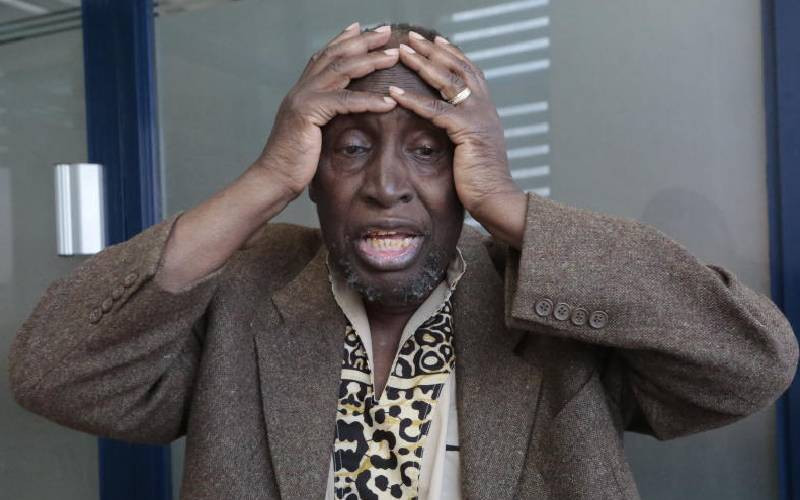
Prof Ngugi wa Thiong'o during an interview at the Standard Group offices in Nairobi, on February 7, 2019. [File, Standard]
The death of Ngugi Wa Thiong’o’s in 2025 and the rise of Gen Zs in the same year amounts to a generational change-over planned by our destiny. As Kenya’s pre-eminent social commentator, Prof Ngugi was a leading voice amongst intellectuals focused on creating a post-colonial order founded on African ideologies. With Ngugi taking his final bow, the rise of a tribeless generation with modern liberal values creates an opportune moment to reflect on Kenya’s ideological direction.As a product of colonial Kenya, Ngugi’s activism was heavily influenced by a ringside view of the impact of modernity on African traditions. As a social commentator, Ngugi believed Kenyans needed to decolonise their minds in order to achieve total liberation of the African soul from colonial experience.Accordingly, what started as a cultural revolution turned political in order to take on a post-independence dispensation many considered incompatible with African nature. Like Mwalimu Julius Nyerere of Tanzania, Ngugi believed that it was imperative to adopt socialism because it was consistent with the indigenous communal spirit that characterised pre-colonial African societies.Follow The Standard
channel
on WhatsAppNgugi’s socialist dream was however cut short by foreign interests in Kenya during an era of intense competition between communism and capitalism. Additionally, a newly independent Kenya provided unprecedented opportunities for accumulation of wealth for African elite that took over from colonial administrators.Ngugi’s activism not only raised troubling questions about how the fruits of independence struggle were being distributed, his socialist prescription ran counter to the capitalist aspirations of the new African elite.When Ngugi fled to the US after a one-year stint in prison, the government continued to clamp down on a new generation of activists that was equally critical of the corruption and rapacity that was taking root. Suppression of dissenting voices became especially repressive after the 1982 attempted coup as Kanu strongmen tried to regain control of the nation.A landmark initiative to control debate led to passage of a constitutional amendment in Parliament turning Kenya into a one-party state. This blatant curtailment of democratic space inspired a second liberation struggle targeting the repeal of section 2A of the Constitution that made Kenya a one-party state. Eventually, the single-minded push for multi-party democracy culminated in the repeal of section 2A in 1992 and promulgation of a new constitution in 2010.As Kenyans welcome a new year, a health check of our democracy at 62 shows a country with a robust liberal constitution with entrenched safeguards for individual freedoms.However and notwithstanding a new constitutional order, political mobilisation is still ethnocentric due to lack of shared national values and ideologies that can enable citizens to transcend traditional loyalties. For this reason, Kenyan political competition is a zero-sum game where different communities fight for their turn on the eating trough.Similarly, in absence of an ideology to explain the relationship between individual effort and economic prosperity, Kenyans have come to believe that the only way out of poverty is by controlling the visible hand of government. Accordingly, capturing government has become the primary preoccupation of predatory politicians seeking wealth and personal aggrandisement. The instability engendered by ensuing competition has become one of the hallmarks of post-independence Kenya.For ordinary citizens, trying to put food on the table has become an uphill task because those entrusted with managing the economy are preoccupied in self-enrichment. Despite 62 years of independence, the nation exhibits all the symptoms of anaemic economy such as high unemployment rates, widespread industrial actions and failing education and health systems.The epitome of the instability of an under-performing economy was a Gen Z uprising in 2024 largely fueled by frustrations with an economic system that has failed to create employment for a generational bulge.As Ngugi’s generation hands over national duty to the Gen Zs, a pertinent question is what lessons have been learnt from the 62 years of our democratic experiment. One lesson is that Ngugi’s post-independence generation was partly right in seeking an indigenous ideology to inform politics and economics.Ample evidence shows our political and economic systems have been captured by a political cabal driven by personal and tribal interests. Ngugi was however wrong in assuming that Africans are defined by their pre-colonial cultures because as history shows, the cultures are time-bound and reflect the experience of a society at any given time and space.Stay informed. Subscribe to our newsletterBy clicking on theSIGN UPbutton, you agree to ourTerms & Conditionsand thePrivacy PolicySIGN UPGoing forward and just as Karl Marx turned Hegel’s logic on its head, it is time to turn Ngugi’s thesis the right way up. Instead of obsessing with outdated cultures, Kenyans need to focus on understanding the essence of the African consciousness that is navigating the digital age. It is only by focusing on the human needs of the citizens that we can build people-centered political and economic systems that transcend ethnic calculations.Stay Informed, Stay Empowered: Download the Standard ePaper App!Follow The Standard
channel
on WhatsApp
As a product of colonial Kenya, Ngugi’s activism was heavily influenced by a ringside view of the impact of modernity on African traditions. As a social commentator, Ngugi believed Kenyans needed to decolonise their minds in order to achieve total liberation of the African soul from colonial experience.Accordingly, what started as a cultural revolution turned political in order to take on a post-independence dispensation many considered incompatible with African nature. Like Mwalimu Julius Nyerere of Tanzania, Ngugi believed that it was imperative to adopt socialism because it was consistent with the indigenous communal spirit that characterised pre-colonial African societies.Follow The Standard
channel
on WhatsAppNgugi’s socialist dream was however cut short by foreign interests in Kenya during an era of intense competition between communism and capitalism. Additionally, a newly independent Kenya provided unprecedented opportunities for accumulation of wealth for African elite that took over from colonial administrators.Ngugi’s activism not only raised troubling questions about how the fruits of independence struggle were being distributed, his socialist prescription ran counter to the capitalist aspirations of the new African elite.When Ngugi fled to the US after a one-year stint in prison, the government continued to clamp down on a new generation of activists that was equally critical of the corruption and rapacity that was taking root. Suppression of dissenting voices became especially repressive after the 1982 attempted coup as Kanu strongmen tried to regain control of the nation.A landmark initiative to control debate led to passage of a constitutional amendment in Parliament turning Kenya into a one-party state. This blatant curtailment of democratic space inspired a second liberation struggle targeting the repeal of section 2A of the Constitution that made Kenya a one-party state. Eventually, the single-minded push for multi-party democracy culminated in the repeal of section 2A in 1992 and promulgation of a new constitution in 2010.As Kenyans welcome a new year, a health check of our democracy at 62 shows a country with a robust liberal constitution with entrenched safeguards for individual freedoms.However and notwithstanding a new constitutional order, political mobilisation is still ethnocentric due to lack of shared national values and ideologies that can enable citizens to transcend traditional loyalties. For this reason, Kenyan political competition is a zero-sum game where different communities fight for their turn on the eating trough.Similarly, in absence of an ideology to explain the relationship between individual effort and economic prosperity, Kenyans have come to believe that the only way out of poverty is by controlling the visible hand of government. Accordingly, capturing government has become the primary preoccupation of predatory politicians seeking wealth and personal aggrandisement. The instability engendered by ensuing competition has become one of the hallmarks of post-independence Kenya.For ordinary citizens, trying to put food on the table has become an uphill task because those entrusted with managing the economy are preoccupied in self-enrichment. Despite 62 years of independence, the nation exhibits all the symptoms of anaemic economy such as high unemployment rates, widespread industrial actions and failing education and health systems.The epitome of the instability of an under-performing economy was a Gen Z uprising in 2024 largely fueled by frustrations with an economic system that has failed to create employment for a generational bulge.As Ngugi’s generation hands over national duty to the Gen Zs, a pertinent question is what lessons have been learnt from the 62 years of our democratic experiment. One lesson is that Ngugi’s post-independence generation was partly right in seeking an indigenous ideology to inform politics and economics.Ample evidence shows our political and economic systems have been captured by a political cabal driven by personal and tribal interests. Ngugi was however wrong in assuming that Africans are defined by their pre-colonial cultures because as history shows, the cultures are time-bound and reflect the experience of a society at any given time and space.Stay informed. Subscribe to our newsletterBy clicking on theSIGN UPbutton, you agree to ourTerms & Conditionsand thePrivacy PolicySIGN UPGoing forward and just as Karl Marx turned Hegel’s logic on its head, it is time to turn Ngugi’s thesis the right way up. Instead of obsessing with outdated cultures, Kenyans need to focus on understanding the essence of the African consciousness that is navigating the digital age. It is only by focusing on the human needs of the citizens that we can build people-centered political and economic systems that transcend ethnic calculations.Stay Informed, Stay Empowered: Download the Standard ePaper App!Follow The Standard
channel
on WhatsApp
Accordingly, what started as a cultural revolution turned political in order to take on a post-independence dispensation many considered incompatible with African nature. Like Mwalimu Julius Nyerere of Tanzania, Ngugi believed that it was imperative to adopt socialism because it was consistent with the indigenous communal spirit that characterised pre-colonial African societies.Follow The Standard
channel
on WhatsAppNgugi’s socialist dream was however cut short by foreign interests in Kenya during an era of intense competition between communism and capitalism. Additionally, a newly independent Kenya provided unprecedented opportunities for accumulation of wealth for African elite that took over from colonial administrators.Ngugi’s activism not only raised troubling questions about how the fruits of independence struggle were being distributed, his socialist prescription ran counter to the capitalist aspirations of the new African elite.When Ngugi fled to the US after a one-year stint in prison, the government continued to clamp down on a new generation of activists that was equally critical of the corruption and rapacity that was taking root. Suppression of dissenting voices became especially repressive after the 1982 attempted coup as Kanu strongmen tried to regain control of the nation.A landmark initiative to control debate led to passage of a constitutional amendment in Parliament turning Kenya into a one-party state. This blatant curtailment of democratic space inspired a second liberation struggle targeting the repeal of section 2A of the Constitution that made Kenya a one-party state. Eventually, the single-minded push for multi-party democracy culminated in the repeal of section 2A in 1992 and promulgation of a new constitution in 2010.As Kenyans welcome a new year, a health check of our democracy at 62 shows a country with a robust liberal constitution with entrenched safeguards for individual freedoms.However and notwithstanding a new constitutional order, political mobilisation is still ethnocentric due to lack of shared national values and ideologies that can enable citizens to transcend traditional loyalties. For this reason, Kenyan political competition is a zero-sum game where different communities fight for their turn on the eating trough.Similarly, in absence of an ideology to explain the relationship between individual effort and economic prosperity, Kenyans have come to believe that the only way out of poverty is by controlling the visible hand of government. Accordingly, capturing government has become the primary preoccupation of predatory politicians seeking wealth and personal aggrandisement. The instability engendered by ensuing competition has become one of the hallmarks of post-independence Kenya.For ordinary citizens, trying to put food on the table has become an uphill task because those entrusted with managing the economy are preoccupied in self-enrichment. Despite 62 years of independence, the nation exhibits all the symptoms of anaemic economy such as high unemployment rates, widespread industrial actions and failing education and health systems.The epitome of the instability of an under-performing economy was a Gen Z uprising in 2024 largely fueled by frustrations with an economic system that has failed to create employment for a generational bulge.As Ngugi’s generation hands over national duty to the Gen Zs, a pertinent question is what lessons have been learnt from the 62 years of our democratic experiment. One lesson is that Ngugi’s post-independence generation was partly right in seeking an indigenous ideology to inform politics and economics.Ample evidence shows our political and economic systems have been captured by a political cabal driven by personal and tribal interests. Ngugi was however wrong in assuming that Africans are defined by their pre-colonial cultures because as history shows, the cultures are time-bound and reflect the experience of a society at any given time and space.Stay informed. Subscribe to our newsletterBy clicking on theSIGN UPbutton, you agree to ourTerms & Conditionsand thePrivacy PolicySIGN UPGoing forward and just as Karl Marx turned Hegel’s logic on its head, it is time to turn Ngugi’s thesis the right way up. Instead of obsessing with outdated cultures, Kenyans need to focus on understanding the essence of the African consciousness that is navigating the digital age. It is only by focusing on the human needs of the citizens that we can build people-centered political and economic systems that transcend ethnic calculations.Stay Informed, Stay Empowered: Download the Standard ePaper App!Follow The Standard
channel
on WhatsApp
Ngugi’s socialist dream was however cut short by foreign interests in Kenya during an era of intense competition between communism and capitalism. Additionally, a newly independent Kenya provided unprecedented opportunities for accumulation of wealth for African elite that took over from colonial administrators.Ngugi’s activism not only raised troubling questions about how the fruits of independence struggle were being distributed, his socialist prescription ran counter to the capitalist aspirations of the new African elite.When Ngugi fled to the US after a one-year stint in prison, the government continued to clamp down on a new generation of activists that was equally critical of the corruption and rapacity that was taking root. Suppression of dissenting voices became especially repressive after the 1982 attempted coup as Kanu strongmen tried to regain control of the nation.A landmark initiative to control debate led to passage of a constitutional amendment in Parliament turning Kenya into a one-party state. This blatant curtailment of democratic space inspired a second liberation struggle targeting the repeal of section 2A of the Constitution that made Kenya a one-party state. Eventually, the single-minded push for multi-party democracy culminated in the repeal of section 2A in 1992 and promulgation of a new constitution in 2010.As Kenyans welcome a new year, a health check of our democracy at 62 shows a country with a robust liberal constitution with entrenched safeguards for individual freedoms.However and notwithstanding a new constitutional order, political mobilisation is still ethnocentric due to lack of shared national values and ideologies that can enable citizens to transcend traditional loyalties. For this reason, Kenyan political competition is a zero-sum game where different communities fight for their turn on the eating trough.Similarly, in absence of an ideology to explain the relationship between individual effort and economic prosperity, Kenyans have come to believe that the only way out of poverty is by controlling the visible hand of government. Accordingly, capturing government has become the primary preoccupation of predatory politicians seeking wealth and personal aggrandisement. The instability engendered by ensuing competition has become one of the hallmarks of post-independence Kenya.For ordinary citizens, trying to put food on the table has become an uphill task because those entrusted with managing the economy are preoccupied in self-enrichment. Despite 62 years of independence, the nation exhibits all the symptoms of anaemic economy such as high unemployment rates, widespread industrial actions and failing education and health systems.The epitome of the instability of an under-performing economy was a Gen Z uprising in 2024 largely fueled by frustrations with an economic system that has failed to create employment for a generational bulge.As Ngugi’s generation hands over national duty to the Gen Zs, a pertinent question is what lessons have been learnt from the 62 years of our democratic experiment. One lesson is that Ngugi’s post-independence generation was partly right in seeking an indigenous ideology to inform politics and economics.Ample evidence shows our political and economic systems have been captured by a political cabal driven by personal and tribal interests. Ngugi was however wrong in assuming that Africans are defined by their pre-colonial cultures because as history shows, the cultures are time-bound and reflect the experience of a society at any given time and space.Stay informed. Subscribe to our newsletterBy clicking on theSIGN UPbutton, you agree to ourTerms & Conditionsand thePrivacy PolicySIGN UPGoing forward and just as Karl Marx turned Hegel’s logic on its head, it is time to turn Ngugi’s thesis the right way up. Instead of obsessing with outdated cultures, Kenyans need to focus on understanding the essence of the African consciousness that is navigating the digital age. It is only by focusing on the human needs of the citizens that we can build people-centered political and economic systems that transcend ethnic calculations.Stay Informed, Stay Empowered: Download the Standard ePaper App!Follow The Standard
channel
on WhatsApp
Ngugi’s activism not only raised troubling questions about how the fruits of independence struggle were being distributed, his socialist prescription ran counter to the capitalist aspirations of the new African elite.When Ngugi fled to the US after a one-year stint in prison, the government continued to clamp down on a new generation of activists that was equally critical of the corruption and rapacity that was taking root. Suppression of dissenting voices became especially repressive after the 1982 attempted coup as Kanu strongmen tried to regain control of the nation.A landmark initiative to control debate led to passage of a constitutional amendment in Parliament turning Kenya into a one-party state. This blatant curtailment of democratic space inspired a second liberation struggle targeting the repeal of section 2A of the Constitution that made Kenya a one-party state. Eventually, the single-minded push for multi-party democracy culminated in the repeal of section 2A in 1992 and promulgation of a new constitution in 2010.As Kenyans welcome a new year, a health check of our democracy at 62 shows a country with a robust liberal constitution with entrenched safeguards for individual freedoms.However and notwithstanding a new constitutional order, political mobilisation is still ethnocentric due to lack of shared national values and ideologies that can enable citizens to transcend traditional loyalties. For this reason, Kenyan political competition is a zero-sum game where different communities fight for their turn on the eating trough.Similarly, in absence of an ideology to explain the relationship between individual effort and economic prosperity, Kenyans have come to believe that the only way out of poverty is by controlling the visible hand of government. Accordingly, capturing government has become the primary preoccupation of predatory politicians seeking wealth and personal aggrandisement. The instability engendered by ensuing competition has become one of the hallmarks of post-independence Kenya.For ordinary citizens, trying to put food on the table has become an uphill task because those entrusted with managing the economy are preoccupied in self-enrichment. Despite 62 years of independence, the nation exhibits all the symptoms of anaemic economy such as high unemployment rates, widespread industrial actions and failing education and health systems.The epitome of the instability of an under-performing economy was a Gen Z uprising in 2024 largely fueled by frustrations with an economic system that has failed to create employment for a generational bulge.As Ngugi’s generation hands over national duty to the Gen Zs, a pertinent question is what lessons have been learnt from the 62 years of our democratic experiment. One lesson is that Ngugi’s post-independence generation was partly right in seeking an indigenous ideology to inform politics and economics.Ample evidence shows our political and economic systems have been captured by a political cabal driven by personal and tribal interests. Ngugi was however wrong in assuming that Africans are defined by their pre-colonial cultures because as history shows, the cultures are time-bound and reflect the experience of a society at any given time and space.Stay informed. Subscribe to our newsletterBy clicking on theSIGN UPbutton, you agree to ourTerms & Conditionsand thePrivacy PolicySIGN UPGoing forward and just as Karl Marx turned Hegel’s logic on its head, it is time to turn Ngugi’s thesis the right way up. Instead of obsessing with outdated cultures, Kenyans need to focus on understanding the essence of the African consciousness that is navigating the digital age. It is only by focusing on the human needs of the citizens that we can build people-centered political and economic systems that transcend ethnic calculations.Stay Informed, Stay Empowered: Download the Standard ePaper App!Follow The Standard
channel
on WhatsApp
When Ngugi fled to the US after a one-year stint in prison, the government continued to clamp down on a new generation of activists that was equally critical of the corruption and rapacity that was taking root. Suppression of dissenting voices became especially repressive after the 1982 attempted coup as Kanu strongmen tried to regain control of the nation.A landmark initiative to control debate led to passage of a constitutional amendment in Parliament turning Kenya into a one-party state. This blatant curtailment of democratic space inspired a second liberation struggle targeting the repeal of section 2A of the Constitution that made Kenya a one-party state. Eventually, the single-minded push for multi-party democracy culminated in the repeal of section 2A in 1992 and promulgation of a new constitution in 2010.As Kenyans welcome a new year, a health check of our democracy at 62 shows a country with a robust liberal constitution with entrenched safeguards for individual freedoms.However and notwithstanding a new constitutional order, political mobilisation is still ethnocentric due to lack of shared national values and ideologies that can enable citizens to transcend traditional loyalties. For this reason, Kenyan political competition is a zero-sum game where different communities fight for their turn on the eating trough.Similarly, in absence of an ideology to explain the relationship between individual effort and economic prosperity, Kenyans have come to believe that the only way out of poverty is by controlling the visible hand of government. Accordingly, capturing government has become the primary preoccupation of predatory politicians seeking wealth and personal aggrandisement. The instability engendered by ensuing competition has become one of the hallmarks of post-independence Kenya.For ordinary citizens, trying to put food on the table has become an uphill task because those entrusted with managing the economy are preoccupied in self-enrichment. Despite 62 years of independence, the nation exhibits all the symptoms of anaemic economy such as high unemployment rates, widespread industrial actions and failing education and health systems.The epitome of the instability of an under-performing economy was a Gen Z uprising in 2024 largely fueled by frustrations with an economic system that has failed to create employment for a generational bulge.As Ngugi’s generation hands over national duty to the Gen Zs, a pertinent question is what lessons have been learnt from the 62 years of our democratic experiment. One lesson is that Ngugi’s post-independence generation was partly right in seeking an indigenous ideology to inform politics and economics.Ample evidence shows our political and economic systems have been captured by a political cabal driven by personal and tribal interests. Ngugi was however wrong in assuming that Africans are defined by their pre-colonial cultures because as history shows, the cultures are time-bound and reflect the experience of a society at any given time and space.Stay informed. Subscribe to our newsletterBy clicking on theSIGN UPbutton, you agree to ourTerms & Conditionsand thePrivacy PolicySIGN UPGoing forward and just as Karl Marx turned Hegel’s logic on its head, it is time to turn Ngugi’s thesis the right way up. Instead of obsessing with outdated cultures, Kenyans need to focus on understanding the essence of the African consciousness that is navigating the digital age. It is only by focusing on the human needs of the citizens that we can build people-centered political and economic systems that transcend ethnic calculations.Stay Informed, Stay Empowered: Download the Standard ePaper App!Follow The Standard
channel
on WhatsApp
A landmark initiative to control debate led to passage of a constitutional amendment in Parliament turning Kenya into a one-party state. This blatant curtailment of democratic space inspired a second liberation struggle targeting the repeal of section 2A of the Constitution that made Kenya a one-party state. Eventually, the single-minded push for multi-party democracy culminated in the repeal of section 2A in 1992 and promulgation of a new constitution in 2010.As Kenyans welcome a new year, a health check of our democracy at 62 shows a country with a robust liberal constitution with entrenched safeguards for individual freedoms.However and notwithstanding a new constitutional order, political mobilisation is still ethnocentric due to lack of shared national values and ideologies that can enable citizens to transcend traditional loyalties. For this reason, Kenyan political competition is a zero-sum game where different communities fight for their turn on the eating trough.Similarly, in absence of an ideology to explain the relationship between individual effort and economic prosperity, Kenyans have come to believe that the only way out of poverty is by controlling the visible hand of government. Accordingly, capturing government has become the primary preoccupation of predatory politicians seeking wealth and personal aggrandisement. The instability engendered by ensuing competition has become one of the hallmarks of post-independence Kenya.For ordinary citizens, trying to put food on the table has become an uphill task because those entrusted with managing the economy are preoccupied in self-enrichment. Despite 62 years of independence, the nation exhibits all the symptoms of anaemic economy such as high unemployment rates, widespread industrial actions and failing education and health systems.The epitome of the instability of an under-performing economy was a Gen Z uprising in 2024 largely fueled by frustrations with an economic system that has failed to create employment for a generational bulge.As Ngugi’s generation hands over national duty to the Gen Zs, a pertinent question is what lessons have been learnt from the 62 years of our democratic experiment. One lesson is that Ngugi’s post-independence generation was partly right in seeking an indigenous ideology to inform politics and economics.Ample evidence shows our political and economic systems have been captured by a political cabal driven by personal and tribal interests. Ngugi was however wrong in assuming that Africans are defined by their pre-colonial cultures because as history shows, the cultures are time-bound and reflect the experience of a society at any given time and space.Stay informed. Subscribe to our newsletterBy clicking on theSIGN UPbutton, you agree to ourTerms & Conditionsand thePrivacy PolicySIGN UPGoing forward and just as Karl Marx turned Hegel’s logic on its head, it is time to turn Ngugi’s thesis the right way up. Instead of obsessing with outdated cultures, Kenyans need to focus on understanding the essence of the African consciousness that is navigating the digital age. It is only by focusing on the human needs of the citizens that we can build people-centered political and economic systems that transcend ethnic calculations.Stay Informed, Stay Empowered: Download the Standard ePaper App!Follow The Standard
channel
on WhatsApp
As Kenyans welcome a new year, a health check of our democracy at 62 shows a country with a robust liberal constitution with entrenched safeguards for individual freedoms.However and notwithstanding a new constitutional order, political mobilisation is still ethnocentric due to lack of shared national values and ideologies that can enable citizens to transcend traditional loyalties. For this reason, Kenyan political competition is a zero-sum game where different communities fight for their turn on the eating trough.Similarly, in absence of an ideology to explain the relationship between individual effort and economic prosperity, Kenyans have come to believe that the only way out of poverty is by controlling the visible hand of government. Accordingly, capturing government has become the primary preoccupation of predatory politicians seeking wealth and personal aggrandisement. The instability engendered by ensuing competition has become one of the hallmarks of post-independence Kenya.For ordinary citizens, trying to put food on the table has become an uphill task because those entrusted with managing the economy are preoccupied in self-enrichment. Despite 62 years of independence, the nation exhibits all the symptoms of anaemic economy such as high unemployment rates, widespread industrial actions and failing education and health systems.The epitome of the instability of an under-performing economy was a Gen Z uprising in 2024 largely fueled by frustrations with an economic system that has failed to create employment for a generational bulge.As Ngugi’s generation hands over national duty to the Gen Zs, a pertinent question is what lessons have been learnt from the 62 years of our democratic experiment. One lesson is that Ngugi’s post-independence generation was partly right in seeking an indigenous ideology to inform politics and economics.Ample evidence shows our political and economic systems have been captured by a political cabal driven by personal and tribal interests. Ngugi was however wrong in assuming that Africans are defined by their pre-colonial cultures because as history shows, the cultures are time-bound and reflect the experience of a society at any given time and space.Stay informed. Subscribe to our newsletterBy clicking on theSIGN UPbutton, you agree to ourTerms & Conditionsand thePrivacy PolicySIGN UPGoing forward and just as Karl Marx turned Hegel’s logic on its head, it is time to turn Ngugi’s thesis the right way up. Instead of obsessing with outdated cultures, Kenyans need to focus on understanding the essence of the African consciousness that is navigating the digital age. It is only by focusing on the human needs of the citizens that we can build people-centered political and economic systems that transcend ethnic calculations.Stay Informed, Stay Empowered: Download the Standard ePaper App!Follow The Standard
channel
on WhatsApp
However and notwithstanding a new constitutional order, political mobilisation is still ethnocentric due to lack of shared national values and ideologies that can enable citizens to transcend traditional loyalties. For this reason, Kenyan political competition is a zero-sum game where different communities fight for their turn on the eating trough.Similarly, in absence of an ideology to explain the relationship between individual effort and economic prosperity, Kenyans have come to believe that the only way out of poverty is by controlling the visible hand of government. Accordingly, capturing government has become the primary preoccupation of predatory politicians seeking wealth and personal aggrandisement. The instability engendered by ensuing competition has become one of the hallmarks of post-independence Kenya.For ordinary citizens, trying to put food on the table has become an uphill task because those entrusted with managing the economy are preoccupied in self-enrichment. Despite 62 years of independence, the nation exhibits all the symptoms of anaemic economy such as high unemployment rates, widespread industrial actions and failing education and health systems.The epitome of the instability of an under-performing economy was a Gen Z uprising in 2024 largely fueled by frustrations with an economic system that has failed to create employment for a generational bulge.As Ngugi’s generation hands over national duty to the Gen Zs, a pertinent question is what lessons have been learnt from the 62 years of our democratic experiment. One lesson is that Ngugi’s post-independence generation was partly right in seeking an indigenous ideology to inform politics and economics.Ample evidence shows our political and economic systems have been captured by a political cabal driven by personal and tribal interests. Ngugi was however wrong in assuming that Africans are defined by their pre-colonial cultures because as history shows, the cultures are time-bound and reflect the experience of a society at any given time and space.Stay informed. Subscribe to our newsletterBy clicking on theSIGN UPbutton, you agree to ourTerms & Conditionsand thePrivacy PolicySIGN UPGoing forward and just as Karl Marx turned Hegel’s logic on its head, it is time to turn Ngugi’s thesis the right way up. Instead of obsessing with outdated cultures, Kenyans need to focus on understanding the essence of the African consciousness that is navigating the digital age. It is only by focusing on the human needs of the citizens that we can build people-centered political and economic systems that transcend ethnic calculations.Stay Informed, Stay Empowered: Download the Standard ePaper App!Follow The Standard
channel
on WhatsApp
Similarly, in absence of an ideology to explain the relationship between individual effort and economic prosperity, Kenyans have come to believe that the only way out of poverty is by controlling the visible hand of government. Accordingly, capturing government has become the primary preoccupation of predatory politicians seeking wealth and personal aggrandisement. The instability engendered by ensuing competition has become one of the hallmarks of post-independence Kenya.For ordinary citizens, trying to put food on the table has become an uphill task because those entrusted with managing the economy are preoccupied in self-enrichment. Despite 62 years of independence, the nation exhibits all the symptoms of anaemic economy such as high unemployment rates, widespread industrial actions and failing education and health systems.The epitome of the instability of an under-performing economy was a Gen Z uprising in 2024 largely fueled by frustrations with an economic system that has failed to create employment for a generational bulge.As Ngugi’s generation hands over national duty to the Gen Zs, a pertinent question is what lessons have been learnt from the 62 years of our democratic experiment. One lesson is that Ngugi’s post-independence generation was partly right in seeking an indigenous ideology to inform politics and economics.Ample evidence shows our political and economic systems have been captured by a political cabal driven by personal and tribal interests. Ngugi was however wrong in assuming that Africans are defined by their pre-colonial cultures because as history shows, the cultures are time-bound and reflect the experience of a society at any given time and space.Stay informed. Subscribe to our newsletterBy clicking on theSIGN UPbutton, you agree to ourTerms & Conditionsand thePrivacy PolicySIGN UPGoing forward and just as Karl Marx turned Hegel’s logic on its head, it is time to turn Ngugi’s thesis the right way up. Instead of obsessing with outdated cultures, Kenyans need to focus on understanding the essence of the African consciousness that is navigating the digital age. It is only by focusing on the human needs of the citizens that we can build people-centered political and economic systems that transcend ethnic calculations.Stay Informed, Stay Empowered: Download the Standard ePaper App!Follow The Standard
channel
on WhatsApp
For ordinary citizens, trying to put food on the table has become an uphill task because those entrusted with managing the economy are preoccupied in self-enrichment. Despite 62 years of independence, the nation exhibits all the symptoms of anaemic economy such as high unemployment rates, widespread industrial actions and failing education and health systems.The epitome of the instability of an under-performing economy was a Gen Z uprising in 2024 largely fueled by frustrations with an economic system that has failed to create employment for a generational bulge.As Ngugi’s generation hands over national duty to the Gen Zs, a pertinent question is what lessons have been learnt from the 62 years of our democratic experiment. One lesson is that Ngugi’s post-independence generation was partly right in seeking an indigenous ideology to inform politics and economics.Ample evidence shows our political and economic systems have been captured by a political cabal driven by personal and tribal interests. Ngugi was however wrong in assuming that Africans are defined by their pre-colonial cultures because as history shows, the cultures are time-bound and reflect the experience of a society at any given time and space.Stay informed. Subscribe to our newsletterBy clicking on theSIGN UPbutton, you agree to ourTerms & Conditionsand thePrivacy PolicySIGN UPGoing forward and just as Karl Marx turned Hegel’s logic on its head, it is time to turn Ngugi’s thesis the right way up. Instead of obsessing with outdated cultures, Kenyans need to focus on understanding the essence of the African consciousness that is navigating the digital age. It is only by focusing on the human needs of the citizens that we can build people-centered political and economic systems that transcend ethnic calculations.Stay Informed, Stay Empowered: Download the Standard ePaper App!Follow The Standard
channel
on WhatsApp
The epitome of the instability of an under-performing economy was a Gen Z uprising in 2024 largely fueled by frustrations with an economic system that has failed to create employment for a generational bulge.As Ngugi’s generation hands over national duty to the Gen Zs, a pertinent question is what lessons have been learnt from the 62 years of our democratic experiment. One lesson is that Ngugi’s post-independence generation was partly right in seeking an indigenous ideology to inform politics and economics.Ample evidence shows our political and economic systems have been captured by a political cabal driven by personal and tribal interests. Ngugi was however wrong in assuming that Africans are defined by their pre-colonial cultures because as history shows, the cultures are time-bound and reflect the experience of a society at any given time and space.Stay informed. Subscribe to our newsletterBy clicking on theSIGN UPbutton, you agree to ourTerms & Conditionsand thePrivacy PolicySIGN UPGoing forward and just as Karl Marx turned Hegel’s logic on its head, it is time to turn Ngugi’s thesis the right way up. Instead of obsessing with outdated cultures, Kenyans need to focus on understanding the essence of the African consciousness that is navigating the digital age. It is only by focusing on the human needs of the citizens that we can build people-centered political and economic systems that transcend ethnic calculations.Stay Informed, Stay Empowered: Download the Standard ePaper App!Follow The Standard
channel
on WhatsApp
As Ngugi’s generation hands over national duty to the Gen Zs, a pertinent question is what lessons have been learnt from the 62 years of our democratic experiment. One lesson is that Ngugi’s post-independence generation was partly right in seeking an indigenous ideology to inform politics and economics.Ample evidence shows our political and economic systems have been captured by a political cabal driven by personal and tribal interests. Ngugi was however wrong in assuming that Africans are defined by their pre-colonial cultures because as history shows, the cultures are time-bound and reflect the experience of a society at any given time and space.Stay informed. Subscribe to our newsletterBy clicking on theSIGN UPbutton, you agree to ourTerms & Conditionsand thePrivacy PolicySIGN UPGoing forward and just as Karl Marx turned Hegel’s logic on its head, it is time to turn Ngugi’s thesis the right way up. Instead of obsessing with outdated cultures, Kenyans need to focus on understanding the essence of the African consciousness that is navigating the digital age. It is only by focusing on the human needs of the citizens that we can build people-centered political and economic systems that transcend ethnic calculations.Stay Informed, Stay Empowered: Download the Standard ePaper App!Follow The Standard
channel
on WhatsApp
Ample evidence shows our political and economic systems have been captured by a political cabal driven by personal and tribal interests. Ngugi was however wrong in assuming that Africans are defined by their pre-colonial cultures because as history shows, the cultures are time-bound and reflect the experience of a society at any given time and space.Stay informed. Subscribe to our newsletterBy clicking on theSIGN UPbutton, you agree to ourTerms & Conditionsand thePrivacy PolicySIGN UPGoing forward and just as Karl Marx turned Hegel’s logic on its head, it is time to turn Ngugi’s thesis the right way up. Instead of obsessing with outdated cultures, Kenyans need to focus on understanding the essence of the African consciousness that is navigating the digital age. It is only by focusing on the human needs of the citizens that we can build people-centered political and economic systems that transcend ethnic calculations.Stay Informed, Stay Empowered: Download the Standard ePaper App!Follow The Standard
channel
on WhatsApp
Going forward and just as Karl Marx turned Hegel’s logic on its head, it is time to turn Ngugi’s thesis the right way up. Instead of obsessing with outdated cultures, Kenyans need to focus on understanding the essence of the African consciousness that is navigating the digital age. It is only by focusing on the human needs of the citizens that we can build people-centered political and economic systems that transcend ethnic calculations.Stay Informed, Stay Empowered: Download the Standard ePaper App!Follow The Standard
channel
on WhatsApp
Subscribe to our newsletter and stay updated on the latest developments and special
offers!
Pick your favourite topics below for a tailor made homepage just for you