
Satellites deployed to protect Kenya's endangered mountain bongos
Source: The Standard
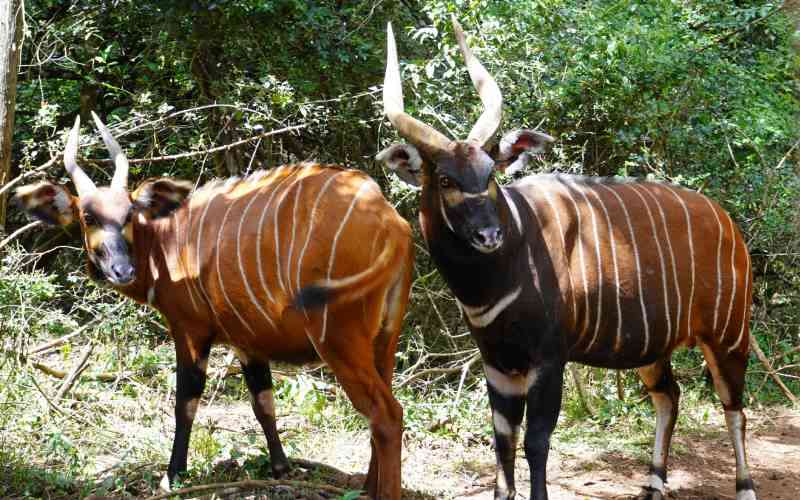
Critically endangered mountain bongo feeds at Mount Kenya Wildlife Conservancy, January 16, 2026. Kenya Space Agency and Planet launched Project Centinela to monitor and protect the species using satellite technology.[Mose Sammy, Standard]
Kenya is deploying satellite surveillance to protect shrinking mountain bongo habitats as conservationists warn the species faces extinction if forest loss continues.The Kenya Space Agency (KSA) launched Project Centinela on January 16 at Mount Kenya Wildlife Conservancy (MKWC), using daily satellite imagery to monitor forest cover, detect illegal logging and guide habitatrestoration for the critically endangered antelope.The project brings space technology into frontline wildlife protection, a role traditionally handled through ground patrols and aerial surveys.Follow The Standard
channel
on WhatsAppKSA is working with MKWC and Planet, a United States-based Earth imaging company, under a memorandum of understanding signed in 2023."Through Earth observation data, we are supporting evidence-based environmental management and strengthening institutional capacity for biodiversity conservation," said Charles Mwangi, Acting Director of KSA.Wild mountain bongos now survive only in isolated forest patches across Mount Kenya, the Aberdare range, Eburu Forest and the Mau Complex.The species is listed as Critically Endangered on the International Union for Conservation of Nature (IUCN) Red List.Kenya's 2021 wildlife census recorded 150 mountain bongos. That number rose to 176 in the 2025 census. However, captive populations now outnumber those in the wild, with MKWC housing 93 animals as of 2025.The conservancy's breeding programme began in 2004 with 18 animals repatriated from United States zoos. The programme reached a milestone on January 8 when its 100th calf was born.In February last year, Kenya received 17 additional mountain bongos from the Rare Species Conservatory Foundation in Florida, comprising 12 females and five males.The animals were flown to the Marania and Mucheene sanctuary in Meru County, where they underwent quarantine before integration into the breeding programme.Planet's satellite constellation of over 430 satellites provides daily coverage of Mount Kenya, allowing conservation teams to detect land cover changes and respond to threats sooner."Daily Earth observation helps conservation partners see change as it happens and act on it," said Andrew Zolli, Chief Impact Officer at Planet.Stay informed. Subscribe to our newsletterBy clicking on theSIGN UPbutton, you agree to ourTerms & Conditionsand thePrivacy PolicySIGN UPThe mountain forests where bongos live supply 80 per cent of Kenya's water resources, making habitat protection a national priority.Stay Informed, Stay Empowered: Download the Standard ePaper App!Conservationists say habitat loss driven by logging, agricultural expansion, poaching, disease and climate change has pushed the species to the brink. The wild population declined from an estimated 500 animals in 1975 to fewer than 100 today.Some forest areas now contain only male bongos, making local extinction inevitable without the translocation of females from breeding centres.Kenya Space Agency Acting Director Technical Charles Mwangi (left), Mount Kenya Wildlife Conservancy Head Dr Robert Aruho (second left), and Planet team members Dr Amy Rosenthal (second right) and Andrew Zolli (right) cut the ribbon to launch Project Centinela on January 16, 2026. The initiative uses satellite technology to monitor and protect the critically endangered mountain bongo.[Mose Sammy, Standard]In 2022, Kenya opened the Mawingu Mountain Bongo Sanctuary, releasing 10 animals into semi-wild conditions. MKWC, Kenya Wildlife Service (KWS) and Kenya Forest Service (KFS) manage the sanctuary jointly.By 2024, the sanctuary had recorded three wild births, bringing its population to 13 animals. In May last year, authorities released 10 more bongos into the sanctuary during a ceremony attended by First Lady Rachel Ruto.Officials said satellite data will help identify priority restoration areas, track the success of reintroduction efforts and support long-term conservation planning.The project complements ground-based monitoring, including artificial intelligence-enabled camera systems deployed in 2024 to track bongo movements and behaviour in the Mawingu Sanctuary.Kenya's National Recovery and Action Plan for the mountain bongo targets a population of 730 animals over the next 50 years, with the current phase running from 2026 to 2030. KWS, KFS and MKWC implement the plan jointly.The government has fenced key forest ecosystems, including the Aberdare, Mount Kenya and Eburu forests, deployed armed rangers and expanded camera trap monitoring as part of broader efforts to prevent extinction of the species.Follow The Standard
channel
on WhatsApp
The Kenya Space Agency (KSA) launched Project Centinela on January 16 at Mount Kenya Wildlife Conservancy (MKWC), using daily satellite imagery to monitor forest cover, detect illegal logging and guide habitatrestoration for the critically endangered antelope.The project brings space technology into frontline wildlife protection, a role traditionally handled through ground patrols and aerial surveys.Follow The Standard
channel
on WhatsAppKSA is working with MKWC and Planet, a United States-based Earth imaging company, under a memorandum of understanding signed in 2023."Through Earth observation data, we are supporting evidence-based environmental management and strengthening institutional capacity for biodiversity conservation," said Charles Mwangi, Acting Director of KSA.Wild mountain bongos now survive only in isolated forest patches across Mount Kenya, the Aberdare range, Eburu Forest and the Mau Complex.The species is listed as Critically Endangered on the International Union for Conservation of Nature (IUCN) Red List.Kenya's 2021 wildlife census recorded 150 mountain bongos. That number rose to 176 in the 2025 census. However, captive populations now outnumber those in the wild, with MKWC housing 93 animals as of 2025.The conservancy's breeding programme began in 2004 with 18 animals repatriated from United States zoos. The programme reached a milestone on January 8 when its 100th calf was born.In February last year, Kenya received 17 additional mountain bongos from the Rare Species Conservatory Foundation in Florida, comprising 12 females and five males.The animals were flown to the Marania and Mucheene sanctuary in Meru County, where they underwent quarantine before integration into the breeding programme.Planet's satellite constellation of over 430 satellites provides daily coverage of Mount Kenya, allowing conservation teams to detect land cover changes and respond to threats sooner."Daily Earth observation helps conservation partners see change as it happens and act on it," said Andrew Zolli, Chief Impact Officer at Planet.Stay informed. Subscribe to our newsletterBy clicking on theSIGN UPbutton, you agree to ourTerms & Conditionsand thePrivacy PolicySIGN UPThe mountain forests where bongos live supply 80 per cent of Kenya's water resources, making habitat protection a national priority.Stay Informed, Stay Empowered: Download the Standard ePaper App!Conservationists say habitat loss driven by logging, agricultural expansion, poaching, disease and climate change has pushed the species to the brink. The wild population declined from an estimated 500 animals in 1975 to fewer than 100 today.Some forest areas now contain only male bongos, making local extinction inevitable without the translocation of females from breeding centres.Kenya Space Agency Acting Director Technical Charles Mwangi (left), Mount Kenya Wildlife Conservancy Head Dr Robert Aruho (second left), and Planet team members Dr Amy Rosenthal (second right) and Andrew Zolli (right) cut the ribbon to launch Project Centinela on January 16, 2026. The initiative uses satellite technology to monitor and protect the critically endangered mountain bongo.[Mose Sammy, Standard]In 2022, Kenya opened the Mawingu Mountain Bongo Sanctuary, releasing 10 animals into semi-wild conditions. MKWC, Kenya Wildlife Service (KWS) and Kenya Forest Service (KFS) manage the sanctuary jointly.By 2024, the sanctuary had recorded three wild births, bringing its population to 13 animals. In May last year, authorities released 10 more bongos into the sanctuary during a ceremony attended by First Lady Rachel Ruto.Officials said satellite data will help identify priority restoration areas, track the success of reintroduction efforts and support long-term conservation planning.The project complements ground-based monitoring, including artificial intelligence-enabled camera systems deployed in 2024 to track bongo movements and behaviour in the Mawingu Sanctuary.Kenya's National Recovery and Action Plan for the mountain bongo targets a population of 730 animals over the next 50 years, with the current phase running from 2026 to 2030. KWS, KFS and MKWC implement the plan jointly.The government has fenced key forest ecosystems, including the Aberdare, Mount Kenya and Eburu forests, deployed armed rangers and expanded camera trap monitoring as part of broader efforts to prevent extinction of the species.Follow The Standard
channel
on WhatsApp
The project brings space technology into frontline wildlife protection, a role traditionally handled through ground patrols and aerial surveys.Follow The Standard
channel
on WhatsAppKSA is working with MKWC and Planet, a United States-based Earth imaging company, under a memorandum of understanding signed in 2023."Through Earth observation data, we are supporting evidence-based environmental management and strengthening institutional capacity for biodiversity conservation," said Charles Mwangi, Acting Director of KSA.Wild mountain bongos now survive only in isolated forest patches across Mount Kenya, the Aberdare range, Eburu Forest and the Mau Complex.The species is listed as Critically Endangered on the International Union for Conservation of Nature (IUCN) Red List.Kenya's 2021 wildlife census recorded 150 mountain bongos. That number rose to 176 in the 2025 census. However, captive populations now outnumber those in the wild, with MKWC housing 93 animals as of 2025.The conservancy's breeding programme began in 2004 with 18 animals repatriated from United States zoos. The programme reached a milestone on January 8 when its 100th calf was born.In February last year, Kenya received 17 additional mountain bongos from the Rare Species Conservatory Foundation in Florida, comprising 12 females and five males.The animals were flown to the Marania and Mucheene sanctuary in Meru County, where they underwent quarantine before integration into the breeding programme.Planet's satellite constellation of over 430 satellites provides daily coverage of Mount Kenya, allowing conservation teams to detect land cover changes and respond to threats sooner."Daily Earth observation helps conservation partners see change as it happens and act on it," said Andrew Zolli, Chief Impact Officer at Planet.Stay informed. Subscribe to our newsletterBy clicking on theSIGN UPbutton, you agree to ourTerms & Conditionsand thePrivacy PolicySIGN UPThe mountain forests where bongos live supply 80 per cent of Kenya's water resources, making habitat protection a national priority.Stay Informed, Stay Empowered: Download the Standard ePaper App!Conservationists say habitat loss driven by logging, agricultural expansion, poaching, disease and climate change has pushed the species to the brink. The wild population declined from an estimated 500 animals in 1975 to fewer than 100 today.Some forest areas now contain only male bongos, making local extinction inevitable without the translocation of females from breeding centres.Kenya Space Agency Acting Director Technical Charles Mwangi (left), Mount Kenya Wildlife Conservancy Head Dr Robert Aruho (second left), and Planet team members Dr Amy Rosenthal (second right) and Andrew Zolli (right) cut the ribbon to launch Project Centinela on January 16, 2026. The initiative uses satellite technology to monitor and protect the critically endangered mountain bongo.[Mose Sammy, Standard]In 2022, Kenya opened the Mawingu Mountain Bongo Sanctuary, releasing 10 animals into semi-wild conditions. MKWC, Kenya Wildlife Service (KWS) and Kenya Forest Service (KFS) manage the sanctuary jointly.By 2024, the sanctuary had recorded three wild births, bringing its population to 13 animals. In May last year, authorities released 10 more bongos into the sanctuary during a ceremony attended by First Lady Rachel Ruto.Officials said satellite data will help identify priority restoration areas, track the success of reintroduction efforts and support long-term conservation planning.The project complements ground-based monitoring, including artificial intelligence-enabled camera systems deployed in 2024 to track bongo movements and behaviour in the Mawingu Sanctuary.Kenya's National Recovery and Action Plan for the mountain bongo targets a population of 730 animals over the next 50 years, with the current phase running from 2026 to 2030. KWS, KFS and MKWC implement the plan jointly.The government has fenced key forest ecosystems, including the Aberdare, Mount Kenya and Eburu forests, deployed armed rangers and expanded camera trap monitoring as part of broader efforts to prevent extinction of the species.Follow The Standard
channel
on WhatsApp
KSA is working with MKWC and Planet, a United States-based Earth imaging company, under a memorandum of understanding signed in 2023."Through Earth observation data, we are supporting evidence-based environmental management and strengthening institutional capacity for biodiversity conservation," said Charles Mwangi, Acting Director of KSA.Wild mountain bongos now survive only in isolated forest patches across Mount Kenya, the Aberdare range, Eburu Forest and the Mau Complex.The species is listed as Critically Endangered on the International Union for Conservation of Nature (IUCN) Red List.Kenya's 2021 wildlife census recorded 150 mountain bongos. That number rose to 176 in the 2025 census. However, captive populations now outnumber those in the wild, with MKWC housing 93 animals as of 2025.The conservancy's breeding programme began in 2004 with 18 animals repatriated from United States zoos. The programme reached a milestone on January 8 when its 100th calf was born.In February last year, Kenya received 17 additional mountain bongos from the Rare Species Conservatory Foundation in Florida, comprising 12 females and five males.The animals were flown to the Marania and Mucheene sanctuary in Meru County, where they underwent quarantine before integration into the breeding programme.Planet's satellite constellation of over 430 satellites provides daily coverage of Mount Kenya, allowing conservation teams to detect land cover changes and respond to threats sooner."Daily Earth observation helps conservation partners see change as it happens and act on it," said Andrew Zolli, Chief Impact Officer at Planet.Stay informed. Subscribe to our newsletterBy clicking on theSIGN UPbutton, you agree to ourTerms & Conditionsand thePrivacy PolicySIGN UPThe mountain forests where bongos live supply 80 per cent of Kenya's water resources, making habitat protection a national priority.Stay Informed, Stay Empowered: Download the Standard ePaper App!Conservationists say habitat loss driven by logging, agricultural expansion, poaching, disease and climate change has pushed the species to the brink. The wild population declined from an estimated 500 animals in 1975 to fewer than 100 today.Some forest areas now contain only male bongos, making local extinction inevitable without the translocation of females from breeding centres.Kenya Space Agency Acting Director Technical Charles Mwangi (left), Mount Kenya Wildlife Conservancy Head Dr Robert Aruho (second left), and Planet team members Dr Amy Rosenthal (second right) and Andrew Zolli (right) cut the ribbon to launch Project Centinela on January 16, 2026. The initiative uses satellite technology to monitor and protect the critically endangered mountain bongo.[Mose Sammy, Standard]In 2022, Kenya opened the Mawingu Mountain Bongo Sanctuary, releasing 10 animals into semi-wild conditions. MKWC, Kenya Wildlife Service (KWS) and Kenya Forest Service (KFS) manage the sanctuary jointly.By 2024, the sanctuary had recorded three wild births, bringing its population to 13 animals. In May last year, authorities released 10 more bongos into the sanctuary during a ceremony attended by First Lady Rachel Ruto.Officials said satellite data will help identify priority restoration areas, track the success of reintroduction efforts and support long-term conservation planning.The project complements ground-based monitoring, including artificial intelligence-enabled camera systems deployed in 2024 to track bongo movements and behaviour in the Mawingu Sanctuary.Kenya's National Recovery and Action Plan for the mountain bongo targets a population of 730 animals over the next 50 years, with the current phase running from 2026 to 2030. KWS, KFS and MKWC implement the plan jointly.The government has fenced key forest ecosystems, including the Aberdare, Mount Kenya and Eburu forests, deployed armed rangers and expanded camera trap monitoring as part of broader efforts to prevent extinction of the species.Follow The Standard
channel
on WhatsApp
"Through Earth observation data, we are supporting evidence-based environmental management and strengthening institutional capacity for biodiversity conservation," said Charles Mwangi, Acting Director of KSA.Wild mountain bongos now survive only in isolated forest patches across Mount Kenya, the Aberdare range, Eburu Forest and the Mau Complex.The species is listed as Critically Endangered on the International Union for Conservation of Nature (IUCN) Red List.Kenya's 2021 wildlife census recorded 150 mountain bongos. That number rose to 176 in the 2025 census. However, captive populations now outnumber those in the wild, with MKWC housing 93 animals as of 2025.The conservancy's breeding programme began in 2004 with 18 animals repatriated from United States zoos. The programme reached a milestone on January 8 when its 100th calf was born.In February last year, Kenya received 17 additional mountain bongos from the Rare Species Conservatory Foundation in Florida, comprising 12 females and five males.The animals were flown to the Marania and Mucheene sanctuary in Meru County, where they underwent quarantine before integration into the breeding programme.Planet's satellite constellation of over 430 satellites provides daily coverage of Mount Kenya, allowing conservation teams to detect land cover changes and respond to threats sooner."Daily Earth observation helps conservation partners see change as it happens and act on it," said Andrew Zolli, Chief Impact Officer at Planet.Stay informed. Subscribe to our newsletterBy clicking on theSIGN UPbutton, you agree to ourTerms & Conditionsand thePrivacy PolicySIGN UPThe mountain forests where bongos live supply 80 per cent of Kenya's water resources, making habitat protection a national priority.Stay Informed, Stay Empowered: Download the Standard ePaper App!Conservationists say habitat loss driven by logging, agricultural expansion, poaching, disease and climate change has pushed the species to the brink. The wild population declined from an estimated 500 animals in 1975 to fewer than 100 today.Some forest areas now contain only male bongos, making local extinction inevitable without the translocation of females from breeding centres.Kenya Space Agency Acting Director Technical Charles Mwangi (left), Mount Kenya Wildlife Conservancy Head Dr Robert Aruho (second left), and Planet team members Dr Amy Rosenthal (second right) and Andrew Zolli (right) cut the ribbon to launch Project Centinela on January 16, 2026. The initiative uses satellite technology to monitor and protect the critically endangered mountain bongo.[Mose Sammy, Standard]In 2022, Kenya opened the Mawingu Mountain Bongo Sanctuary, releasing 10 animals into semi-wild conditions. MKWC, Kenya Wildlife Service (KWS) and Kenya Forest Service (KFS) manage the sanctuary jointly.By 2024, the sanctuary had recorded three wild births, bringing its population to 13 animals. In May last year, authorities released 10 more bongos into the sanctuary during a ceremony attended by First Lady Rachel Ruto.Officials said satellite data will help identify priority restoration areas, track the success of reintroduction efforts and support long-term conservation planning.The project complements ground-based monitoring, including artificial intelligence-enabled camera systems deployed in 2024 to track bongo movements and behaviour in the Mawingu Sanctuary.Kenya's National Recovery and Action Plan for the mountain bongo targets a population of 730 animals over the next 50 years, with the current phase running from 2026 to 2030. KWS, KFS and MKWC implement the plan jointly.The government has fenced key forest ecosystems, including the Aberdare, Mount Kenya and Eburu forests, deployed armed rangers and expanded camera trap monitoring as part of broader efforts to prevent extinction of the species.Follow The Standard
channel
on WhatsApp
Wild mountain bongos now survive only in isolated forest patches across Mount Kenya, the Aberdare range, Eburu Forest and the Mau Complex.The species is listed as Critically Endangered on the International Union for Conservation of Nature (IUCN) Red List.Kenya's 2021 wildlife census recorded 150 mountain bongos. That number rose to 176 in the 2025 census. However, captive populations now outnumber those in the wild, with MKWC housing 93 animals as of 2025.The conservancy's breeding programme began in 2004 with 18 animals repatriated from United States zoos. The programme reached a milestone on January 8 when its 100th calf was born.In February last year, Kenya received 17 additional mountain bongos from the Rare Species Conservatory Foundation in Florida, comprising 12 females and five males.The animals were flown to the Marania and Mucheene sanctuary in Meru County, where they underwent quarantine before integration into the breeding programme.Planet's satellite constellation of over 430 satellites provides daily coverage of Mount Kenya, allowing conservation teams to detect land cover changes and respond to threats sooner."Daily Earth observation helps conservation partners see change as it happens and act on it," said Andrew Zolli, Chief Impact Officer at Planet.Stay informed. Subscribe to our newsletterBy clicking on theSIGN UPbutton, you agree to ourTerms & Conditionsand thePrivacy PolicySIGN UPThe mountain forests where bongos live supply 80 per cent of Kenya's water resources, making habitat protection a national priority.Stay Informed, Stay Empowered: Download the Standard ePaper App!Conservationists say habitat loss driven by logging, agricultural expansion, poaching, disease and climate change has pushed the species to the brink. The wild population declined from an estimated 500 animals in 1975 to fewer than 100 today.Some forest areas now contain only male bongos, making local extinction inevitable without the translocation of females from breeding centres.Kenya Space Agency Acting Director Technical Charles Mwangi (left), Mount Kenya Wildlife Conservancy Head Dr Robert Aruho (second left), and Planet team members Dr Amy Rosenthal (second right) and Andrew Zolli (right) cut the ribbon to launch Project Centinela on January 16, 2026. The initiative uses satellite technology to monitor and protect the critically endangered mountain bongo.[Mose Sammy, Standard]In 2022, Kenya opened the Mawingu Mountain Bongo Sanctuary, releasing 10 animals into semi-wild conditions. MKWC, Kenya Wildlife Service (KWS) and Kenya Forest Service (KFS) manage the sanctuary jointly.By 2024, the sanctuary had recorded three wild births, bringing its population to 13 animals. In May last year, authorities released 10 more bongos into the sanctuary during a ceremony attended by First Lady Rachel Ruto.Officials said satellite data will help identify priority restoration areas, track the success of reintroduction efforts and support long-term conservation planning.The project complements ground-based monitoring, including artificial intelligence-enabled camera systems deployed in 2024 to track bongo movements and behaviour in the Mawingu Sanctuary.Kenya's National Recovery and Action Plan for the mountain bongo targets a population of 730 animals over the next 50 years, with the current phase running from 2026 to 2030. KWS, KFS and MKWC implement the plan jointly.The government has fenced key forest ecosystems, including the Aberdare, Mount Kenya and Eburu forests, deployed armed rangers and expanded camera trap monitoring as part of broader efforts to prevent extinction of the species.Follow The Standard
channel
on WhatsApp
The species is listed as Critically Endangered on the International Union for Conservation of Nature (IUCN) Red List.Kenya's 2021 wildlife census recorded 150 mountain bongos. That number rose to 176 in the 2025 census. However, captive populations now outnumber those in the wild, with MKWC housing 93 animals as of 2025.The conservancy's breeding programme began in 2004 with 18 animals repatriated from United States zoos. The programme reached a milestone on January 8 when its 100th calf was born.In February last year, Kenya received 17 additional mountain bongos from the Rare Species Conservatory Foundation in Florida, comprising 12 females and five males.The animals were flown to the Marania and Mucheene sanctuary in Meru County, where they underwent quarantine before integration into the breeding programme.Planet's satellite constellation of over 430 satellites provides daily coverage of Mount Kenya, allowing conservation teams to detect land cover changes and respond to threats sooner."Daily Earth observation helps conservation partners see change as it happens and act on it," said Andrew Zolli, Chief Impact Officer at Planet.Stay informed. Subscribe to our newsletterBy clicking on theSIGN UPbutton, you agree to ourTerms & Conditionsand thePrivacy PolicySIGN UPThe mountain forests where bongos live supply 80 per cent of Kenya's water resources, making habitat protection a national priority.Stay Informed, Stay Empowered: Download the Standard ePaper App!Conservationists say habitat loss driven by logging, agricultural expansion, poaching, disease and climate change has pushed the species to the brink. The wild population declined from an estimated 500 animals in 1975 to fewer than 100 today.Some forest areas now contain only male bongos, making local extinction inevitable without the translocation of females from breeding centres.Kenya Space Agency Acting Director Technical Charles Mwangi (left), Mount Kenya Wildlife Conservancy Head Dr Robert Aruho (second left), and Planet team members Dr Amy Rosenthal (second right) and Andrew Zolli (right) cut the ribbon to launch Project Centinela on January 16, 2026. The initiative uses satellite technology to monitor and protect the critically endangered mountain bongo.[Mose Sammy, Standard]In 2022, Kenya opened the Mawingu Mountain Bongo Sanctuary, releasing 10 animals into semi-wild conditions. MKWC, Kenya Wildlife Service (KWS) and Kenya Forest Service (KFS) manage the sanctuary jointly.By 2024, the sanctuary had recorded three wild births, bringing its population to 13 animals. In May last year, authorities released 10 more bongos into the sanctuary during a ceremony attended by First Lady Rachel Ruto.Officials said satellite data will help identify priority restoration areas, track the success of reintroduction efforts and support long-term conservation planning.The project complements ground-based monitoring, including artificial intelligence-enabled camera systems deployed in 2024 to track bongo movements and behaviour in the Mawingu Sanctuary.Kenya's National Recovery and Action Plan for the mountain bongo targets a population of 730 animals over the next 50 years, with the current phase running from 2026 to 2030. KWS, KFS and MKWC implement the plan jointly.The government has fenced key forest ecosystems, including the Aberdare, Mount Kenya and Eburu forests, deployed armed rangers and expanded camera trap monitoring as part of broader efforts to prevent extinction of the species.Follow The Standard
channel
on WhatsApp
Kenya's 2021 wildlife census recorded 150 mountain bongos. That number rose to 176 in the 2025 census. However, captive populations now outnumber those in the wild, with MKWC housing 93 animals as of 2025.The conservancy's breeding programme began in 2004 with 18 animals repatriated from United States zoos. The programme reached a milestone on January 8 when its 100th calf was born.In February last year, Kenya received 17 additional mountain bongos from the Rare Species Conservatory Foundation in Florida, comprising 12 females and five males.The animals were flown to the Marania and Mucheene sanctuary in Meru County, where they underwent quarantine before integration into the breeding programme.Planet's satellite constellation of over 430 satellites provides daily coverage of Mount Kenya, allowing conservation teams to detect land cover changes and respond to threats sooner."Daily Earth observation helps conservation partners see change as it happens and act on it," said Andrew Zolli, Chief Impact Officer at Planet.Stay informed. Subscribe to our newsletterBy clicking on theSIGN UPbutton, you agree to ourTerms & Conditionsand thePrivacy PolicySIGN UPThe mountain forests where bongos live supply 80 per cent of Kenya's water resources, making habitat protection a national priority.Stay Informed, Stay Empowered: Download the Standard ePaper App!Conservationists say habitat loss driven by logging, agricultural expansion, poaching, disease and climate change has pushed the species to the brink. The wild population declined from an estimated 500 animals in 1975 to fewer than 100 today.Some forest areas now contain only male bongos, making local extinction inevitable without the translocation of females from breeding centres.Kenya Space Agency Acting Director Technical Charles Mwangi (left), Mount Kenya Wildlife Conservancy Head Dr Robert Aruho (second left), and Planet team members Dr Amy Rosenthal (second right) and Andrew Zolli (right) cut the ribbon to launch Project Centinela on January 16, 2026. The initiative uses satellite technology to monitor and protect the critically endangered mountain bongo.[Mose Sammy, Standard]In 2022, Kenya opened the Mawingu Mountain Bongo Sanctuary, releasing 10 animals into semi-wild conditions. MKWC, Kenya Wildlife Service (KWS) and Kenya Forest Service (KFS) manage the sanctuary jointly.By 2024, the sanctuary had recorded three wild births, bringing its population to 13 animals. In May last year, authorities released 10 more bongos into the sanctuary during a ceremony attended by First Lady Rachel Ruto.Officials said satellite data will help identify priority restoration areas, track the success of reintroduction efforts and support long-term conservation planning.The project complements ground-based monitoring, including artificial intelligence-enabled camera systems deployed in 2024 to track bongo movements and behaviour in the Mawingu Sanctuary.Kenya's National Recovery and Action Plan for the mountain bongo targets a population of 730 animals over the next 50 years, with the current phase running from 2026 to 2030. KWS, KFS and MKWC implement the plan jointly.The government has fenced key forest ecosystems, including the Aberdare, Mount Kenya and Eburu forests, deployed armed rangers and expanded camera trap monitoring as part of broader efforts to prevent extinction of the species.Follow The Standard
channel
on WhatsApp
The conservancy's breeding programme began in 2004 with 18 animals repatriated from United States zoos. The programme reached a milestone on January 8 when its 100th calf was born.In February last year, Kenya received 17 additional mountain bongos from the Rare Species Conservatory Foundation in Florida, comprising 12 females and five males.The animals were flown to the Marania and Mucheene sanctuary in Meru County, where they underwent quarantine before integration into the breeding programme.Planet's satellite constellation of over 430 satellites provides daily coverage of Mount Kenya, allowing conservation teams to detect land cover changes and respond to threats sooner."Daily Earth observation helps conservation partners see change as it happens and act on it," said Andrew Zolli, Chief Impact Officer at Planet.Stay informed. Subscribe to our newsletterBy clicking on theSIGN UPbutton, you agree to ourTerms & Conditionsand thePrivacy PolicySIGN UPThe mountain forests where bongos live supply 80 per cent of Kenya's water resources, making habitat protection a national priority.Stay Informed, Stay Empowered: Download the Standard ePaper App!Conservationists say habitat loss driven by logging, agricultural expansion, poaching, disease and climate change has pushed the species to the brink. The wild population declined from an estimated 500 animals in 1975 to fewer than 100 today.Some forest areas now contain only male bongos, making local extinction inevitable without the translocation of females from breeding centres.Kenya Space Agency Acting Director Technical Charles Mwangi (left), Mount Kenya Wildlife Conservancy Head Dr Robert Aruho (second left), and Planet team members Dr Amy Rosenthal (second right) and Andrew Zolli (right) cut the ribbon to launch Project Centinela on January 16, 2026. The initiative uses satellite technology to monitor and protect the critically endangered mountain bongo.[Mose Sammy, Standard]In 2022, Kenya opened the Mawingu Mountain Bongo Sanctuary, releasing 10 animals into semi-wild conditions. MKWC, Kenya Wildlife Service (KWS) and Kenya Forest Service (KFS) manage the sanctuary jointly.By 2024, the sanctuary had recorded three wild births, bringing its population to 13 animals. In May last year, authorities released 10 more bongos into the sanctuary during a ceremony attended by First Lady Rachel Ruto.Officials said satellite data will help identify priority restoration areas, track the success of reintroduction efforts and support long-term conservation planning.The project complements ground-based monitoring, including artificial intelligence-enabled camera systems deployed in 2024 to track bongo movements and behaviour in the Mawingu Sanctuary.Kenya's National Recovery and Action Plan for the mountain bongo targets a population of 730 animals over the next 50 years, with the current phase running from 2026 to 2030. KWS, KFS and MKWC implement the plan jointly.The government has fenced key forest ecosystems, including the Aberdare, Mount Kenya and Eburu forests, deployed armed rangers and expanded camera trap monitoring as part of broader efforts to prevent extinction of the species.Follow The Standard
channel
on WhatsApp
In February last year, Kenya received 17 additional mountain bongos from the Rare Species Conservatory Foundation in Florida, comprising 12 females and five males.The animals were flown to the Marania and Mucheene sanctuary in Meru County, where they underwent quarantine before integration into the breeding programme.Planet's satellite constellation of over 430 satellites provides daily coverage of Mount Kenya, allowing conservation teams to detect land cover changes and respond to threats sooner."Daily Earth observation helps conservation partners see change as it happens and act on it," said Andrew Zolli, Chief Impact Officer at Planet.Stay informed. Subscribe to our newsletterBy clicking on theSIGN UPbutton, you agree to ourTerms & Conditionsand thePrivacy PolicySIGN UPThe mountain forests where bongos live supply 80 per cent of Kenya's water resources, making habitat protection a national priority.Stay Informed, Stay Empowered: Download the Standard ePaper App!Conservationists say habitat loss driven by logging, agricultural expansion, poaching, disease and climate change has pushed the species to the brink. The wild population declined from an estimated 500 animals in 1975 to fewer than 100 today.Some forest areas now contain only male bongos, making local extinction inevitable without the translocation of females from breeding centres.Kenya Space Agency Acting Director Technical Charles Mwangi (left), Mount Kenya Wildlife Conservancy Head Dr Robert Aruho (second left), and Planet team members Dr Amy Rosenthal (second right) and Andrew Zolli (right) cut the ribbon to launch Project Centinela on January 16, 2026. The initiative uses satellite technology to monitor and protect the critically endangered mountain bongo.[Mose Sammy, Standard]In 2022, Kenya opened the Mawingu Mountain Bongo Sanctuary, releasing 10 animals into semi-wild conditions. MKWC, Kenya Wildlife Service (KWS) and Kenya Forest Service (KFS) manage the sanctuary jointly.By 2024, the sanctuary had recorded three wild births, bringing its population to 13 animals. In May last year, authorities released 10 more bongos into the sanctuary during a ceremony attended by First Lady Rachel Ruto.Officials said satellite data will help identify priority restoration areas, track the success of reintroduction efforts and support long-term conservation planning.The project complements ground-based monitoring, including artificial intelligence-enabled camera systems deployed in 2024 to track bongo movements and behaviour in the Mawingu Sanctuary.Kenya's National Recovery and Action Plan for the mountain bongo targets a population of 730 animals over the next 50 years, with the current phase running from 2026 to 2030. KWS, KFS and MKWC implement the plan jointly.The government has fenced key forest ecosystems, including the Aberdare, Mount Kenya and Eburu forests, deployed armed rangers and expanded camera trap monitoring as part of broader efforts to prevent extinction of the species.Follow The Standard
channel
on WhatsApp
In February last year, Kenya received 17 additional mountain bongos from the Rare Species Conservatory Foundation in Florida, comprising 12 females and five males.The animals were flown to the Marania and Mucheene sanctuary in Meru County, where they underwent quarantine before integration into the breeding programme.Planet's satellite constellation of over 430 satellites provides daily coverage of Mount Kenya, allowing conservation teams to detect land cover changes and respond to threats sooner."Daily Earth observation helps conservation partners see change as it happens and act on it," said Andrew Zolli, Chief Impact Officer at Planet.Stay informed. Subscribe to our newsletterBy clicking on theSIGN UPbutton, you agree to ourTerms & Conditionsand thePrivacy PolicySIGN UPThe mountain forests where bongos live supply 80 per cent of Kenya's water resources, making habitat protection a national priority.Stay Informed, Stay Empowered: Download the Standard ePaper App!Conservationists say habitat loss driven by logging, agricultural expansion, poaching, disease and climate change has pushed the species to the brink. The wild population declined from an estimated 500 animals in 1975 to fewer than 100 today.Some forest areas now contain only male bongos, making local extinction inevitable without the translocation of females from breeding centres.Kenya Space Agency Acting Director Technical Charles Mwangi (left), Mount Kenya Wildlife Conservancy Head Dr Robert Aruho (second left), and Planet team members Dr Amy Rosenthal (second right) and Andrew Zolli (right) cut the ribbon to launch Project Centinela on January 16, 2026. The initiative uses satellite technology to monitor and protect the critically endangered mountain bongo.[Mose Sammy, Standard]In 2022, Kenya opened the Mawingu Mountain Bongo Sanctuary, releasing 10 animals into semi-wild conditions. MKWC, Kenya Wildlife Service (KWS) and Kenya Forest Service (KFS) manage the sanctuary jointly.By 2024, the sanctuary had recorded three wild births, bringing its population to 13 animals. In May last year, authorities released 10 more bongos into the sanctuary during a ceremony attended by First Lady Rachel Ruto.Officials said satellite data will help identify priority restoration areas, track the success of reintroduction efforts and support long-term conservation planning.The project complements ground-based monitoring, including artificial intelligence-enabled camera systems deployed in 2024 to track bongo movements and behaviour in the Mawingu Sanctuary.Kenya's National Recovery and Action Plan for the mountain bongo targets a population of 730 animals over the next 50 years, with the current phase running from 2026 to 2030. KWS, KFS and MKWC implement the plan jointly.The government has fenced key forest ecosystems, including the Aberdare, Mount Kenya and Eburu forests, deployed armed rangers and expanded camera trap monitoring as part of broader efforts to prevent extinction of the species.Follow The Standard
channel
on WhatsApp
The animals were flown to the Marania and Mucheene sanctuary in Meru County, where they underwent quarantine before integration into the breeding programme.Planet's satellite constellation of over 430 satellites provides daily coverage of Mount Kenya, allowing conservation teams to detect land cover changes and respond to threats sooner."Daily Earth observation helps conservation partners see change as it happens and act on it," said Andrew Zolli, Chief Impact Officer at Planet.Stay informed. Subscribe to our newsletterBy clicking on theSIGN UPbutton, you agree to ourTerms & Conditionsand thePrivacy PolicySIGN UPThe mountain forests where bongos live supply 80 per cent of Kenya's water resources, making habitat protection a national priority.Stay Informed, Stay Empowered: Download the Standard ePaper App!Conservationists say habitat loss driven by logging, agricultural expansion, poaching, disease and climate change has pushed the species to the brink. The wild population declined from an estimated 500 animals in 1975 to fewer than 100 today.Some forest areas now contain only male bongos, making local extinction inevitable without the translocation of females from breeding centres.Kenya Space Agency Acting Director Technical Charles Mwangi (left), Mount Kenya Wildlife Conservancy Head Dr Robert Aruho (second left), and Planet team members Dr Amy Rosenthal (second right) and Andrew Zolli (right) cut the ribbon to launch Project Centinela on January 16, 2026. The initiative uses satellite technology to monitor and protect the critically endangered mountain bongo.[Mose Sammy, Standard]In 2022, Kenya opened the Mawingu Mountain Bongo Sanctuary, releasing 10 animals into semi-wild conditions. MKWC, Kenya Wildlife Service (KWS) and Kenya Forest Service (KFS) manage the sanctuary jointly.By 2024, the sanctuary had recorded three wild births, bringing its population to 13 animals. In May last year, authorities released 10 more bongos into the sanctuary during a ceremony attended by First Lady Rachel Ruto.Officials said satellite data will help identify priority restoration areas, track the success of reintroduction efforts and support long-term conservation planning.The project complements ground-based monitoring, including artificial intelligence-enabled camera systems deployed in 2024 to track bongo movements and behaviour in the Mawingu Sanctuary.Kenya's National Recovery and Action Plan for the mountain bongo targets a population of 730 animals over the next 50 years, with the current phase running from 2026 to 2030. KWS, KFS and MKWC implement the plan jointly.The government has fenced key forest ecosystems, including the Aberdare, Mount Kenya and Eburu forests, deployed armed rangers and expanded camera trap monitoring as part of broader efforts to prevent extinction of the species.Follow The Standard
channel
on WhatsApp
Planet's satellite constellation of over 430 satellites provides daily coverage of Mount Kenya, allowing conservation teams to detect land cover changes and respond to threats sooner."Daily Earth observation helps conservation partners see change as it happens and act on it," said Andrew Zolli, Chief Impact Officer at Planet.Stay informed. Subscribe to our newsletterBy clicking on theSIGN UPbutton, you agree to ourTerms & Conditionsand thePrivacy PolicySIGN UPThe mountain forests where bongos live supply 80 per cent of Kenya's water resources, making habitat protection a national priority.Stay Informed, Stay Empowered: Download the Standard ePaper App!Conservationists say habitat loss driven by logging, agricultural expansion, poaching, disease and climate change has pushed the species to the brink. The wild population declined from an estimated 500 animals in 1975 to fewer than 100 today.Some forest areas now contain only male bongos, making local extinction inevitable without the translocation of females from breeding centres.Kenya Space Agency Acting Director Technical Charles Mwangi (left), Mount Kenya Wildlife Conservancy Head Dr Robert Aruho (second left), and Planet team members Dr Amy Rosenthal (second right) and Andrew Zolli (right) cut the ribbon to launch Project Centinela on January 16, 2026. The initiative uses satellite technology to monitor and protect the critically endangered mountain bongo.[Mose Sammy, Standard]In 2022, Kenya opened the Mawingu Mountain Bongo Sanctuary, releasing 10 animals into semi-wild conditions. MKWC, Kenya Wildlife Service (KWS) and Kenya Forest Service (KFS) manage the sanctuary jointly.By 2024, the sanctuary had recorded three wild births, bringing its population to 13 animals. In May last year, authorities released 10 more bongos into the sanctuary during a ceremony attended by First Lady Rachel Ruto.Officials said satellite data will help identify priority restoration areas, track the success of reintroduction efforts and support long-term conservation planning.The project complements ground-based monitoring, including artificial intelligence-enabled camera systems deployed in 2024 to track bongo movements and behaviour in the Mawingu Sanctuary.Kenya's National Recovery and Action Plan for the mountain bongo targets a population of 730 animals over the next 50 years, with the current phase running from 2026 to 2030. KWS, KFS and MKWC implement the plan jointly.The government has fenced key forest ecosystems, including the Aberdare, Mount Kenya and Eburu forests, deployed armed rangers and expanded camera trap monitoring as part of broader efforts to prevent extinction of the species.Follow The Standard
channel
on WhatsApp
"Daily Earth observation helps conservation partners see change as it happens and act on it," said Andrew Zolli, Chief Impact Officer at Planet.Stay informed. Subscribe to our newsletterBy clicking on theSIGN UPbutton, you agree to ourTerms & Conditionsand thePrivacy PolicySIGN UPThe mountain forests where bongos live supply 80 per cent of Kenya's water resources, making habitat protection a national priority.Stay Informed, Stay Empowered: Download the Standard ePaper App!Conservationists say habitat loss driven by logging, agricultural expansion, poaching, disease and climate change has pushed the species to the brink. The wild population declined from an estimated 500 animals in 1975 to fewer than 100 today.Some forest areas now contain only male bongos, making local extinction inevitable without the translocation of females from breeding centres.Kenya Space Agency Acting Director Technical Charles Mwangi (left), Mount Kenya Wildlife Conservancy Head Dr Robert Aruho (second left), and Planet team members Dr Amy Rosenthal (second right) and Andrew Zolli (right) cut the ribbon to launch Project Centinela on January 16, 2026. The initiative uses satellite technology to monitor and protect the critically endangered mountain bongo.[Mose Sammy, Standard]In 2022, Kenya opened the Mawingu Mountain Bongo Sanctuary, releasing 10 animals into semi-wild conditions. MKWC, Kenya Wildlife Service (KWS) and Kenya Forest Service (KFS) manage the sanctuary jointly.By 2024, the sanctuary had recorded three wild births, bringing its population to 13 animals. In May last year, authorities released 10 more bongos into the sanctuary during a ceremony attended by First Lady Rachel Ruto.Officials said satellite data will help identify priority restoration areas, track the success of reintroduction efforts and support long-term conservation planning.The project complements ground-based monitoring, including artificial intelligence-enabled camera systems deployed in 2024 to track bongo movements and behaviour in the Mawingu Sanctuary.Kenya's National Recovery and Action Plan for the mountain bongo targets a population of 730 animals over the next 50 years, with the current phase running from 2026 to 2030. KWS, KFS and MKWC implement the plan jointly.The government has fenced key forest ecosystems, including the Aberdare, Mount Kenya and Eburu forests, deployed armed rangers and expanded camera trap monitoring as part of broader efforts to prevent extinction of the species.Follow The Standard
channel
on WhatsApp
The mountain forests where bongos live supply 80 per cent of Kenya's water resources, making habitat protection a national priority.Stay Informed, Stay Empowered: Download the Standard ePaper App!Conservationists say habitat loss driven by logging, agricultural expansion, poaching, disease and climate change has pushed the species to the brink. The wild population declined from an estimated 500 animals in 1975 to fewer than 100 today.Some forest areas now contain only male bongos, making local extinction inevitable without the translocation of females from breeding centres.Kenya Space Agency Acting Director Technical Charles Mwangi (left), Mount Kenya Wildlife Conservancy Head Dr Robert Aruho (second left), and Planet team members Dr Amy Rosenthal (second right) and Andrew Zolli (right) cut the ribbon to launch Project Centinela on January 16, 2026. The initiative uses satellite technology to monitor and protect the critically endangered mountain bongo.[Mose Sammy, Standard]In 2022, Kenya opened the Mawingu Mountain Bongo Sanctuary, releasing 10 animals into semi-wild conditions. MKWC, Kenya Wildlife Service (KWS) and Kenya Forest Service (KFS) manage the sanctuary jointly.By 2024, the sanctuary had recorded three wild births, bringing its population to 13 animals. In May last year, authorities released 10 more bongos into the sanctuary during a ceremony attended by First Lady Rachel Ruto.Officials said satellite data will help identify priority restoration areas, track the success of reintroduction efforts and support long-term conservation planning.The project complements ground-based monitoring, including artificial intelligence-enabled camera systems deployed in 2024 to track bongo movements and behaviour in the Mawingu Sanctuary.Kenya's National Recovery and Action Plan for the mountain bongo targets a population of 730 animals over the next 50 years, with the current phase running from 2026 to 2030. KWS, KFS and MKWC implement the plan jointly.The government has fenced key forest ecosystems, including the Aberdare, Mount Kenya and Eburu forests, deployed armed rangers and expanded camera trap monitoring as part of broader efforts to prevent extinction of the species.Follow The Standard
channel
on WhatsApp
Conservationists say habitat loss driven by logging, agricultural expansion, poaching, disease and climate change has pushed the species to the brink. The wild population declined from an estimated 500 animals in 1975 to fewer than 100 today.Some forest areas now contain only male bongos, making local extinction inevitable without the translocation of females from breeding centres.Kenya Space Agency Acting Director Technical Charles Mwangi (left), Mount Kenya Wildlife Conservancy Head Dr Robert Aruho (second left), and Planet team members Dr Amy Rosenthal (second right) and Andrew Zolli (right) cut the ribbon to launch Project Centinela on January 16, 2026. The initiative uses satellite technology to monitor and protect the critically endangered mountain bongo.[Mose Sammy, Standard]In 2022, Kenya opened the Mawingu Mountain Bongo Sanctuary, releasing 10 animals into semi-wild conditions. MKWC, Kenya Wildlife Service (KWS) and Kenya Forest Service (KFS) manage the sanctuary jointly.By 2024, the sanctuary had recorded three wild births, bringing its population to 13 animals. In May last year, authorities released 10 more bongos into the sanctuary during a ceremony attended by First Lady Rachel Ruto.Officials said satellite data will help identify priority restoration areas, track the success of reintroduction efforts and support long-term conservation planning.The project complements ground-based monitoring, including artificial intelligence-enabled camera systems deployed in 2024 to track bongo movements and behaviour in the Mawingu Sanctuary.Kenya's National Recovery and Action Plan for the mountain bongo targets a population of 730 animals over the next 50 years, with the current phase running from 2026 to 2030. KWS, KFS and MKWC implement the plan jointly.The government has fenced key forest ecosystems, including the Aberdare, Mount Kenya and Eburu forests, deployed armed rangers and expanded camera trap monitoring as part of broader efforts to prevent extinction of the species.Follow The Standard
channel
on WhatsApp
Some forest areas now contain only male bongos, making local extinction inevitable without the translocation of females from breeding centres.Kenya Space Agency Acting Director Technical Charles Mwangi (left), Mount Kenya Wildlife Conservancy Head Dr Robert Aruho (second left), and Planet team members Dr Amy Rosenthal (second right) and Andrew Zolli (right) cut the ribbon to launch Project Centinela on January 16, 2026. The initiative uses satellite technology to monitor and protect the critically endangered mountain bongo.[Mose Sammy, Standard]In 2022, Kenya opened the Mawingu Mountain Bongo Sanctuary, releasing 10 animals into semi-wild conditions. MKWC, Kenya Wildlife Service (KWS) and Kenya Forest Service (KFS) manage the sanctuary jointly.By 2024, the sanctuary had recorded three wild births, bringing its population to 13 animals. In May last year, authorities released 10 more bongos into the sanctuary during a ceremony attended by First Lady Rachel Ruto.Officials said satellite data will help identify priority restoration areas, track the success of reintroduction efforts and support long-term conservation planning.The project complements ground-based monitoring, including artificial intelligence-enabled camera systems deployed in 2024 to track bongo movements and behaviour in the Mawingu Sanctuary.Kenya's National Recovery and Action Plan for the mountain bongo targets a population of 730 animals over the next 50 years, with the current phase running from 2026 to 2030. KWS, KFS and MKWC implement the plan jointly.The government has fenced key forest ecosystems, including the Aberdare, Mount Kenya and Eburu forests, deployed armed rangers and expanded camera trap monitoring as part of broader efforts to prevent extinction of the species.Follow The Standard
channel
on WhatsApp
Kenya Space Agency Acting Director Technical Charles Mwangi (left), Mount Kenya Wildlife Conservancy Head Dr Robert Aruho (second left), and Planet team members Dr Amy Rosenthal (second right) and Andrew Zolli (right) cut the ribbon to launch Project Centinela on January 16, 2026. The initiative uses satellite technology to monitor and protect the critically endangered mountain bongo.[Mose Sammy, Standard]
In 2022, Kenya opened the Mawingu Mountain Bongo Sanctuary, releasing 10 animals into semi-wild conditions. MKWC, Kenya Wildlife Service (KWS) and Kenya Forest Service (KFS) manage the sanctuary jointly.By 2024, the sanctuary had recorded three wild births, bringing its population to 13 animals. In May last year, authorities released 10 more bongos into the sanctuary during a ceremony attended by First Lady Rachel Ruto.Officials said satellite data will help identify priority restoration areas, track the success of reintroduction efforts and support long-term conservation planning.The project complements ground-based monitoring, including artificial intelligence-enabled camera systems deployed in 2024 to track bongo movements and behaviour in the Mawingu Sanctuary.Kenya's National Recovery and Action Plan for the mountain bongo targets a population of 730 animals over the next 50 years, with the current phase running from 2026 to 2030. KWS, KFS and MKWC implement the plan jointly.The government has fenced key forest ecosystems, including the Aberdare, Mount Kenya and Eburu forests, deployed armed rangers and expanded camera trap monitoring as part of broader efforts to prevent extinction of the species.Follow The Standard
channel
on WhatsApp
By 2024, the sanctuary had recorded three wild births, bringing its population to 13 animals. In May last year, authorities released 10 more bongos into the sanctuary during a ceremony attended by First Lady Rachel Ruto.Officials said satellite data will help identify priority restoration areas, track the success of reintroduction efforts and support long-term conservation planning.The project complements ground-based monitoring, including artificial intelligence-enabled camera systems deployed in 2024 to track bongo movements and behaviour in the Mawingu Sanctuary.Kenya's National Recovery and Action Plan for the mountain bongo targets a population of 730 animals over the next 50 years, with the current phase running from 2026 to 2030. KWS, KFS and MKWC implement the plan jointly.The government has fenced key forest ecosystems, including the Aberdare, Mount Kenya and Eburu forests, deployed armed rangers and expanded camera trap monitoring as part of broader efforts to prevent extinction of the species.Follow The Standard
channel
on WhatsApp
Officials said satellite data will help identify priority restoration areas, track the success of reintroduction efforts and support long-term conservation planning.The project complements ground-based monitoring, including artificial intelligence-enabled camera systems deployed in 2024 to track bongo movements and behaviour in the Mawingu Sanctuary.Kenya's National Recovery and Action Plan for the mountain bongo targets a population of 730 animals over the next 50 years, with the current phase running from 2026 to 2030. KWS, KFS and MKWC implement the plan jointly.The government has fenced key forest ecosystems, including the Aberdare, Mount Kenya and Eburu forests, deployed armed rangers and expanded camera trap monitoring as part of broader efforts to prevent extinction of the species.Follow The Standard
channel
on WhatsApp
The project complements ground-based monitoring, including artificial intelligence-enabled camera systems deployed in 2024 to track bongo movements and behaviour in the Mawingu Sanctuary.Kenya's National Recovery and Action Plan for the mountain bongo targets a population of 730 animals over the next 50 years, with the current phase running from 2026 to 2030. KWS, KFS and MKWC implement the plan jointly.The government has fenced key forest ecosystems, including the Aberdare, Mount Kenya and Eburu forests, deployed armed rangers and expanded camera trap monitoring as part of broader efforts to prevent extinction of the species.Follow The Standard
channel
on WhatsApp
Kenya's National Recovery and Action Plan for the mountain bongo targets a population of 730 animals over the next 50 years, with the current phase running from 2026 to 2030. KWS, KFS and MKWC implement the plan jointly.The government has fenced key forest ecosystems, including the Aberdare, Mount Kenya and Eburu forests, deployed armed rangers and expanded camera trap monitoring as part of broader efforts to prevent extinction of the species.Follow The Standard
channel
on WhatsApp
The government has fenced key forest ecosystems, including the Aberdare, Mount Kenya and Eburu forests, deployed armed rangers and expanded camera trap monitoring as part of broader efforts to prevent extinction of the species.Follow The Standard
channel
on WhatsApp
Subscribe to our newsletter and stay updated on the latest developments and special
offers!
Pick your favourite topics below for a tailor made homepage just for you