
Somalia becomes fifth nation to ratify revised IGAD Treaty
Source: The Standard
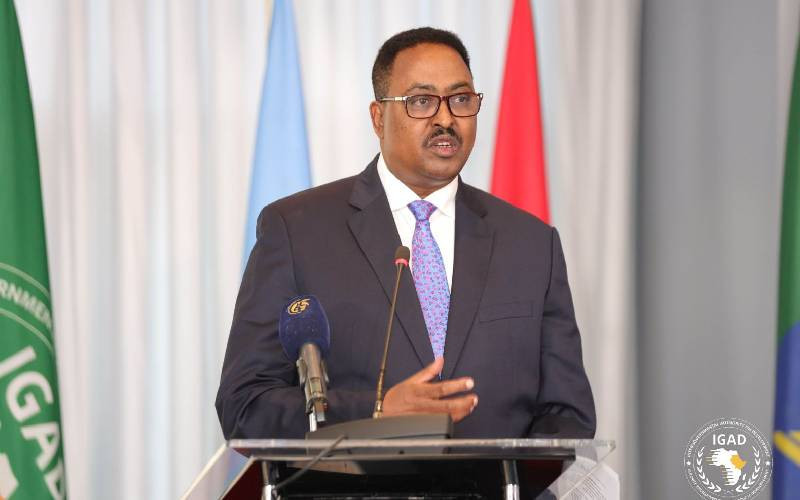
IGAD Executive Secretary Workneh Gebeyehu.[Bernard Orwongo, Standard]
Somalia's Parliament has ratified the revised Intergovernmental Authority on Development (IGAD) Treaty, making it the fifth nation to endorse the framework and meeting the two-thirds threshold needed to operationalise the agreement.The House of the People approved the treaty on January 20, 2026, replacing the 1996 founding document with an updated legal structure for regional cooperation on peace, security, climate resilience, infrastructure, health, trade and social development across the Horn of Africa.Somalia joins Djibouti, Ethiopia, South Sudan and Kenya in ratifying the new treaty, reaching the critical five-out-of-eight member states required to activate the framework as IGAD marks its 40th anniversary.Follow The Standard
channel
on WhatsApp"The ratification by the Federal Republic of Somalia helps us reach the required two-thirds threshold, strengthening the legal foundation for deeper regional integration and more coordinated action in trade, peace, and sustainable development across the Horn of Africa," IGAD Executive Secretary Workneh Gebeyehu said.The IGAD Treaty of 2023 underwent a revitalization process after nearly three decades under the original agreement.Gebeyehu said Somalia's Parliament and governmentdemonstrated decisive leadershipin advancing the milestone during a period when regional cooperation faces mounting challenges.The eight-member bloc includes Djibouti, Eritrea, Ethiopia, Kenya, Somalia, South Sudan, Sudan, and Uganda.Three nations have yet to ratify the treaty.Somalia's endorsement follows years of engagement with regional mechanisms for peace and development.The country has relied on IGAD support through various peacekeeping initiatives since 2006.The treaty creates mechanisms for collaboration on cross-border trade, infrastructure development and conflict prevention.It establishes frameworks for climate adaptation and environmental protection in a region facing recurring droughts and food insecurity.IGAD was established in 1996 as a successor to the Intergovernmental Authority on Drought and Development, which was formed in 1986 following devastating droughts between 1974 and 1984.Stay informed. Subscribe to our newsletterBy clicking on theSIGN UPbutton, you agree to ourTerms & Conditionsand thePrivacy PolicySIGN UPThe ratification positions Somalia to participate more actively inregional economic integrationefforts, though the bloc has lagged behind other African economic communities in implementing trade agreements.Stay Informed, Stay Empowered: Download the Standard ePaper App!IGAD maintains its headquarters in Djibouti.Follow The Standard
channel
on WhatsApp
The House of the People approved the treaty on January 20, 2026, replacing the 1996 founding document with an updated legal structure for regional cooperation on peace, security, climate resilience, infrastructure, health, trade and social development across the Horn of Africa.Somalia joins Djibouti, Ethiopia, South Sudan and Kenya in ratifying the new treaty, reaching the critical five-out-of-eight member states required to activate the framework as IGAD marks its 40th anniversary.Follow The Standard
channel
on WhatsApp"The ratification by the Federal Republic of Somalia helps us reach the required two-thirds threshold, strengthening the legal foundation for deeper regional integration and more coordinated action in trade, peace, and sustainable development across the Horn of Africa," IGAD Executive Secretary Workneh Gebeyehu said.The IGAD Treaty of 2023 underwent a revitalization process after nearly three decades under the original agreement.Gebeyehu said Somalia's Parliament and governmentdemonstrated decisive leadershipin advancing the milestone during a period when regional cooperation faces mounting challenges.The eight-member bloc includes Djibouti, Eritrea, Ethiopia, Kenya, Somalia, South Sudan, Sudan, and Uganda.Three nations have yet to ratify the treaty.Somalia's endorsement follows years of engagement with regional mechanisms for peace and development.The country has relied on IGAD support through various peacekeeping initiatives since 2006.The treaty creates mechanisms for collaboration on cross-border trade, infrastructure development and conflict prevention.It establishes frameworks for climate adaptation and environmental protection in a region facing recurring droughts and food insecurity.IGAD was established in 1996 as a successor to the Intergovernmental Authority on Drought and Development, which was formed in 1986 following devastating droughts between 1974 and 1984.Stay informed. Subscribe to our newsletterBy clicking on theSIGN UPbutton, you agree to ourTerms & Conditionsand thePrivacy PolicySIGN UPThe ratification positions Somalia to participate more actively inregional economic integrationefforts, though the bloc has lagged behind other African economic communities in implementing trade agreements.Stay Informed, Stay Empowered: Download the Standard ePaper App!IGAD maintains its headquarters in Djibouti.Follow The Standard
channel
on WhatsApp
Somalia joins Djibouti, Ethiopia, South Sudan and Kenya in ratifying the new treaty, reaching the critical five-out-of-eight member states required to activate the framework as IGAD marks its 40th anniversary.Follow The Standard
channel
on WhatsApp"The ratification by the Federal Republic of Somalia helps us reach the required two-thirds threshold, strengthening the legal foundation for deeper regional integration and more coordinated action in trade, peace, and sustainable development across the Horn of Africa," IGAD Executive Secretary Workneh Gebeyehu said.The IGAD Treaty of 2023 underwent a revitalization process after nearly three decades under the original agreement.Gebeyehu said Somalia's Parliament and governmentdemonstrated decisive leadershipin advancing the milestone during a period when regional cooperation faces mounting challenges.The eight-member bloc includes Djibouti, Eritrea, Ethiopia, Kenya, Somalia, South Sudan, Sudan, and Uganda.Three nations have yet to ratify the treaty.Somalia's endorsement follows years of engagement with regional mechanisms for peace and development.The country has relied on IGAD support through various peacekeeping initiatives since 2006.The treaty creates mechanisms for collaboration on cross-border trade, infrastructure development and conflict prevention.It establishes frameworks for climate adaptation and environmental protection in a region facing recurring droughts and food insecurity.IGAD was established in 1996 as a successor to the Intergovernmental Authority on Drought and Development, which was formed in 1986 following devastating droughts between 1974 and 1984.Stay informed. Subscribe to our newsletterBy clicking on theSIGN UPbutton, you agree to ourTerms & Conditionsand thePrivacy PolicySIGN UPThe ratification positions Somalia to participate more actively inregional economic integrationefforts, though the bloc has lagged behind other African economic communities in implementing trade agreements.Stay Informed, Stay Empowered: Download the Standard ePaper App!IGAD maintains its headquarters in Djibouti.Follow The Standard
channel
on WhatsApp
"The ratification by the Federal Republic of Somalia helps us reach the required two-thirds threshold, strengthening the legal foundation for deeper regional integration and more coordinated action in trade, peace, and sustainable development across the Horn of Africa," IGAD Executive Secretary Workneh Gebeyehu said.The IGAD Treaty of 2023 underwent a revitalization process after nearly three decades under the original agreement.Gebeyehu said Somalia's Parliament and governmentdemonstrated decisive leadershipin advancing the milestone during a period when regional cooperation faces mounting challenges.The eight-member bloc includes Djibouti, Eritrea, Ethiopia, Kenya, Somalia, South Sudan, Sudan, and Uganda.Three nations have yet to ratify the treaty.Somalia's endorsement follows years of engagement with regional mechanisms for peace and development.The country has relied on IGAD support through various peacekeeping initiatives since 2006.The treaty creates mechanisms for collaboration on cross-border trade, infrastructure development and conflict prevention.It establishes frameworks for climate adaptation and environmental protection in a region facing recurring droughts and food insecurity.IGAD was established in 1996 as a successor to the Intergovernmental Authority on Drought and Development, which was formed in 1986 following devastating droughts between 1974 and 1984.Stay informed. Subscribe to our newsletterBy clicking on theSIGN UPbutton, you agree to ourTerms & Conditionsand thePrivacy PolicySIGN UPThe ratification positions Somalia to participate more actively inregional economic integrationefforts, though the bloc has lagged behind other African economic communities in implementing trade agreements.Stay Informed, Stay Empowered: Download the Standard ePaper App!IGAD maintains its headquarters in Djibouti.Follow The Standard
channel
on WhatsApp
"The ratification by the Federal Republic of Somalia helps us reach the required two-thirds threshold, strengthening the legal foundation for deeper regional integration and more coordinated action in trade, peace, and sustainable development across the Horn of Africa," IGAD Executive Secretary Workneh Gebeyehu said.The IGAD Treaty of 2023 underwent a revitalization process after nearly three decades under the original agreement.Gebeyehu said Somalia's Parliament and governmentdemonstrated decisive leadershipin advancing the milestone during a period when regional cooperation faces mounting challenges.The eight-member bloc includes Djibouti, Eritrea, Ethiopia, Kenya, Somalia, South Sudan, Sudan, and Uganda.Three nations have yet to ratify the treaty.Somalia's endorsement follows years of engagement with regional mechanisms for peace and development.The country has relied on IGAD support through various peacekeeping initiatives since 2006.The treaty creates mechanisms for collaboration on cross-border trade, infrastructure development and conflict prevention.It establishes frameworks for climate adaptation and environmental protection in a region facing recurring droughts and food insecurity.IGAD was established in 1996 as a successor to the Intergovernmental Authority on Drought and Development, which was formed in 1986 following devastating droughts between 1974 and 1984.Stay informed. Subscribe to our newsletterBy clicking on theSIGN UPbutton, you agree to ourTerms & Conditionsand thePrivacy PolicySIGN UPThe ratification positions Somalia to participate more actively inregional economic integrationefforts, though the bloc has lagged behind other African economic communities in implementing trade agreements.Stay Informed, Stay Empowered: Download the Standard ePaper App!IGAD maintains its headquarters in Djibouti.Follow The Standard
channel
on WhatsApp
The IGAD Treaty of 2023 underwent a revitalization process after nearly three decades under the original agreement.Gebeyehu said Somalia's Parliament and governmentdemonstrated decisive leadershipin advancing the milestone during a period when regional cooperation faces mounting challenges.The eight-member bloc includes Djibouti, Eritrea, Ethiopia, Kenya, Somalia, South Sudan, Sudan, and Uganda.Three nations have yet to ratify the treaty.Somalia's endorsement follows years of engagement with regional mechanisms for peace and development.The country has relied on IGAD support through various peacekeeping initiatives since 2006.The treaty creates mechanisms for collaboration on cross-border trade, infrastructure development and conflict prevention.It establishes frameworks for climate adaptation and environmental protection in a region facing recurring droughts and food insecurity.IGAD was established in 1996 as a successor to the Intergovernmental Authority on Drought and Development, which was formed in 1986 following devastating droughts between 1974 and 1984.Stay informed. Subscribe to our newsletterBy clicking on theSIGN UPbutton, you agree to ourTerms & Conditionsand thePrivacy PolicySIGN UPThe ratification positions Somalia to participate more actively inregional economic integrationefforts, though the bloc has lagged behind other African economic communities in implementing trade agreements.Stay Informed, Stay Empowered: Download the Standard ePaper App!IGAD maintains its headquarters in Djibouti.Follow The Standard
channel
on WhatsApp
Gebeyehu said Somalia's Parliament and governmentdemonstrated decisive leadershipin advancing the milestone during a period when regional cooperation faces mounting challenges.The eight-member bloc includes Djibouti, Eritrea, Ethiopia, Kenya, Somalia, South Sudan, Sudan, and Uganda.Three nations have yet to ratify the treaty.Somalia's endorsement follows years of engagement with regional mechanisms for peace and development.The country has relied on IGAD support through various peacekeeping initiatives since 2006.The treaty creates mechanisms for collaboration on cross-border trade, infrastructure development and conflict prevention.It establishes frameworks for climate adaptation and environmental protection in a region facing recurring droughts and food insecurity.IGAD was established in 1996 as a successor to the Intergovernmental Authority on Drought and Development, which was formed in 1986 following devastating droughts between 1974 and 1984.Stay informed. Subscribe to our newsletterBy clicking on theSIGN UPbutton, you agree to ourTerms & Conditionsand thePrivacy PolicySIGN UPThe ratification positions Somalia to participate more actively inregional economic integrationefforts, though the bloc has lagged behind other African economic communities in implementing trade agreements.Stay Informed, Stay Empowered: Download the Standard ePaper App!IGAD maintains its headquarters in Djibouti.Follow The Standard
channel
on WhatsApp
The eight-member bloc includes Djibouti, Eritrea, Ethiopia, Kenya, Somalia, South Sudan, Sudan, and Uganda.Three nations have yet to ratify the treaty.Somalia's endorsement follows years of engagement with regional mechanisms for peace and development.The country has relied on IGAD support through various peacekeeping initiatives since 2006.The treaty creates mechanisms for collaboration on cross-border trade, infrastructure development and conflict prevention.It establishes frameworks for climate adaptation and environmental protection in a region facing recurring droughts and food insecurity.IGAD was established in 1996 as a successor to the Intergovernmental Authority on Drought and Development, which was formed in 1986 following devastating droughts between 1974 and 1984.Stay informed. Subscribe to our newsletterBy clicking on theSIGN UPbutton, you agree to ourTerms & Conditionsand thePrivacy PolicySIGN UPThe ratification positions Somalia to participate more actively inregional economic integrationefforts, though the bloc has lagged behind other African economic communities in implementing trade agreements.Stay Informed, Stay Empowered: Download the Standard ePaper App!IGAD maintains its headquarters in Djibouti.Follow The Standard
channel
on WhatsApp
Three nations have yet to ratify the treaty.Somalia's endorsement follows years of engagement with regional mechanisms for peace and development.The country has relied on IGAD support through various peacekeeping initiatives since 2006.The treaty creates mechanisms for collaboration on cross-border trade, infrastructure development and conflict prevention.It establishes frameworks for climate adaptation and environmental protection in a region facing recurring droughts and food insecurity.IGAD was established in 1996 as a successor to the Intergovernmental Authority on Drought and Development, which was formed in 1986 following devastating droughts between 1974 and 1984.Stay informed. Subscribe to our newsletterBy clicking on theSIGN UPbutton, you agree to ourTerms & Conditionsand thePrivacy PolicySIGN UPThe ratification positions Somalia to participate more actively inregional economic integrationefforts, though the bloc has lagged behind other African economic communities in implementing trade agreements.Stay Informed, Stay Empowered: Download the Standard ePaper App!IGAD maintains its headquarters in Djibouti.Follow The Standard
channel
on WhatsApp
Somalia's endorsement follows years of engagement with regional mechanisms for peace and development.The country has relied on IGAD support through various peacekeeping initiatives since 2006.The treaty creates mechanisms for collaboration on cross-border trade, infrastructure development and conflict prevention.It establishes frameworks for climate adaptation and environmental protection in a region facing recurring droughts and food insecurity.IGAD was established in 1996 as a successor to the Intergovernmental Authority on Drought and Development, which was formed in 1986 following devastating droughts between 1974 and 1984.Stay informed. Subscribe to our newsletterBy clicking on theSIGN UPbutton, you agree to ourTerms & Conditionsand thePrivacy PolicySIGN UPThe ratification positions Somalia to participate more actively inregional economic integrationefforts, though the bloc has lagged behind other African economic communities in implementing trade agreements.Stay Informed, Stay Empowered: Download the Standard ePaper App!IGAD maintains its headquarters in Djibouti.Follow The Standard
channel
on WhatsApp
The country has relied on IGAD support through various peacekeeping initiatives since 2006.The treaty creates mechanisms for collaboration on cross-border trade, infrastructure development and conflict prevention.It establishes frameworks for climate adaptation and environmental protection in a region facing recurring droughts and food insecurity.IGAD was established in 1996 as a successor to the Intergovernmental Authority on Drought and Development, which was formed in 1986 following devastating droughts between 1974 and 1984.Stay informed. Subscribe to our newsletterBy clicking on theSIGN UPbutton, you agree to ourTerms & Conditionsand thePrivacy PolicySIGN UPThe ratification positions Somalia to participate more actively inregional economic integrationefforts, though the bloc has lagged behind other African economic communities in implementing trade agreements.Stay Informed, Stay Empowered: Download the Standard ePaper App!IGAD maintains its headquarters in Djibouti.Follow The Standard
channel
on WhatsApp
The treaty creates mechanisms for collaboration on cross-border trade, infrastructure development and conflict prevention.It establishes frameworks for climate adaptation and environmental protection in a region facing recurring droughts and food insecurity.IGAD was established in 1996 as a successor to the Intergovernmental Authority on Drought and Development, which was formed in 1986 following devastating droughts between 1974 and 1984.Stay informed. Subscribe to our newsletterBy clicking on theSIGN UPbutton, you agree to ourTerms & Conditionsand thePrivacy PolicySIGN UPThe ratification positions Somalia to participate more actively inregional economic integrationefforts, though the bloc has lagged behind other African economic communities in implementing trade agreements.Stay Informed, Stay Empowered: Download the Standard ePaper App!IGAD maintains its headquarters in Djibouti.Follow The Standard
channel
on WhatsApp
It establishes frameworks for climate adaptation and environmental protection in a region facing recurring droughts and food insecurity.IGAD was established in 1996 as a successor to the Intergovernmental Authority on Drought and Development, which was formed in 1986 following devastating droughts between 1974 and 1984.Stay informed. Subscribe to our newsletterBy clicking on theSIGN UPbutton, you agree to ourTerms & Conditionsand thePrivacy PolicySIGN UPThe ratification positions Somalia to participate more actively inregional economic integrationefforts, though the bloc has lagged behind other African economic communities in implementing trade agreements.Stay Informed, Stay Empowered: Download the Standard ePaper App!IGAD maintains its headquarters in Djibouti.Follow The Standard
channel
on WhatsApp
IGAD was established in 1996 as a successor to the Intergovernmental Authority on Drought and Development, which was formed in 1986 following devastating droughts between 1974 and 1984.Stay informed. Subscribe to our newsletterBy clicking on theSIGN UPbutton, you agree to ourTerms & Conditionsand thePrivacy PolicySIGN UPThe ratification positions Somalia to participate more actively inregional economic integrationefforts, though the bloc has lagged behind other African economic communities in implementing trade agreements.Stay Informed, Stay Empowered: Download the Standard ePaper App!IGAD maintains its headquarters in Djibouti.Follow The Standard
channel
on WhatsApp
The ratification positions Somalia to participate more actively inregional economic integrationefforts, though the bloc has lagged behind other African economic communities in implementing trade agreements.Stay Informed, Stay Empowered: Download the Standard ePaper App!IGAD maintains its headquarters in Djibouti.Follow The Standard
channel
on WhatsApp
IGAD maintains its headquarters in Djibouti.Follow The Standard
channel
on WhatsApp
Subscribe to our newsletter and stay updated on the latest developments and special
offers!
Pick your favourite topics below for a tailor made homepage just for you