
Somalia cancels all UAE deals after Somaliland, Yemeni spats
Source: The Standard
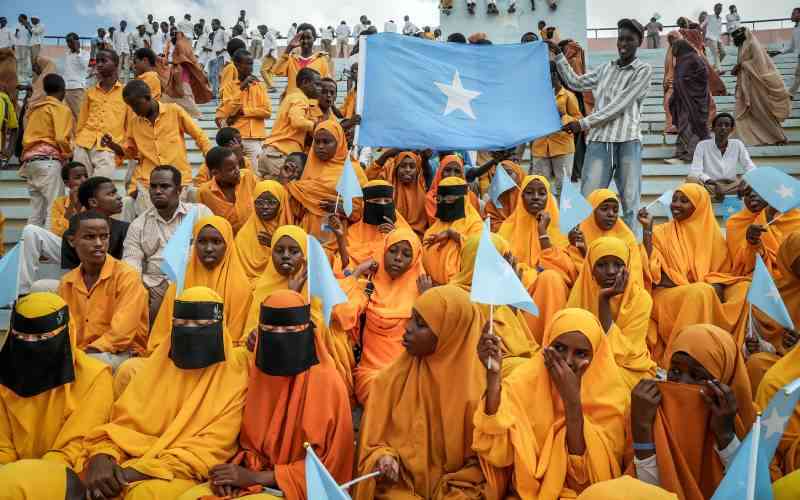
Residents wave Somali flags as they attend a rally denouncing Israel’s announcement recognizing the breakaway Somaliland region, during a gathering calling for Somalia’s territorial unity at Mogadishu Stadium in Mogadishu on December 30, 2025.[AFP]
Somalia cancelled all agreements with the United Arab Emirates on Monday amid tensions over Israel's recognition of Somaliland and reports the Emiratis used Somali territory to help a Yemeni separatist flee his country."Having carefully assessed recent developments and exercising its constitutional authority, the Council of Ministers has annulled all agreements concluded with the United Arab Emirates... including bilateral security and defense cooperation agreements," the Somali government said in a statement.There have been deepening differences between Somalia and the UAE over a number of issues.Follow The Standard
channel
on WhatsAppThe UAE is seen as quietly supporting the move by Israel last month to recognise Somaliland, the first to do so since the self-proclaimed republic declared independence from Somalia in 1991.The UAE built and operates a large deep-water port and military base at Berbera in Somaliland.Tensions spiked again last week after Saudi Arabia accused the UAE of helping a Yemeni separatist leader, Aidarous Al-Zubaidi, escape by boat and plane via Berbera and the Somali capital Mogadishu to Abu Dhabi.Somalia's immigration agency said at the time it was investigating an "alleged unauthorised use of Somalia's national airspace and airports".The Somali government did not directly mention the recognition of Somaliland or the alleged escape of Zubaidi in its statement cancelling deals with the UAE.It said the decision was "based on credible reports and compelling evidence concerning hostile actions undermining national sovereignty, territorial unity, and the political independence of the country"."The decision of the cabinet today comes after a long period of endurance by the leadership of the federal government. The UAE continued to interfere with Somalia's internal affairs and has been engaging in acts of misconduct and dual-track policy in Somalia," a senior official in the Somali presidential palace told AFP, on condition of anonymity and without going into details.Stoked fearsMuch of the international community, especially in the African and Arab world, opposed Israel's recognition of Somaliland, with many fearing it would stoke other seccessionist movements.But the UAE has remained quiet.Somaliland enjoys a strategic position on the Gulf of Aden and has its own currency, passport and army. It is seen as a useful launchpad for Israel to target Houthi rebels in Yemen or for the UAE to supply allies in Africa.Stay informed. Subscribe to our newsletterBy clicking on theSIGN UPbutton, you agree to ourTerms & Conditionsand thePrivacy PolicySIGN UPSomali President Hassan Sheikh Mohamud called the Israeli decision a "threat" to stability in the already volatile Horn of Africa.Stay Informed, Stay Empowered: Download the Standard ePaper App!In its statement on Monday, the Somali government said the UAE would no longer be permitted to operate in Berbera, although it has only theoretical authority over the region.It said partnerships with the UAE at two other ports in Somalia -- at Bosaso and Kismayo -- were also cancelled, although these also lie in areas where the federal government has only limited control, in the semi-autonomous states of Puntland and Jubaland, respectively.Follow The Standard
channel
on WhatsApp
"Having carefully assessed recent developments and exercising its constitutional authority, the Council of Ministers has annulled all agreements concluded with the United Arab Emirates... including bilateral security and defense cooperation agreements," the Somali government said in a statement.There have been deepening differences between Somalia and the UAE over a number of issues.Follow The Standard
channel
on WhatsAppThe UAE is seen as quietly supporting the move by Israel last month to recognise Somaliland, the first to do so since the self-proclaimed republic declared independence from Somalia in 1991.The UAE built and operates a large deep-water port and military base at Berbera in Somaliland.Tensions spiked again last week after Saudi Arabia accused the UAE of helping a Yemeni separatist leader, Aidarous Al-Zubaidi, escape by boat and plane via Berbera and the Somali capital Mogadishu to Abu Dhabi.Somalia's immigration agency said at the time it was investigating an "alleged unauthorised use of Somalia's national airspace and airports".The Somali government did not directly mention the recognition of Somaliland or the alleged escape of Zubaidi in its statement cancelling deals with the UAE.It said the decision was "based on credible reports and compelling evidence concerning hostile actions undermining national sovereignty, territorial unity, and the political independence of the country"."The decision of the cabinet today comes after a long period of endurance by the leadership of the federal government. The UAE continued to interfere with Somalia's internal affairs and has been engaging in acts of misconduct and dual-track policy in Somalia," a senior official in the Somali presidential palace told AFP, on condition of anonymity and without going into details.Stoked fearsMuch of the international community, especially in the African and Arab world, opposed Israel's recognition of Somaliland, with many fearing it would stoke other seccessionist movements.But the UAE has remained quiet.Somaliland enjoys a strategic position on the Gulf of Aden and has its own currency, passport and army. It is seen as a useful launchpad for Israel to target Houthi rebels in Yemen or for the UAE to supply allies in Africa.Stay informed. Subscribe to our newsletterBy clicking on theSIGN UPbutton, you agree to ourTerms & Conditionsand thePrivacy PolicySIGN UPSomali President Hassan Sheikh Mohamud called the Israeli decision a "threat" to stability in the already volatile Horn of Africa.Stay Informed, Stay Empowered: Download the Standard ePaper App!In its statement on Monday, the Somali government said the UAE would no longer be permitted to operate in Berbera, although it has only theoretical authority over the region.It said partnerships with the UAE at two other ports in Somalia -- at Bosaso and Kismayo -- were also cancelled, although these also lie in areas where the federal government has only limited control, in the semi-autonomous states of Puntland and Jubaland, respectively.Follow The Standard
channel
on WhatsApp
There have been deepening differences between Somalia and the UAE over a number of issues.Follow The Standard
channel
on WhatsAppThe UAE is seen as quietly supporting the move by Israel last month to recognise Somaliland, the first to do so since the self-proclaimed republic declared independence from Somalia in 1991.The UAE built and operates a large deep-water port and military base at Berbera in Somaliland.Tensions spiked again last week after Saudi Arabia accused the UAE of helping a Yemeni separatist leader, Aidarous Al-Zubaidi, escape by boat and plane via Berbera and the Somali capital Mogadishu to Abu Dhabi.Somalia's immigration agency said at the time it was investigating an "alleged unauthorised use of Somalia's national airspace and airports".The Somali government did not directly mention the recognition of Somaliland or the alleged escape of Zubaidi in its statement cancelling deals with the UAE.It said the decision was "based on credible reports and compelling evidence concerning hostile actions undermining national sovereignty, territorial unity, and the political independence of the country"."The decision of the cabinet today comes after a long period of endurance by the leadership of the federal government. The UAE continued to interfere with Somalia's internal affairs and has been engaging in acts of misconduct and dual-track policy in Somalia," a senior official in the Somali presidential palace told AFP, on condition of anonymity and without going into details.Stoked fearsMuch of the international community, especially in the African and Arab world, opposed Israel's recognition of Somaliland, with many fearing it would stoke other seccessionist movements.But the UAE has remained quiet.Somaliland enjoys a strategic position on the Gulf of Aden and has its own currency, passport and army. It is seen as a useful launchpad for Israel to target Houthi rebels in Yemen or for the UAE to supply allies in Africa.Stay informed. Subscribe to our newsletterBy clicking on theSIGN UPbutton, you agree to ourTerms & Conditionsand thePrivacy PolicySIGN UPSomali President Hassan Sheikh Mohamud called the Israeli decision a "threat" to stability in the already volatile Horn of Africa.Stay Informed, Stay Empowered: Download the Standard ePaper App!In its statement on Monday, the Somali government said the UAE would no longer be permitted to operate in Berbera, although it has only theoretical authority over the region.It said partnerships with the UAE at two other ports in Somalia -- at Bosaso and Kismayo -- were also cancelled, although these also lie in areas where the federal government has only limited control, in the semi-autonomous states of Puntland and Jubaland, respectively.Follow The Standard
channel
on WhatsApp
The UAE is seen as quietly supporting the move by Israel last month to recognise Somaliland, the first to do so since the self-proclaimed republic declared independence from Somalia in 1991.The UAE built and operates a large deep-water port and military base at Berbera in Somaliland.Tensions spiked again last week after Saudi Arabia accused the UAE of helping a Yemeni separatist leader, Aidarous Al-Zubaidi, escape by boat and plane via Berbera and the Somali capital Mogadishu to Abu Dhabi.Somalia's immigration agency said at the time it was investigating an "alleged unauthorised use of Somalia's national airspace and airports".The Somali government did not directly mention the recognition of Somaliland or the alleged escape of Zubaidi in its statement cancelling deals with the UAE.It said the decision was "based on credible reports and compelling evidence concerning hostile actions undermining national sovereignty, territorial unity, and the political independence of the country"."The decision of the cabinet today comes after a long period of endurance by the leadership of the federal government. The UAE continued to interfere with Somalia's internal affairs and has been engaging in acts of misconduct and dual-track policy in Somalia," a senior official in the Somali presidential palace told AFP, on condition of anonymity and without going into details.Stoked fearsMuch of the international community, especially in the African and Arab world, opposed Israel's recognition of Somaliland, with many fearing it would stoke other seccessionist movements.But the UAE has remained quiet.Somaliland enjoys a strategic position on the Gulf of Aden and has its own currency, passport and army. It is seen as a useful launchpad for Israel to target Houthi rebels in Yemen or for the UAE to supply allies in Africa.Stay informed. Subscribe to our newsletterBy clicking on theSIGN UPbutton, you agree to ourTerms & Conditionsand thePrivacy PolicySIGN UPSomali President Hassan Sheikh Mohamud called the Israeli decision a "threat" to stability in the already volatile Horn of Africa.Stay Informed, Stay Empowered: Download the Standard ePaper App!In its statement on Monday, the Somali government said the UAE would no longer be permitted to operate in Berbera, although it has only theoretical authority over the region.It said partnerships with the UAE at two other ports in Somalia -- at Bosaso and Kismayo -- were also cancelled, although these also lie in areas where the federal government has only limited control, in the semi-autonomous states of Puntland and Jubaland, respectively.Follow The Standard
channel
on WhatsApp
The UAE built and operates a large deep-water port and military base at Berbera in Somaliland.Tensions spiked again last week after Saudi Arabia accused the UAE of helping a Yemeni separatist leader, Aidarous Al-Zubaidi, escape by boat and plane via Berbera and the Somali capital Mogadishu to Abu Dhabi.Somalia's immigration agency said at the time it was investigating an "alleged unauthorised use of Somalia's national airspace and airports".The Somali government did not directly mention the recognition of Somaliland or the alleged escape of Zubaidi in its statement cancelling deals with the UAE.It said the decision was "based on credible reports and compelling evidence concerning hostile actions undermining national sovereignty, territorial unity, and the political independence of the country"."The decision of the cabinet today comes after a long period of endurance by the leadership of the federal government. The UAE continued to interfere with Somalia's internal affairs and has been engaging in acts of misconduct and dual-track policy in Somalia," a senior official in the Somali presidential palace told AFP, on condition of anonymity and without going into details.Stoked fearsMuch of the international community, especially in the African and Arab world, opposed Israel's recognition of Somaliland, with many fearing it would stoke other seccessionist movements.But the UAE has remained quiet.Somaliland enjoys a strategic position on the Gulf of Aden and has its own currency, passport and army. It is seen as a useful launchpad for Israel to target Houthi rebels in Yemen or for the UAE to supply allies in Africa.Stay informed. Subscribe to our newsletterBy clicking on theSIGN UPbutton, you agree to ourTerms & Conditionsand thePrivacy PolicySIGN UPSomali President Hassan Sheikh Mohamud called the Israeli decision a "threat" to stability in the already volatile Horn of Africa.Stay Informed, Stay Empowered: Download the Standard ePaper App!In its statement on Monday, the Somali government said the UAE would no longer be permitted to operate in Berbera, although it has only theoretical authority over the region.It said partnerships with the UAE at two other ports in Somalia -- at Bosaso and Kismayo -- were also cancelled, although these also lie in areas where the federal government has only limited control, in the semi-autonomous states of Puntland and Jubaland, respectively.Follow The Standard
channel
on WhatsApp
Tensions spiked again last week after Saudi Arabia accused the UAE of helping a Yemeni separatist leader, Aidarous Al-Zubaidi, escape by boat and plane via Berbera and the Somali capital Mogadishu to Abu Dhabi.Somalia's immigration agency said at the time it was investigating an "alleged unauthorised use of Somalia's national airspace and airports".The Somali government did not directly mention the recognition of Somaliland or the alleged escape of Zubaidi in its statement cancelling deals with the UAE.It said the decision was "based on credible reports and compelling evidence concerning hostile actions undermining national sovereignty, territorial unity, and the political independence of the country"."The decision of the cabinet today comes after a long period of endurance by the leadership of the federal government. The UAE continued to interfere with Somalia's internal affairs and has been engaging in acts of misconduct and dual-track policy in Somalia," a senior official in the Somali presidential palace told AFP, on condition of anonymity and without going into details.Stoked fearsMuch of the international community, especially in the African and Arab world, opposed Israel's recognition of Somaliland, with many fearing it would stoke other seccessionist movements.But the UAE has remained quiet.Somaliland enjoys a strategic position on the Gulf of Aden and has its own currency, passport and army. It is seen as a useful launchpad for Israel to target Houthi rebels in Yemen or for the UAE to supply allies in Africa.Stay informed. Subscribe to our newsletterBy clicking on theSIGN UPbutton, you agree to ourTerms & Conditionsand thePrivacy PolicySIGN UPSomali President Hassan Sheikh Mohamud called the Israeli decision a "threat" to stability in the already volatile Horn of Africa.Stay Informed, Stay Empowered: Download the Standard ePaper App!In its statement on Monday, the Somali government said the UAE would no longer be permitted to operate in Berbera, although it has only theoretical authority over the region.It said partnerships with the UAE at two other ports in Somalia -- at Bosaso and Kismayo -- were also cancelled, although these also lie in areas where the federal government has only limited control, in the semi-autonomous states of Puntland and Jubaland, respectively.Follow The Standard
channel
on WhatsApp
Somalia's immigration agency said at the time it was investigating an "alleged unauthorised use of Somalia's national airspace and airports".The Somali government did not directly mention the recognition of Somaliland or the alleged escape of Zubaidi in its statement cancelling deals with the UAE.It said the decision was "based on credible reports and compelling evidence concerning hostile actions undermining national sovereignty, territorial unity, and the political independence of the country"."The decision of the cabinet today comes after a long period of endurance by the leadership of the federal government. The UAE continued to interfere with Somalia's internal affairs and has been engaging in acts of misconduct and dual-track policy in Somalia," a senior official in the Somali presidential palace told AFP, on condition of anonymity and without going into details.Stoked fearsMuch of the international community, especially in the African and Arab world, opposed Israel's recognition of Somaliland, with many fearing it would stoke other seccessionist movements.But the UAE has remained quiet.Somaliland enjoys a strategic position on the Gulf of Aden and has its own currency, passport and army. It is seen as a useful launchpad for Israel to target Houthi rebels in Yemen or for the UAE to supply allies in Africa.Stay informed. Subscribe to our newsletterBy clicking on theSIGN UPbutton, you agree to ourTerms & Conditionsand thePrivacy PolicySIGN UPSomali President Hassan Sheikh Mohamud called the Israeli decision a "threat" to stability in the already volatile Horn of Africa.Stay Informed, Stay Empowered: Download the Standard ePaper App!In its statement on Monday, the Somali government said the UAE would no longer be permitted to operate in Berbera, although it has only theoretical authority over the region.It said partnerships with the UAE at two other ports in Somalia -- at Bosaso and Kismayo -- were also cancelled, although these also lie in areas where the federal government has only limited control, in the semi-autonomous states of Puntland and Jubaland, respectively.Follow The Standard
channel
on WhatsApp
The Somali government did not directly mention the recognition of Somaliland or the alleged escape of Zubaidi in its statement cancelling deals with the UAE.It said the decision was "based on credible reports and compelling evidence concerning hostile actions undermining national sovereignty, territorial unity, and the political independence of the country"."The decision of the cabinet today comes after a long period of endurance by the leadership of the federal government. The UAE continued to interfere with Somalia's internal affairs and has been engaging in acts of misconduct and dual-track policy in Somalia," a senior official in the Somali presidential palace told AFP, on condition of anonymity and without going into details.Stoked fearsMuch of the international community, especially in the African and Arab world, opposed Israel's recognition of Somaliland, with many fearing it would stoke other seccessionist movements.But the UAE has remained quiet.Somaliland enjoys a strategic position on the Gulf of Aden and has its own currency, passport and army. It is seen as a useful launchpad for Israel to target Houthi rebels in Yemen or for the UAE to supply allies in Africa.Stay informed. Subscribe to our newsletterBy clicking on theSIGN UPbutton, you agree to ourTerms & Conditionsand thePrivacy PolicySIGN UPSomali President Hassan Sheikh Mohamud called the Israeli decision a "threat" to stability in the already volatile Horn of Africa.Stay Informed, Stay Empowered: Download the Standard ePaper App!In its statement on Monday, the Somali government said the UAE would no longer be permitted to operate in Berbera, although it has only theoretical authority over the region.It said partnerships with the UAE at two other ports in Somalia -- at Bosaso and Kismayo -- were also cancelled, although these also lie in areas where the federal government has only limited control, in the semi-autonomous states of Puntland and Jubaland, respectively.Follow The Standard
channel
on WhatsApp
It said the decision was "based on credible reports and compelling evidence concerning hostile actions undermining national sovereignty, territorial unity, and the political independence of the country"."The decision of the cabinet today comes after a long period of endurance by the leadership of the federal government. The UAE continued to interfere with Somalia's internal affairs and has been engaging in acts of misconduct and dual-track policy in Somalia," a senior official in the Somali presidential palace told AFP, on condition of anonymity and without going into details.Stoked fearsMuch of the international community, especially in the African and Arab world, opposed Israel's recognition of Somaliland, with many fearing it would stoke other seccessionist movements.But the UAE has remained quiet.Somaliland enjoys a strategic position on the Gulf of Aden and has its own currency, passport and army. It is seen as a useful launchpad for Israel to target Houthi rebels in Yemen or for the UAE to supply allies in Africa.Stay informed. Subscribe to our newsletterBy clicking on theSIGN UPbutton, you agree to ourTerms & Conditionsand thePrivacy PolicySIGN UPSomali President Hassan Sheikh Mohamud called the Israeli decision a "threat" to stability in the already volatile Horn of Africa.Stay Informed, Stay Empowered: Download the Standard ePaper App!In its statement on Monday, the Somali government said the UAE would no longer be permitted to operate in Berbera, although it has only theoretical authority over the region.It said partnerships with the UAE at two other ports in Somalia -- at Bosaso and Kismayo -- were also cancelled, although these also lie in areas where the federal government has only limited control, in the semi-autonomous states of Puntland and Jubaland, respectively.Follow The Standard
channel
on WhatsApp
"The decision of the cabinet today comes after a long period of endurance by the leadership of the federal government. The UAE continued to interfere with Somalia's internal affairs and has been engaging in acts of misconduct and dual-track policy in Somalia," a senior official in the Somali presidential palace told AFP, on condition of anonymity and without going into details.Stoked fearsMuch of the international community, especially in the African and Arab world, opposed Israel's recognition of Somaliland, with many fearing it would stoke other seccessionist movements.But the UAE has remained quiet.Somaliland enjoys a strategic position on the Gulf of Aden and has its own currency, passport and army. It is seen as a useful launchpad for Israel to target Houthi rebels in Yemen or for the UAE to supply allies in Africa.Stay informed. Subscribe to our newsletterBy clicking on theSIGN UPbutton, you agree to ourTerms & Conditionsand thePrivacy PolicySIGN UPSomali President Hassan Sheikh Mohamud called the Israeli decision a "threat" to stability in the already volatile Horn of Africa.Stay Informed, Stay Empowered: Download the Standard ePaper App!In its statement on Monday, the Somali government said the UAE would no longer be permitted to operate in Berbera, although it has only theoretical authority over the region.It said partnerships with the UAE at two other ports in Somalia -- at Bosaso and Kismayo -- were also cancelled, although these also lie in areas where the federal government has only limited control, in the semi-autonomous states of Puntland and Jubaland, respectively.Follow The Standard
channel
on WhatsApp
Stoked fearsMuch of the international community, especially in the African and Arab world, opposed Israel's recognition of Somaliland, with many fearing it would stoke other seccessionist movements.But the UAE has remained quiet.Somaliland enjoys a strategic position on the Gulf of Aden and has its own currency, passport and army. It is seen as a useful launchpad for Israel to target Houthi rebels in Yemen or for the UAE to supply allies in Africa.Stay informed. Subscribe to our newsletterBy clicking on theSIGN UPbutton, you agree to ourTerms & Conditionsand thePrivacy PolicySIGN UPSomali President Hassan Sheikh Mohamud called the Israeli decision a "threat" to stability in the already volatile Horn of Africa.Stay Informed, Stay Empowered: Download the Standard ePaper App!In its statement on Monday, the Somali government said the UAE would no longer be permitted to operate in Berbera, although it has only theoretical authority over the region.It said partnerships with the UAE at two other ports in Somalia -- at Bosaso and Kismayo -- were also cancelled, although these also lie in areas where the federal government has only limited control, in the semi-autonomous states of Puntland and Jubaland, respectively.Follow The Standard
channel
on WhatsApp
Much of the international community, especially in the African and Arab world, opposed Israel's recognition of Somaliland, with many fearing it would stoke other seccessionist movements.But the UAE has remained quiet.Somaliland enjoys a strategic position on the Gulf of Aden and has its own currency, passport and army. It is seen as a useful launchpad for Israel to target Houthi rebels in Yemen or for the UAE to supply allies in Africa.Stay informed. Subscribe to our newsletterBy clicking on theSIGN UPbutton, you agree to ourTerms & Conditionsand thePrivacy PolicySIGN UPSomali President Hassan Sheikh Mohamud called the Israeli decision a "threat" to stability in the already volatile Horn of Africa.Stay Informed, Stay Empowered: Download the Standard ePaper App!In its statement on Monday, the Somali government said the UAE would no longer be permitted to operate in Berbera, although it has only theoretical authority over the region.It said partnerships with the UAE at two other ports in Somalia -- at Bosaso and Kismayo -- were also cancelled, although these also lie in areas where the federal government has only limited control, in the semi-autonomous states of Puntland and Jubaland, respectively.Follow The Standard
channel
on WhatsApp
But the UAE has remained quiet.Somaliland enjoys a strategic position on the Gulf of Aden and has its own currency, passport and army. It is seen as a useful launchpad for Israel to target Houthi rebels in Yemen or for the UAE to supply allies in Africa.Stay informed. Subscribe to our newsletterBy clicking on theSIGN UPbutton, you agree to ourTerms & Conditionsand thePrivacy PolicySIGN UPSomali President Hassan Sheikh Mohamud called the Israeli decision a "threat" to stability in the already volatile Horn of Africa.Stay Informed, Stay Empowered: Download the Standard ePaper App!In its statement on Monday, the Somali government said the UAE would no longer be permitted to operate in Berbera, although it has only theoretical authority over the region.It said partnerships with the UAE at two other ports in Somalia -- at Bosaso and Kismayo -- were also cancelled, although these also lie in areas where the federal government has only limited control, in the semi-autonomous states of Puntland and Jubaland, respectively.Follow The Standard
channel
on WhatsApp
Somaliland enjoys a strategic position on the Gulf of Aden and has its own currency, passport and army. It is seen as a useful launchpad for Israel to target Houthi rebels in Yemen or for the UAE to supply allies in Africa.Stay informed. Subscribe to our newsletterBy clicking on theSIGN UPbutton, you agree to ourTerms & Conditionsand thePrivacy PolicySIGN UPSomali President Hassan Sheikh Mohamud called the Israeli decision a "threat" to stability in the already volatile Horn of Africa.Stay Informed, Stay Empowered: Download the Standard ePaper App!In its statement on Monday, the Somali government said the UAE would no longer be permitted to operate in Berbera, although it has only theoretical authority over the region.It said partnerships with the UAE at two other ports in Somalia -- at Bosaso and Kismayo -- were also cancelled, although these also lie in areas where the federal government has only limited control, in the semi-autonomous states of Puntland and Jubaland, respectively.Follow The Standard
channel
on WhatsApp
Somali President Hassan Sheikh Mohamud called the Israeli decision a "threat" to stability in the already volatile Horn of Africa.Stay Informed, Stay Empowered: Download the Standard ePaper App!In its statement on Monday, the Somali government said the UAE would no longer be permitted to operate in Berbera, although it has only theoretical authority over the region.It said partnerships with the UAE at two other ports in Somalia -- at Bosaso and Kismayo -- were also cancelled, although these also lie in areas where the federal government has only limited control, in the semi-autonomous states of Puntland and Jubaland, respectively.Follow The Standard
channel
on WhatsApp
In its statement on Monday, the Somali government said the UAE would no longer be permitted to operate in Berbera, although it has only theoretical authority over the region.It said partnerships with the UAE at two other ports in Somalia -- at Bosaso and Kismayo -- were also cancelled, although these also lie in areas where the federal government has only limited control, in the semi-autonomous states of Puntland and Jubaland, respectively.Follow The Standard
channel
on WhatsApp
It said partnerships with the UAE at two other ports in Somalia -- at Bosaso and Kismayo -- were also cancelled, although these also lie in areas where the federal government has only limited control, in the semi-autonomous states of Puntland and Jubaland, respectively.Follow The Standard
channel
on WhatsApp
Subscribe to our newsletter and stay updated on the latest developments and special
offers!
Pick your favourite topics below for a tailor made homepage just for you