
University of Nairobi sets new standard as Kenya formalises protocol education
Source: The Standard
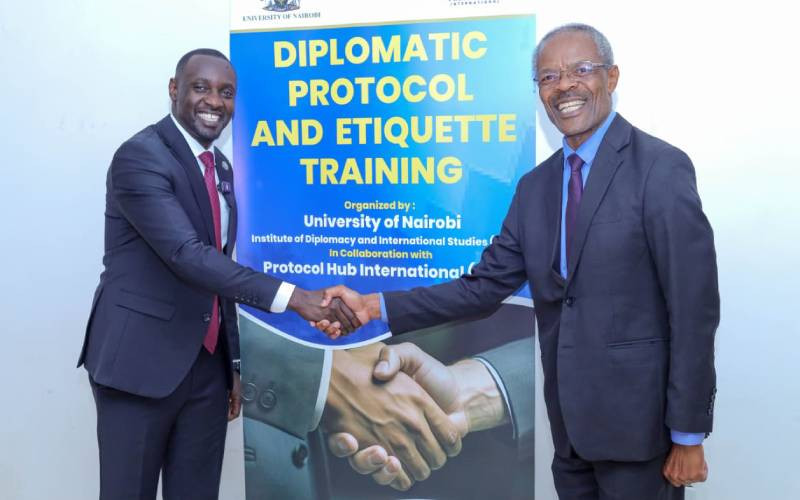
Kenya has taken a decisive step towardreshaping professional educationafter the University of Nairobi hosted the country’s first formal protocol and etiquette education lecture.This signal a shift in how future diplomats, public servants, and institutional leaders will be trained.For decades, protocol in Kenya has largely been treated as an informal workplace skill, picked up through observation, mentorship, or costly trial and error once one joins public service or international institutions, that approach is now changing.By placing protocol and etiquette firmly within the academic space, the University of Nairobi is redefining how professionalism, leadership conduct, and international engagement are taught and understood.Follow The Standard
channel
on WhatsAppThe milestone lecture was delivered at the University of Nairobi’s Institute of Diplomacy and International Studies (IDIS), marking the practical start of a partnership between the University and Protocol Hub International (PHI).The collaboration is designed to embed protocol and etiquette intostructured higher educationprogrammes, elevating them from optional knowledge to assessable academic disciplines.At the heart of the initiative is a Memorandum of Understanding signed by University of Nairobi Vice-Chancellor Prof. Margaret Jesang’ Hutchinson and Protocol Hub International Chief Executive Officer Apollo John.The agreement formally opens the door for protocol education to be taught, examined, and progressively developed within the University’s curriculum, creating a foundation for long-term institutionalisation.Speaking during the lecture, Apollo described the development as a turning point for Kenya’s education system.“For a long time, protocol has been treated as an afterthought, yet it determines how institutions engage the world. By bringing protocol and etiquette into formal education, we are preparing students to represent Kenya with confidence, discipline, and global awareness,” he said.Apollo explained that the programme goes far beyond ceremonial rules or surface-level formality. Instead, it addresses professionalism, leadership behaviour, institutional credibility, and alignment with international standards.“Protocol is not about formality for its own sake. It is about respect, order, and credibility. When our graduates understand this early, it improves governance, diplomacy, and public service delivery across the country,” he said.The training is domiciled at IDIS, under the leadership of Prof. Patrick Maluki, who also chairs the Board of the Kenya Foreign Service Academy. The Institute’s central role reflects growing recognition that modern diplomacy requires more thanpolicy knowledge and negotiation skillsit also demands refined conduct, cultural sensitivity, and structured engagement practices.Drawing from his experience working in government and regional institutions, Apollo noted that the initiative would help close a long-standing skills gap.Stay informed. Subscribe to our newsletterBy clicking on theSIGN UPbutton, you agree to ourTerms & Conditionsand thePrivacy PolicySIGN UP“I have seen talented officers struggle simply because they were never trained in protocol. This programme ensures our students enter the workplace prepared, not learning costly lessons through trial and error,” he said.Stay Informed, Stay Empowered: Download the Standard ePaper App!Dr. Kenneth Mbali of IDIS welcomed the partnership, describing it as a transformative addition to the Institute’s training mandate.He told students that protocol and etiquette skills would remain relevant throughout their careers, particularly in diplomacy, international relations, and public administration, where conduct often shapes outcomes as much as technical expertise.Programme Coordinator Edwin Ayoma reinforced that the lecture was only the beginning of a broader academic journey.He confirmed that the University has formallyapproved the training as a continuous programme, with detailed modules set to be rolled out in due course.This approval signals the University’s commitment to sustaining and expanding the initiative beyond a single event.For Apollo, the long-term impact of the programme extends well beyond the University of Nairobi. “This is about raising national standards,” he said.“When universities take protocol seriously, the ripple effect is felt in government offices, corporate boardrooms, and international engagements. Education is the foundation, and this is where transformation begins.”Protocol Hub International, which already works with universities, county governments, and corporate institutions, views the collaboration as a model that can be replicated across Kenya and the wider region.By institutionalising protocol and etiquette education, the University of Nairobi has positioned itself as a pioneer setting a new benchmark for how the country prepares its future leaders to operate confidently and credibly on both national and global stages.Follow The Standard
channel
on WhatsApp
This signal a shift in how future diplomats, public servants, and institutional leaders will be trained.For decades, protocol in Kenya has largely been treated as an informal workplace skill, picked up through observation, mentorship, or costly trial and error once one joins public service or international institutions, that approach is now changing.By placing protocol and etiquette firmly within the academic space, the University of Nairobi is redefining how professionalism, leadership conduct, and international engagement are taught and understood.Follow The Standard
channel
on WhatsAppThe milestone lecture was delivered at the University of Nairobi’s Institute of Diplomacy and International Studies (IDIS), marking the practical start of a partnership between the University and Protocol Hub International (PHI).The collaboration is designed to embed protocol and etiquette intostructured higher educationprogrammes, elevating them from optional knowledge to assessable academic disciplines.At the heart of the initiative is a Memorandum of Understanding signed by University of Nairobi Vice-Chancellor Prof. Margaret Jesang’ Hutchinson and Protocol Hub International Chief Executive Officer Apollo John.The agreement formally opens the door for protocol education to be taught, examined, and progressively developed within the University’s curriculum, creating a foundation for long-term institutionalisation.Speaking during the lecture, Apollo described the development as a turning point for Kenya’s education system.“For a long time, protocol has been treated as an afterthought, yet it determines how institutions engage the world. By bringing protocol and etiquette into formal education, we are preparing students to represent Kenya with confidence, discipline, and global awareness,” he said.Apollo explained that the programme goes far beyond ceremonial rules or surface-level formality. Instead, it addresses professionalism, leadership behaviour, institutional credibility, and alignment with international standards.“Protocol is not about formality for its own sake. It is about respect, order, and credibility. When our graduates understand this early, it improves governance, diplomacy, and public service delivery across the country,” he said.The training is domiciled at IDIS, under the leadership of Prof. Patrick Maluki, who also chairs the Board of the Kenya Foreign Service Academy. The Institute’s central role reflects growing recognition that modern diplomacy requires more thanpolicy knowledge and negotiation skillsit also demands refined conduct, cultural sensitivity, and structured engagement practices.Drawing from his experience working in government and regional institutions, Apollo noted that the initiative would help close a long-standing skills gap.Stay informed. Subscribe to our newsletterBy clicking on theSIGN UPbutton, you agree to ourTerms & Conditionsand thePrivacy PolicySIGN UP“I have seen talented officers struggle simply because they were never trained in protocol. This programme ensures our students enter the workplace prepared, not learning costly lessons through trial and error,” he said.Stay Informed, Stay Empowered: Download the Standard ePaper App!Dr. Kenneth Mbali of IDIS welcomed the partnership, describing it as a transformative addition to the Institute’s training mandate.He told students that protocol and etiquette skills would remain relevant throughout their careers, particularly in diplomacy, international relations, and public administration, where conduct often shapes outcomes as much as technical expertise.Programme Coordinator Edwin Ayoma reinforced that the lecture was only the beginning of a broader academic journey.He confirmed that the University has formallyapproved the training as a continuous programme, with detailed modules set to be rolled out in due course.This approval signals the University’s commitment to sustaining and expanding the initiative beyond a single event.For Apollo, the long-term impact of the programme extends well beyond the University of Nairobi. “This is about raising national standards,” he said.“When universities take protocol seriously, the ripple effect is felt in government offices, corporate boardrooms, and international engagements. Education is the foundation, and this is where transformation begins.”Protocol Hub International, which already works with universities, county governments, and corporate institutions, views the collaboration as a model that can be replicated across Kenya and the wider region.By institutionalising protocol and etiquette education, the University of Nairobi has positioned itself as a pioneer setting a new benchmark for how the country prepares its future leaders to operate confidently and credibly on both national and global stages.Follow The Standard
channel
on WhatsApp
For decades, protocol in Kenya has largely been treated as an informal workplace skill, picked up through observation, mentorship, or costly trial and error once one joins public service or international institutions, that approach is now changing.By placing protocol and etiquette firmly within the academic space, the University of Nairobi is redefining how professionalism, leadership conduct, and international engagement are taught and understood.Follow The Standard
channel
on WhatsAppThe milestone lecture was delivered at the University of Nairobi’s Institute of Diplomacy and International Studies (IDIS), marking the practical start of a partnership between the University and Protocol Hub International (PHI).The collaboration is designed to embed protocol and etiquette intostructured higher educationprogrammes, elevating them from optional knowledge to assessable academic disciplines.At the heart of the initiative is a Memorandum of Understanding signed by University of Nairobi Vice-Chancellor Prof. Margaret Jesang’ Hutchinson and Protocol Hub International Chief Executive Officer Apollo John.The agreement formally opens the door for protocol education to be taught, examined, and progressively developed within the University’s curriculum, creating a foundation for long-term institutionalisation.Speaking during the lecture, Apollo described the development as a turning point for Kenya’s education system.“For a long time, protocol has been treated as an afterthought, yet it determines how institutions engage the world. By bringing protocol and etiquette into formal education, we are preparing students to represent Kenya with confidence, discipline, and global awareness,” he said.Apollo explained that the programme goes far beyond ceremonial rules or surface-level formality. Instead, it addresses professionalism, leadership behaviour, institutional credibility, and alignment with international standards.“Protocol is not about formality for its own sake. It is about respect, order, and credibility. When our graduates understand this early, it improves governance, diplomacy, and public service delivery across the country,” he said.The training is domiciled at IDIS, under the leadership of Prof. Patrick Maluki, who also chairs the Board of the Kenya Foreign Service Academy. The Institute’s central role reflects growing recognition that modern diplomacy requires more thanpolicy knowledge and negotiation skillsit also demands refined conduct, cultural sensitivity, and structured engagement practices.Drawing from his experience working in government and regional institutions, Apollo noted that the initiative would help close a long-standing skills gap.Stay informed. Subscribe to our newsletterBy clicking on theSIGN UPbutton, you agree to ourTerms & Conditionsand thePrivacy PolicySIGN UP“I have seen talented officers struggle simply because they were never trained in protocol. This programme ensures our students enter the workplace prepared, not learning costly lessons through trial and error,” he said.Stay Informed, Stay Empowered: Download the Standard ePaper App!Dr. Kenneth Mbali of IDIS welcomed the partnership, describing it as a transformative addition to the Institute’s training mandate.He told students that protocol and etiquette skills would remain relevant throughout their careers, particularly in diplomacy, international relations, and public administration, where conduct often shapes outcomes as much as technical expertise.Programme Coordinator Edwin Ayoma reinforced that the lecture was only the beginning of a broader academic journey.He confirmed that the University has formallyapproved the training as a continuous programme, with detailed modules set to be rolled out in due course.This approval signals the University’s commitment to sustaining and expanding the initiative beyond a single event.For Apollo, the long-term impact of the programme extends well beyond the University of Nairobi. “This is about raising national standards,” he said.“When universities take protocol seriously, the ripple effect is felt in government offices, corporate boardrooms, and international engagements. Education is the foundation, and this is where transformation begins.”Protocol Hub International, which already works with universities, county governments, and corporate institutions, views the collaboration as a model that can be replicated across Kenya and the wider region.By institutionalising protocol and etiquette education, the University of Nairobi has positioned itself as a pioneer setting a new benchmark for how the country prepares its future leaders to operate confidently and credibly on both national and global stages.Follow The Standard
channel
on WhatsApp
By placing protocol and etiquette firmly within the academic space, the University of Nairobi is redefining how professionalism, leadership conduct, and international engagement are taught and understood.Follow The Standard
channel
on WhatsAppThe milestone lecture was delivered at the University of Nairobi’s Institute of Diplomacy and International Studies (IDIS), marking the practical start of a partnership between the University and Protocol Hub International (PHI).The collaboration is designed to embed protocol and etiquette intostructured higher educationprogrammes, elevating them from optional knowledge to assessable academic disciplines.At the heart of the initiative is a Memorandum of Understanding signed by University of Nairobi Vice-Chancellor Prof. Margaret Jesang’ Hutchinson and Protocol Hub International Chief Executive Officer Apollo John.The agreement formally opens the door for protocol education to be taught, examined, and progressively developed within the University’s curriculum, creating a foundation for long-term institutionalisation.Speaking during the lecture, Apollo described the development as a turning point for Kenya’s education system.“For a long time, protocol has been treated as an afterthought, yet it determines how institutions engage the world. By bringing protocol and etiquette into formal education, we are preparing students to represent Kenya with confidence, discipline, and global awareness,” he said.Apollo explained that the programme goes far beyond ceremonial rules or surface-level formality. Instead, it addresses professionalism, leadership behaviour, institutional credibility, and alignment with international standards.“Protocol is not about formality for its own sake. It is about respect, order, and credibility. When our graduates understand this early, it improves governance, diplomacy, and public service delivery across the country,” he said.The training is domiciled at IDIS, under the leadership of Prof. Patrick Maluki, who also chairs the Board of the Kenya Foreign Service Academy. The Institute’s central role reflects growing recognition that modern diplomacy requires more thanpolicy knowledge and negotiation skillsit also demands refined conduct, cultural sensitivity, and structured engagement practices.Drawing from his experience working in government and regional institutions, Apollo noted that the initiative would help close a long-standing skills gap.Stay informed. Subscribe to our newsletterBy clicking on theSIGN UPbutton, you agree to ourTerms & Conditionsand thePrivacy PolicySIGN UP“I have seen talented officers struggle simply because they were never trained in protocol. This programme ensures our students enter the workplace prepared, not learning costly lessons through trial and error,” he said.Stay Informed, Stay Empowered: Download the Standard ePaper App!Dr. Kenneth Mbali of IDIS welcomed the partnership, describing it as a transformative addition to the Institute’s training mandate.He told students that protocol and etiquette skills would remain relevant throughout their careers, particularly in diplomacy, international relations, and public administration, where conduct often shapes outcomes as much as technical expertise.Programme Coordinator Edwin Ayoma reinforced that the lecture was only the beginning of a broader academic journey.He confirmed that the University has formallyapproved the training as a continuous programme, with detailed modules set to be rolled out in due course.This approval signals the University’s commitment to sustaining and expanding the initiative beyond a single event.For Apollo, the long-term impact of the programme extends well beyond the University of Nairobi. “This is about raising national standards,” he said.“When universities take protocol seriously, the ripple effect is felt in government offices, corporate boardrooms, and international engagements. Education is the foundation, and this is where transformation begins.”Protocol Hub International, which already works with universities, county governments, and corporate institutions, views the collaboration as a model that can be replicated across Kenya and the wider region.By institutionalising protocol and etiquette education, the University of Nairobi has positioned itself as a pioneer setting a new benchmark for how the country prepares its future leaders to operate confidently and credibly on both national and global stages.Follow The Standard
channel
on WhatsApp
The milestone lecture was delivered at the University of Nairobi’s Institute of Diplomacy and International Studies (IDIS), marking the practical start of a partnership between the University and Protocol Hub International (PHI).The collaboration is designed to embed protocol and etiquette intostructured higher educationprogrammes, elevating them from optional knowledge to assessable academic disciplines.At the heart of the initiative is a Memorandum of Understanding signed by University of Nairobi Vice-Chancellor Prof. Margaret Jesang’ Hutchinson and Protocol Hub International Chief Executive Officer Apollo John.The agreement formally opens the door for protocol education to be taught, examined, and progressively developed within the University’s curriculum, creating a foundation for long-term institutionalisation.Speaking during the lecture, Apollo described the development as a turning point for Kenya’s education system.“For a long time, protocol has been treated as an afterthought, yet it determines how institutions engage the world. By bringing protocol and etiquette into formal education, we are preparing students to represent Kenya with confidence, discipline, and global awareness,” he said.Apollo explained that the programme goes far beyond ceremonial rules or surface-level formality. Instead, it addresses professionalism, leadership behaviour, institutional credibility, and alignment with international standards.“Protocol is not about formality for its own sake. It is about respect, order, and credibility. When our graduates understand this early, it improves governance, diplomacy, and public service delivery across the country,” he said.The training is domiciled at IDIS, under the leadership of Prof. Patrick Maluki, who also chairs the Board of the Kenya Foreign Service Academy. The Institute’s central role reflects growing recognition that modern diplomacy requires more thanpolicy knowledge and negotiation skillsit also demands refined conduct, cultural sensitivity, and structured engagement practices.Drawing from his experience working in government and regional institutions, Apollo noted that the initiative would help close a long-standing skills gap.Stay informed. Subscribe to our newsletterBy clicking on theSIGN UPbutton, you agree to ourTerms & Conditionsand thePrivacy PolicySIGN UP“I have seen talented officers struggle simply because they were never trained in protocol. This programme ensures our students enter the workplace prepared, not learning costly lessons through trial and error,” he said.Stay Informed, Stay Empowered: Download the Standard ePaper App!Dr. Kenneth Mbali of IDIS welcomed the partnership, describing it as a transformative addition to the Institute’s training mandate.He told students that protocol and etiquette skills would remain relevant throughout their careers, particularly in diplomacy, international relations, and public administration, where conduct often shapes outcomes as much as technical expertise.Programme Coordinator Edwin Ayoma reinforced that the lecture was only the beginning of a broader academic journey.He confirmed that the University has formallyapproved the training as a continuous programme, with detailed modules set to be rolled out in due course.This approval signals the University’s commitment to sustaining and expanding the initiative beyond a single event.For Apollo, the long-term impact of the programme extends well beyond the University of Nairobi. “This is about raising national standards,” he said.“When universities take protocol seriously, the ripple effect is felt in government offices, corporate boardrooms, and international engagements. Education is the foundation, and this is where transformation begins.”Protocol Hub International, which already works with universities, county governments, and corporate institutions, views the collaboration as a model that can be replicated across Kenya and the wider region.By institutionalising protocol and etiquette education, the University of Nairobi has positioned itself as a pioneer setting a new benchmark for how the country prepares its future leaders to operate confidently and credibly on both national and global stages.Follow The Standard
channel
on WhatsApp
The collaboration is designed to embed protocol and etiquette intostructured higher educationprogrammes, elevating them from optional knowledge to assessable academic disciplines.At the heart of the initiative is a Memorandum of Understanding signed by University of Nairobi Vice-Chancellor Prof. Margaret Jesang’ Hutchinson and Protocol Hub International Chief Executive Officer Apollo John.The agreement formally opens the door for protocol education to be taught, examined, and progressively developed within the University’s curriculum, creating a foundation for long-term institutionalisation.Speaking during the lecture, Apollo described the development as a turning point for Kenya’s education system.“For a long time, protocol has been treated as an afterthought, yet it determines how institutions engage the world. By bringing protocol and etiquette into formal education, we are preparing students to represent Kenya with confidence, discipline, and global awareness,” he said.Apollo explained that the programme goes far beyond ceremonial rules or surface-level formality. Instead, it addresses professionalism, leadership behaviour, institutional credibility, and alignment with international standards.“Protocol is not about formality for its own sake. It is about respect, order, and credibility. When our graduates understand this early, it improves governance, diplomacy, and public service delivery across the country,” he said.The training is domiciled at IDIS, under the leadership of Prof. Patrick Maluki, who also chairs the Board of the Kenya Foreign Service Academy. The Institute’s central role reflects growing recognition that modern diplomacy requires more thanpolicy knowledge and negotiation skillsit also demands refined conduct, cultural sensitivity, and structured engagement practices.Drawing from his experience working in government and regional institutions, Apollo noted that the initiative would help close a long-standing skills gap.Stay informed. Subscribe to our newsletterBy clicking on theSIGN UPbutton, you agree to ourTerms & Conditionsand thePrivacy PolicySIGN UP“I have seen talented officers struggle simply because they were never trained in protocol. This programme ensures our students enter the workplace prepared, not learning costly lessons through trial and error,” he said.Stay Informed, Stay Empowered: Download the Standard ePaper App!Dr. Kenneth Mbali of IDIS welcomed the partnership, describing it as a transformative addition to the Institute’s training mandate.He told students that protocol and etiquette skills would remain relevant throughout their careers, particularly in diplomacy, international relations, and public administration, where conduct often shapes outcomes as much as technical expertise.Programme Coordinator Edwin Ayoma reinforced that the lecture was only the beginning of a broader academic journey.He confirmed that the University has formallyapproved the training as a continuous programme, with detailed modules set to be rolled out in due course.This approval signals the University’s commitment to sustaining and expanding the initiative beyond a single event.For Apollo, the long-term impact of the programme extends well beyond the University of Nairobi. “This is about raising national standards,” he said.“When universities take protocol seriously, the ripple effect is felt in government offices, corporate boardrooms, and international engagements. Education is the foundation, and this is where transformation begins.”Protocol Hub International, which already works with universities, county governments, and corporate institutions, views the collaboration as a model that can be replicated across Kenya and the wider region.By institutionalising protocol and etiquette education, the University of Nairobi has positioned itself as a pioneer setting a new benchmark for how the country prepares its future leaders to operate confidently and credibly on both national and global stages.Follow The Standard
channel
on WhatsApp
At the heart of the initiative is a Memorandum of Understanding signed by University of Nairobi Vice-Chancellor Prof. Margaret Jesang’ Hutchinson and Protocol Hub International Chief Executive Officer Apollo John.The agreement formally opens the door for protocol education to be taught, examined, and progressively developed within the University’s curriculum, creating a foundation for long-term institutionalisation.Speaking during the lecture, Apollo described the development as a turning point for Kenya’s education system.“For a long time, protocol has been treated as an afterthought, yet it determines how institutions engage the world. By bringing protocol and etiquette into formal education, we are preparing students to represent Kenya with confidence, discipline, and global awareness,” he said.Apollo explained that the programme goes far beyond ceremonial rules or surface-level formality. Instead, it addresses professionalism, leadership behaviour, institutional credibility, and alignment with international standards.“Protocol is not about formality for its own sake. It is about respect, order, and credibility. When our graduates understand this early, it improves governance, diplomacy, and public service delivery across the country,” he said.The training is domiciled at IDIS, under the leadership of Prof. Patrick Maluki, who also chairs the Board of the Kenya Foreign Service Academy. The Institute’s central role reflects growing recognition that modern diplomacy requires more thanpolicy knowledge and negotiation skillsit also demands refined conduct, cultural sensitivity, and structured engagement practices.Drawing from his experience working in government and regional institutions, Apollo noted that the initiative would help close a long-standing skills gap.Stay informed. Subscribe to our newsletterBy clicking on theSIGN UPbutton, you agree to ourTerms & Conditionsand thePrivacy PolicySIGN UP“I have seen talented officers struggle simply because they were never trained in protocol. This programme ensures our students enter the workplace prepared, not learning costly lessons through trial and error,” he said.Stay Informed, Stay Empowered: Download the Standard ePaper App!Dr. Kenneth Mbali of IDIS welcomed the partnership, describing it as a transformative addition to the Institute’s training mandate.He told students that protocol and etiquette skills would remain relevant throughout their careers, particularly in diplomacy, international relations, and public administration, where conduct often shapes outcomes as much as technical expertise.Programme Coordinator Edwin Ayoma reinforced that the lecture was only the beginning of a broader academic journey.He confirmed that the University has formallyapproved the training as a continuous programme, with detailed modules set to be rolled out in due course.This approval signals the University’s commitment to sustaining and expanding the initiative beyond a single event.For Apollo, the long-term impact of the programme extends well beyond the University of Nairobi. “This is about raising national standards,” he said.“When universities take protocol seriously, the ripple effect is felt in government offices, corporate boardrooms, and international engagements. Education is the foundation, and this is where transformation begins.”Protocol Hub International, which already works with universities, county governments, and corporate institutions, views the collaboration as a model that can be replicated across Kenya and the wider region.By institutionalising protocol and etiquette education, the University of Nairobi has positioned itself as a pioneer setting a new benchmark for how the country prepares its future leaders to operate confidently and credibly on both national and global stages.Follow The Standard
channel
on WhatsApp
The agreement formally opens the door for protocol education to be taught, examined, and progressively developed within the University’s curriculum, creating a foundation for long-term institutionalisation.Speaking during the lecture, Apollo described the development as a turning point for Kenya’s education system.“For a long time, protocol has been treated as an afterthought, yet it determines how institutions engage the world. By bringing protocol and etiquette into formal education, we are preparing students to represent Kenya with confidence, discipline, and global awareness,” he said.Apollo explained that the programme goes far beyond ceremonial rules or surface-level formality. Instead, it addresses professionalism, leadership behaviour, institutional credibility, and alignment with international standards.“Protocol is not about formality for its own sake. It is about respect, order, and credibility. When our graduates understand this early, it improves governance, diplomacy, and public service delivery across the country,” he said.The training is domiciled at IDIS, under the leadership of Prof. Patrick Maluki, who also chairs the Board of the Kenya Foreign Service Academy. The Institute’s central role reflects growing recognition that modern diplomacy requires more thanpolicy knowledge and negotiation skillsit also demands refined conduct, cultural sensitivity, and structured engagement practices.Drawing from his experience working in government and regional institutions, Apollo noted that the initiative would help close a long-standing skills gap.Stay informed. Subscribe to our newsletterBy clicking on theSIGN UPbutton, you agree to ourTerms & Conditionsand thePrivacy PolicySIGN UP“I have seen talented officers struggle simply because they were never trained in protocol. This programme ensures our students enter the workplace prepared, not learning costly lessons through trial and error,” he said.Stay Informed, Stay Empowered: Download the Standard ePaper App!Dr. Kenneth Mbali of IDIS welcomed the partnership, describing it as a transformative addition to the Institute’s training mandate.He told students that protocol and etiquette skills would remain relevant throughout their careers, particularly in diplomacy, international relations, and public administration, where conduct often shapes outcomes as much as technical expertise.Programme Coordinator Edwin Ayoma reinforced that the lecture was only the beginning of a broader academic journey.He confirmed that the University has formallyapproved the training as a continuous programme, with detailed modules set to be rolled out in due course.This approval signals the University’s commitment to sustaining and expanding the initiative beyond a single event.For Apollo, the long-term impact of the programme extends well beyond the University of Nairobi. “This is about raising national standards,” he said.“When universities take protocol seriously, the ripple effect is felt in government offices, corporate boardrooms, and international engagements. Education is the foundation, and this is where transformation begins.”Protocol Hub International, which already works with universities, county governments, and corporate institutions, views the collaboration as a model that can be replicated across Kenya and the wider region.By institutionalising protocol and etiquette education, the University of Nairobi has positioned itself as a pioneer setting a new benchmark for how the country prepares its future leaders to operate confidently and credibly on both national and global stages.Follow The Standard
channel
on WhatsApp
Speaking during the lecture, Apollo described the development as a turning point for Kenya’s education system.“For a long time, protocol has been treated as an afterthought, yet it determines how institutions engage the world. By bringing protocol and etiquette into formal education, we are preparing students to represent Kenya with confidence, discipline, and global awareness,” he said.Apollo explained that the programme goes far beyond ceremonial rules or surface-level formality. Instead, it addresses professionalism, leadership behaviour, institutional credibility, and alignment with international standards.“Protocol is not about formality for its own sake. It is about respect, order, and credibility. When our graduates understand this early, it improves governance, diplomacy, and public service delivery across the country,” he said.The training is domiciled at IDIS, under the leadership of Prof. Patrick Maluki, who also chairs the Board of the Kenya Foreign Service Academy. The Institute’s central role reflects growing recognition that modern diplomacy requires more thanpolicy knowledge and negotiation skillsit also demands refined conduct, cultural sensitivity, and structured engagement practices.Drawing from his experience working in government and regional institutions, Apollo noted that the initiative would help close a long-standing skills gap.Stay informed. Subscribe to our newsletterBy clicking on theSIGN UPbutton, you agree to ourTerms & Conditionsand thePrivacy PolicySIGN UP“I have seen talented officers struggle simply because they were never trained in protocol. This programme ensures our students enter the workplace prepared, not learning costly lessons through trial and error,” he said.Stay Informed, Stay Empowered: Download the Standard ePaper App!Dr. Kenneth Mbali of IDIS welcomed the partnership, describing it as a transformative addition to the Institute’s training mandate.He told students that protocol and etiquette skills would remain relevant throughout their careers, particularly in diplomacy, international relations, and public administration, where conduct often shapes outcomes as much as technical expertise.Programme Coordinator Edwin Ayoma reinforced that the lecture was only the beginning of a broader academic journey.He confirmed that the University has formallyapproved the training as a continuous programme, with detailed modules set to be rolled out in due course.This approval signals the University’s commitment to sustaining and expanding the initiative beyond a single event.For Apollo, the long-term impact of the programme extends well beyond the University of Nairobi. “This is about raising national standards,” he said.“When universities take protocol seriously, the ripple effect is felt in government offices, corporate boardrooms, and international engagements. Education is the foundation, and this is where transformation begins.”Protocol Hub International, which already works with universities, county governments, and corporate institutions, views the collaboration as a model that can be replicated across Kenya and the wider region.By institutionalising protocol and etiquette education, the University of Nairobi has positioned itself as a pioneer setting a new benchmark for how the country prepares its future leaders to operate confidently and credibly on both national and global stages.Follow The Standard
channel
on WhatsApp
“For a long time, protocol has been treated as an afterthought, yet it determines how institutions engage the world. By bringing protocol and etiquette into formal education, we are preparing students to represent Kenya with confidence, discipline, and global awareness,” he said.Apollo explained that the programme goes far beyond ceremonial rules or surface-level formality. Instead, it addresses professionalism, leadership behaviour, institutional credibility, and alignment with international standards.“Protocol is not about formality for its own sake. It is about respect, order, and credibility. When our graduates understand this early, it improves governance, diplomacy, and public service delivery across the country,” he said.The training is domiciled at IDIS, under the leadership of Prof. Patrick Maluki, who also chairs the Board of the Kenya Foreign Service Academy. The Institute’s central role reflects growing recognition that modern diplomacy requires more thanpolicy knowledge and negotiation skillsit also demands refined conduct, cultural sensitivity, and structured engagement practices.Drawing from his experience working in government and regional institutions, Apollo noted that the initiative would help close a long-standing skills gap.Stay informed. Subscribe to our newsletterBy clicking on theSIGN UPbutton, you agree to ourTerms & Conditionsand thePrivacy PolicySIGN UP“I have seen talented officers struggle simply because they were never trained in protocol. This programme ensures our students enter the workplace prepared, not learning costly lessons through trial and error,” he said.Stay Informed, Stay Empowered: Download the Standard ePaper App!Dr. Kenneth Mbali of IDIS welcomed the partnership, describing it as a transformative addition to the Institute’s training mandate.He told students that protocol and etiquette skills would remain relevant throughout their careers, particularly in diplomacy, international relations, and public administration, where conduct often shapes outcomes as much as technical expertise.Programme Coordinator Edwin Ayoma reinforced that the lecture was only the beginning of a broader academic journey.He confirmed that the University has formallyapproved the training as a continuous programme, with detailed modules set to be rolled out in due course.This approval signals the University’s commitment to sustaining and expanding the initiative beyond a single event.For Apollo, the long-term impact of the programme extends well beyond the University of Nairobi. “This is about raising national standards,” he said.“When universities take protocol seriously, the ripple effect is felt in government offices, corporate boardrooms, and international engagements. Education is the foundation, and this is where transformation begins.”Protocol Hub International, which already works with universities, county governments, and corporate institutions, views the collaboration as a model that can be replicated across Kenya and the wider region.By institutionalising protocol and etiquette education, the University of Nairobi has positioned itself as a pioneer setting a new benchmark for how the country prepares its future leaders to operate confidently and credibly on both national and global stages.Follow The Standard
channel
on WhatsApp
Apollo explained that the programme goes far beyond ceremonial rules or surface-level formality. Instead, it addresses professionalism, leadership behaviour, institutional credibility, and alignment with international standards.“Protocol is not about formality for its own sake. It is about respect, order, and credibility. When our graduates understand this early, it improves governance, diplomacy, and public service delivery across the country,” he said.The training is domiciled at IDIS, under the leadership of Prof. Patrick Maluki, who also chairs the Board of the Kenya Foreign Service Academy. The Institute’s central role reflects growing recognition that modern diplomacy requires more thanpolicy knowledge and negotiation skillsit also demands refined conduct, cultural sensitivity, and structured engagement practices.Drawing from his experience working in government and regional institutions, Apollo noted that the initiative would help close a long-standing skills gap.Stay informed. Subscribe to our newsletterBy clicking on theSIGN UPbutton, you agree to ourTerms & Conditionsand thePrivacy PolicySIGN UP“I have seen talented officers struggle simply because they were never trained in protocol. This programme ensures our students enter the workplace prepared, not learning costly lessons through trial and error,” he said.Stay Informed, Stay Empowered: Download the Standard ePaper App!Dr. Kenneth Mbali of IDIS welcomed the partnership, describing it as a transformative addition to the Institute’s training mandate.He told students that protocol and etiquette skills would remain relevant throughout their careers, particularly in diplomacy, international relations, and public administration, where conduct often shapes outcomes as much as technical expertise.Programme Coordinator Edwin Ayoma reinforced that the lecture was only the beginning of a broader academic journey.He confirmed that the University has formallyapproved the training as a continuous programme, with detailed modules set to be rolled out in due course.This approval signals the University’s commitment to sustaining and expanding the initiative beyond a single event.For Apollo, the long-term impact of the programme extends well beyond the University of Nairobi. “This is about raising national standards,” he said.“When universities take protocol seriously, the ripple effect is felt in government offices, corporate boardrooms, and international engagements. Education is the foundation, and this is where transformation begins.”Protocol Hub International, which already works with universities, county governments, and corporate institutions, views the collaboration as a model that can be replicated across Kenya and the wider region.By institutionalising protocol and etiquette education, the University of Nairobi has positioned itself as a pioneer setting a new benchmark for how the country prepares its future leaders to operate confidently and credibly on both national and global stages.Follow The Standard
channel
on WhatsApp
“Protocol is not about formality for its own sake. It is about respect, order, and credibility. When our graduates understand this early, it improves governance, diplomacy, and public service delivery across the country,” he said.The training is domiciled at IDIS, under the leadership of Prof. Patrick Maluki, who also chairs the Board of the Kenya Foreign Service Academy. The Institute’s central role reflects growing recognition that modern diplomacy requires more thanpolicy knowledge and negotiation skillsit also demands refined conduct, cultural sensitivity, and structured engagement practices.Drawing from his experience working in government and regional institutions, Apollo noted that the initiative would help close a long-standing skills gap.Stay informed. Subscribe to our newsletterBy clicking on theSIGN UPbutton, you agree to ourTerms & Conditionsand thePrivacy PolicySIGN UP“I have seen talented officers struggle simply because they were never trained in protocol. This programme ensures our students enter the workplace prepared, not learning costly lessons through trial and error,” he said.Stay Informed, Stay Empowered: Download the Standard ePaper App!Dr. Kenneth Mbali of IDIS welcomed the partnership, describing it as a transformative addition to the Institute’s training mandate.He told students that protocol and etiquette skills would remain relevant throughout their careers, particularly in diplomacy, international relations, and public administration, where conduct often shapes outcomes as much as technical expertise.Programme Coordinator Edwin Ayoma reinforced that the lecture was only the beginning of a broader academic journey.He confirmed that the University has formallyapproved the training as a continuous programme, with detailed modules set to be rolled out in due course.This approval signals the University’s commitment to sustaining and expanding the initiative beyond a single event.For Apollo, the long-term impact of the programme extends well beyond the University of Nairobi. “This is about raising national standards,” he said.“When universities take protocol seriously, the ripple effect is felt in government offices, corporate boardrooms, and international engagements. Education is the foundation, and this is where transformation begins.”Protocol Hub International, which already works with universities, county governments, and corporate institutions, views the collaboration as a model that can be replicated across Kenya and the wider region.By institutionalising protocol and etiquette education, the University of Nairobi has positioned itself as a pioneer setting a new benchmark for how the country prepares its future leaders to operate confidently and credibly on both national and global stages.Follow The Standard
channel
on WhatsApp
The training is domiciled at IDIS, under the leadership of Prof. Patrick Maluki, who also chairs the Board of the Kenya Foreign Service Academy. The Institute’s central role reflects growing recognition that modern diplomacy requires more thanpolicy knowledge and negotiation skillsit also demands refined conduct, cultural sensitivity, and structured engagement practices.Drawing from his experience working in government and regional institutions, Apollo noted that the initiative would help close a long-standing skills gap.Stay informed. Subscribe to our newsletterBy clicking on theSIGN UPbutton, you agree to ourTerms & Conditionsand thePrivacy PolicySIGN UP“I have seen talented officers struggle simply because they were never trained in protocol. This programme ensures our students enter the workplace prepared, not learning costly lessons through trial and error,” he said.Stay Informed, Stay Empowered: Download the Standard ePaper App!Dr. Kenneth Mbali of IDIS welcomed the partnership, describing it as a transformative addition to the Institute’s training mandate.He told students that protocol and etiquette skills would remain relevant throughout their careers, particularly in diplomacy, international relations, and public administration, where conduct often shapes outcomes as much as technical expertise.Programme Coordinator Edwin Ayoma reinforced that the lecture was only the beginning of a broader academic journey.He confirmed that the University has formallyapproved the training as a continuous programme, with detailed modules set to be rolled out in due course.This approval signals the University’s commitment to sustaining and expanding the initiative beyond a single event.For Apollo, the long-term impact of the programme extends well beyond the University of Nairobi. “This is about raising national standards,” he said.“When universities take protocol seriously, the ripple effect is felt in government offices, corporate boardrooms, and international engagements. Education is the foundation, and this is where transformation begins.”Protocol Hub International, which already works with universities, county governments, and corporate institutions, views the collaboration as a model that can be replicated across Kenya and the wider region.By institutionalising protocol and etiquette education, the University of Nairobi has positioned itself as a pioneer setting a new benchmark for how the country prepares its future leaders to operate confidently and credibly on both national and global stages.Follow The Standard
channel
on WhatsApp
Drawing from his experience working in government and regional institutions, Apollo noted that the initiative would help close a long-standing skills gap.Stay informed. Subscribe to our newsletterBy clicking on theSIGN UPbutton, you agree to ourTerms & Conditionsand thePrivacy PolicySIGN UP“I have seen talented officers struggle simply because they were never trained in protocol. This programme ensures our students enter the workplace prepared, not learning costly lessons through trial and error,” he said.Stay Informed, Stay Empowered: Download the Standard ePaper App!Dr. Kenneth Mbali of IDIS welcomed the partnership, describing it as a transformative addition to the Institute’s training mandate.He told students that protocol and etiquette skills would remain relevant throughout their careers, particularly in diplomacy, international relations, and public administration, where conduct often shapes outcomes as much as technical expertise.Programme Coordinator Edwin Ayoma reinforced that the lecture was only the beginning of a broader academic journey.He confirmed that the University has formallyapproved the training as a continuous programme, with detailed modules set to be rolled out in due course.This approval signals the University’s commitment to sustaining and expanding the initiative beyond a single event.For Apollo, the long-term impact of the programme extends well beyond the University of Nairobi. “This is about raising national standards,” he said.“When universities take protocol seriously, the ripple effect is felt in government offices, corporate boardrooms, and international engagements. Education is the foundation, and this is where transformation begins.”Protocol Hub International, which already works with universities, county governments, and corporate institutions, views the collaboration as a model that can be replicated across Kenya and the wider region.By institutionalising protocol and etiquette education, the University of Nairobi has positioned itself as a pioneer setting a new benchmark for how the country prepares its future leaders to operate confidently and credibly on both national and global stages.Follow The Standard
channel
on WhatsApp
Drawing from his experience working in government and regional institutions, Apollo noted that the initiative would help close a long-standing skills gap.Stay informed. Subscribe to our newsletterBy clicking on theSIGN UPbutton, you agree to ourTerms & Conditionsand thePrivacy PolicySIGN UP“I have seen talented officers struggle simply because they were never trained in protocol. This programme ensures our students enter the workplace prepared, not learning costly lessons through trial and error,” he said.Stay Informed, Stay Empowered: Download the Standard ePaper App!Dr. Kenneth Mbali of IDIS welcomed the partnership, describing it as a transformative addition to the Institute’s training mandate.He told students that protocol and etiquette skills would remain relevant throughout their careers, particularly in diplomacy, international relations, and public administration, where conduct often shapes outcomes as much as technical expertise.Programme Coordinator Edwin Ayoma reinforced that the lecture was only the beginning of a broader academic journey.He confirmed that the University has formallyapproved the training as a continuous programme, with detailed modules set to be rolled out in due course.This approval signals the University’s commitment to sustaining and expanding the initiative beyond a single event.For Apollo, the long-term impact of the programme extends well beyond the University of Nairobi. “This is about raising national standards,” he said.“When universities take protocol seriously, the ripple effect is felt in government offices, corporate boardrooms, and international engagements. Education is the foundation, and this is where transformation begins.”Protocol Hub International, which already works with universities, county governments, and corporate institutions, views the collaboration as a model that can be replicated across Kenya and the wider region.By institutionalising protocol and etiquette education, the University of Nairobi has positioned itself as a pioneer setting a new benchmark for how the country prepares its future leaders to operate confidently and credibly on both national and global stages.Follow The Standard
channel
on WhatsApp
“I have seen talented officers struggle simply because they were never trained in protocol. This programme ensures our students enter the workplace prepared, not learning costly lessons through trial and error,” he said.Stay Informed, Stay Empowered: Download the Standard ePaper App!Dr. Kenneth Mbali of IDIS welcomed the partnership, describing it as a transformative addition to the Institute’s training mandate.He told students that protocol and etiquette skills would remain relevant throughout their careers, particularly in diplomacy, international relations, and public administration, where conduct often shapes outcomes as much as technical expertise.Programme Coordinator Edwin Ayoma reinforced that the lecture was only the beginning of a broader academic journey.He confirmed that the University has formallyapproved the training as a continuous programme, with detailed modules set to be rolled out in due course.This approval signals the University’s commitment to sustaining and expanding the initiative beyond a single event.For Apollo, the long-term impact of the programme extends well beyond the University of Nairobi. “This is about raising national standards,” he said.“When universities take protocol seriously, the ripple effect is felt in government offices, corporate boardrooms, and international engagements. Education is the foundation, and this is where transformation begins.”Protocol Hub International, which already works with universities, county governments, and corporate institutions, views the collaboration as a model that can be replicated across Kenya and the wider region.By institutionalising protocol and etiquette education, the University of Nairobi has positioned itself as a pioneer setting a new benchmark for how the country prepares its future leaders to operate confidently and credibly on both national and global stages.Follow The Standard
channel
on WhatsApp
Dr. Kenneth Mbali of IDIS welcomed the partnership, describing it as a transformative addition to the Institute’s training mandate.He told students that protocol and etiquette skills would remain relevant throughout their careers, particularly in diplomacy, international relations, and public administration, where conduct often shapes outcomes as much as technical expertise.Programme Coordinator Edwin Ayoma reinforced that the lecture was only the beginning of a broader academic journey.He confirmed that the University has formallyapproved the training as a continuous programme, with detailed modules set to be rolled out in due course.This approval signals the University’s commitment to sustaining and expanding the initiative beyond a single event.For Apollo, the long-term impact of the programme extends well beyond the University of Nairobi. “This is about raising national standards,” he said.“When universities take protocol seriously, the ripple effect is felt in government offices, corporate boardrooms, and international engagements. Education is the foundation, and this is where transformation begins.”Protocol Hub International, which already works with universities, county governments, and corporate institutions, views the collaboration as a model that can be replicated across Kenya and the wider region.By institutionalising protocol and etiquette education, the University of Nairobi has positioned itself as a pioneer setting a new benchmark for how the country prepares its future leaders to operate confidently and credibly on both national and global stages.Follow The Standard
channel
on WhatsApp
He told students that protocol and etiquette skills would remain relevant throughout their careers, particularly in diplomacy, international relations, and public administration, where conduct often shapes outcomes as much as technical expertise.Programme Coordinator Edwin Ayoma reinforced that the lecture was only the beginning of a broader academic journey.He confirmed that the University has formallyapproved the training as a continuous programme, with detailed modules set to be rolled out in due course.This approval signals the University’s commitment to sustaining and expanding the initiative beyond a single event.For Apollo, the long-term impact of the programme extends well beyond the University of Nairobi. “This is about raising national standards,” he said.“When universities take protocol seriously, the ripple effect is felt in government offices, corporate boardrooms, and international engagements. Education is the foundation, and this is where transformation begins.”Protocol Hub International, which already works with universities, county governments, and corporate institutions, views the collaboration as a model that can be replicated across Kenya and the wider region.By institutionalising protocol and etiquette education, the University of Nairobi has positioned itself as a pioneer setting a new benchmark for how the country prepares its future leaders to operate confidently and credibly on both national and global stages.Follow The Standard
channel
on WhatsApp
Programme Coordinator Edwin Ayoma reinforced that the lecture was only the beginning of a broader academic journey.He confirmed that the University has formallyapproved the training as a continuous programme, with detailed modules set to be rolled out in due course.This approval signals the University’s commitment to sustaining and expanding the initiative beyond a single event.For Apollo, the long-term impact of the programme extends well beyond the University of Nairobi. “This is about raising national standards,” he said.“When universities take protocol seriously, the ripple effect is felt in government offices, corporate boardrooms, and international engagements. Education is the foundation, and this is where transformation begins.”Protocol Hub International, which already works with universities, county governments, and corporate institutions, views the collaboration as a model that can be replicated across Kenya and the wider region.By institutionalising protocol and etiquette education, the University of Nairobi has positioned itself as a pioneer setting a new benchmark for how the country prepares its future leaders to operate confidently and credibly on both national and global stages.Follow The Standard
channel
on WhatsApp
He confirmed that the University has formallyapproved the training as a continuous programme, with detailed modules set to be rolled out in due course.This approval signals the University’s commitment to sustaining and expanding the initiative beyond a single event.For Apollo, the long-term impact of the programme extends well beyond the University of Nairobi. “This is about raising national standards,” he said.“When universities take protocol seriously, the ripple effect is felt in government offices, corporate boardrooms, and international engagements. Education is the foundation, and this is where transformation begins.”Protocol Hub International, which already works with universities, county governments, and corporate institutions, views the collaboration as a model that can be replicated across Kenya and the wider region.By institutionalising protocol and etiquette education, the University of Nairobi has positioned itself as a pioneer setting a new benchmark for how the country prepares its future leaders to operate confidently and credibly on both national and global stages.Follow The Standard
channel
on WhatsApp
This approval signals the University’s commitment to sustaining and expanding the initiative beyond a single event.For Apollo, the long-term impact of the programme extends well beyond the University of Nairobi. “This is about raising national standards,” he said.“When universities take protocol seriously, the ripple effect is felt in government offices, corporate boardrooms, and international engagements. Education is the foundation, and this is where transformation begins.”Protocol Hub International, which already works with universities, county governments, and corporate institutions, views the collaboration as a model that can be replicated across Kenya and the wider region.By institutionalising protocol and etiquette education, the University of Nairobi has positioned itself as a pioneer setting a new benchmark for how the country prepares its future leaders to operate confidently and credibly on both national and global stages.Follow The Standard
channel
on WhatsApp
For Apollo, the long-term impact of the programme extends well beyond the University of Nairobi. “This is about raising national standards,” he said.“When universities take protocol seriously, the ripple effect is felt in government offices, corporate boardrooms, and international engagements. Education is the foundation, and this is where transformation begins.”Protocol Hub International, which already works with universities, county governments, and corporate institutions, views the collaboration as a model that can be replicated across Kenya and the wider region.By institutionalising protocol and etiquette education, the University of Nairobi has positioned itself as a pioneer setting a new benchmark for how the country prepares its future leaders to operate confidently and credibly on both national and global stages.Follow The Standard
channel
on WhatsApp
“When universities take protocol seriously, the ripple effect is felt in government offices, corporate boardrooms, and international engagements. Education is the foundation, and this is where transformation begins.”Protocol Hub International, which already works with universities, county governments, and corporate institutions, views the collaboration as a model that can be replicated across Kenya and the wider region.By institutionalising protocol and etiquette education, the University of Nairobi has positioned itself as a pioneer setting a new benchmark for how the country prepares its future leaders to operate confidently and credibly on both national and global stages.Follow The Standard
channel
on WhatsApp
Protocol Hub International, which already works with universities, county governments, and corporate institutions, views the collaboration as a model that can be replicated across Kenya and the wider region.By institutionalising protocol and etiquette education, the University of Nairobi has positioned itself as a pioneer setting a new benchmark for how the country prepares its future leaders to operate confidently and credibly on both national and global stages.Follow The Standard
channel
on WhatsApp
By institutionalising protocol and etiquette education, the University of Nairobi has positioned itself as a pioneer setting a new benchmark for how the country prepares its future leaders to operate confidently and credibly on both national and global stages.Follow The Standard
channel
on WhatsApp
Subscribe to our newsletter and stay updated on the latest developments and special
offers!
Pick your favourite topics below for a tailor made homepage just for you